Intel and LG Display Laptop May Lead in Battery Life
▼ Summary
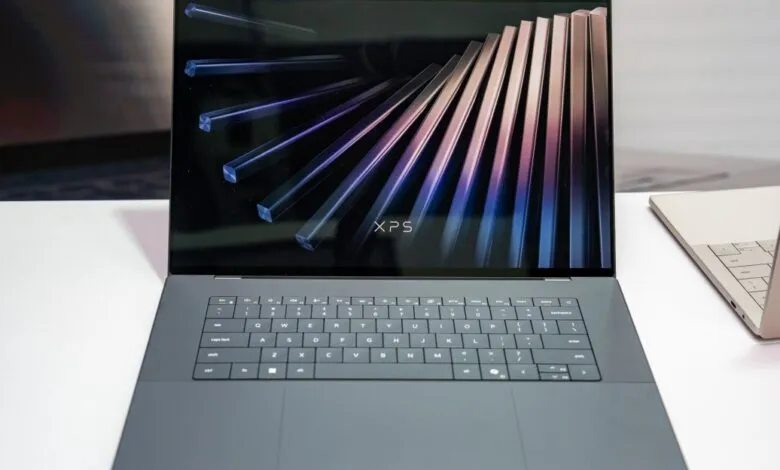
– The Dell XPS 16 laptop features a unique 1–120Hz variable refresh rate display designed to save power.
– In a battery test, a specific model with an Intel Panther Lake chip and LG Display screen achieved record efficiency, lasting nearly 27 hours on a 70Wh battery.
– This battery performance surpasses that of any tested MacBook and nearly all other laptops in the test’s history.
– For the best battery life, the laptop must be configured with the specific 1920×1200 non-touch LCD, not the higher-resolution OLED option.
– The display technology is not exclusive to Dell, as LG Display is mass-producing the panel and Intel is collaborating with other manufacturers like BOE.
A new laptop configuration from Dell, featuring a specialized LG Display panel and Intel’s latest Panther Lake processor, has set a remarkable benchmark for battery efficiency in independent testing. According to Notebookcheck’s Wi-Fi web browsing evaluation, this specific Dell XPS 16 model achieved nearly 27 hours of runtime using only a 70 watt-hour battery. This performance surpasses the results from any tested MacBook and stands among the top three laptops in the test’s decade-long history.
The key to this exceptional power management lies in the hardware synergy. The LG Display screen features a unique 1–120Hz variable refresh rate, allowing it to dramatically reduce power draw during static tasks. When idle, the system consumed as little as 1.5 watts. Paired with Intel’s new Core Ultra 325 chip, this combination proved more efficient than competing systems, even those with significantly larger batteries. The two laptops that outperformed it in total runtime relied on a Qualcomm Snapdragon X Plus chip with an 84Wh battery and a dual-battery system totaling 149Wh, both using standard 60Hz displays.
It is important to contextualize these lab results, as real-world usage with varied applications typically yields lower battery life than controlled benchmarks. However, the comparative data strongly suggests this Dell, Intel, and LG Display collaboration is currently the frontrunner for maximizing laptop endurance. For consumers seeking the absolute best battery performance from this model, it requires selecting the specific 1920 x 1200 non-touch LCD configuration, as the available higher-resolution tandem OLED screen option will consume more power.
The underlying display technology enabling this efficiency may soon become more widespread. LG Display has announced it is the first to mass-produce a 1–120Hz laptop LCD panel, branding it as Oxide 1Hz, with plans for an OLED version by 2027. Intel is also pursuing this low-refresh-rate frontier with multiple partners, having announced a collaboration with Chinese panel maker BOE last October to develop 1Hz refresh rate computers. While Dell successfully integrated these components first, the core innovations in both the panel and processor are poised to influence the broader laptop market, pushing the entire industry toward new standards in battery life performance.
(Source: The Verge)