DJI’s banned camera is cheap and easy – I tested it

▼ Summary
– A DJI Osmo Pocket 4 Pro, banned from US import, was purchased on Temu and shipped from a US fulfillment center in Oregon within four days, with similar cameras available on major US retailers.
– The FCC stripped the cameras’ certifications using rule 47 CFR 2.962(f), as they were certified within 30 days of the December 2025 foreign drone ban, making their import and sale illegal.
– DJI claims full compliance, stating it does not sell or distribute the banned cameras in the US and has no involvement with independent third-party sellers offering them.
– Evidence suggests third-party sellers operate independently, as the camera boots in Chinese and lacks a US FCC ID on its packaging, though it includes generic FCC compliance text.
– The ban extends beyond drones to include DJI and Autel “communications or video surveillance equipment,” and rival HoverAir secured FCC certification for its Versa by claiming its camera isn’t on the Covered List.
Forget shadowy alleyways and whispered passwords. Getting your hands on a banned DJI camera in the US right now is as simple as scrolling through your phone. A quick search on Temu, AliExpress, eBay, or even Amazon reveals the DJI Osmo Pocket 4 and Pocket 4 Pro in stock, shipping fast with no fear of customs or confiscation. The reason is simple: these devices are already sitting in American warehouses, despite the fact that they are officially barred from entering the country.
I decided to test the system myself. Last month, I placed an order for a DJI Osmo Pocket 4 Pro on Temu. The package landed on my doorstep four days later. It wasn’t shipped from overseas; it came from a fulfillment center in Oregon, where a logistics firm called Blue Ocean repackaged it into a FedEx bag for the final leg of its journey. After discounts, my total came to $659.28 for the Vlog Combo, which included the Mic Mini 2 and FrameTap remote. That is actually less than what I paid for the Osmo Pocket 3 combo back in 2023. The whole experience felt less like a black market deal and more like standard e-commerce.
The Verge has confirmed that these cameras are indeed banned from US import. Public records show that while both DJI cameras passed FCC certification ahead of the December 2025 foreign drone ban, that certification was granted within 30 days of the ban taking effect. This timing gave the FCC the authority to use a specific rule, 47 CFR 2.962(f), to quickly revoke the certifications. When asked for an on-the-record explanation of this decision, the FCC declined to comment. DJI, however, confirmed to The Verge that the new cameras are banned.
Without FCC certification, any device with a radio cannot be legally imported, marketed, or sold in the US. The ban is designed to stop new devices from entering the country, but it does not confiscate devices already in the hands of consumers. The problem is that enforcement appears to be spotty at best. The FCC seems to lack the resources to actually prevent these devices from flowing into the market.
DJI has stated that it is not involved in these third-party US sales. In a statement, a company spokesperson said, “DJI was informed of the FCC’s determination and has fully complied with it. Osmo Pocket 4P and Osmo Pocket 4 were not released in the United States when the products were launched globally. DJI does not offer or sell these products through its official U. S. channels and did not distribute these products in the U. S. market. Any products that may be offered by independent third-party sellers are not products sold or distributed by DJI in the U. S. DJI has no involvement in those third-party sales.”
After inspecting my own unit, I find this claim plausible. The camera boots up with Chinese menus, and neither the device’s regulatory screen nor its packaging displays an FCC ID. This suggests the units were not manufactured for the US market. The box does contain the boilerplate “This device complies with part 15 of the FCC Rules” text, but the regulatory markings list certifications from countries like Canada, China, Brazil, Japan, Korea, and the UAE, with no mention of the US.
This situation is part of a larger pattern. DJI technology has a habit of reappearing in the US through repackaged gadgets from companies like Xtra, which ships nearly identical cameras. Neither DJI nor Xtra has confirmed a relationship, but Xtra is now facing its own US ban.
It is strange that a camera with no wireless connectivity is caught up in a drone ban. The Trump administration claims these devices pose a national security threat, but the logic is difficult to follow. What we do know is that when the government banned future foreign drones in December, it simultaneously extended the ban to cover “communications or video surveillance equipment” from DJI and Autel Robotics.
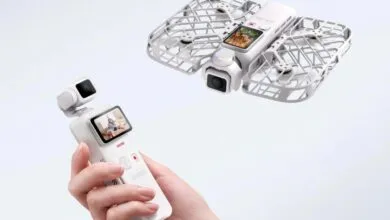
The enforcement game continues to evolve. This week, HoverAir, also known as Zero Zero Robotics, announced it received FCC certification for its new Versa drone. This device is clever: it functions as a pocket camera but transforms into a flying camera with attachable propeller wings. Public records show HoverAir secured certification by arguing the Versa is not on the Covered List, which is technically accurate. The list only includes DJI, Autel, Huawei, ZTE, Hytera, Hikvision, and Dahua. However, all new foreign drones are automatically added to the Covered List unless they receive a waiver. Whether adding wings to a camera is a legitimate loophole or a violation of the ban’s spirit remains an open question.
(Source: The Verge)