AI Absent in Games at Major Developer Conference
▼ Summary
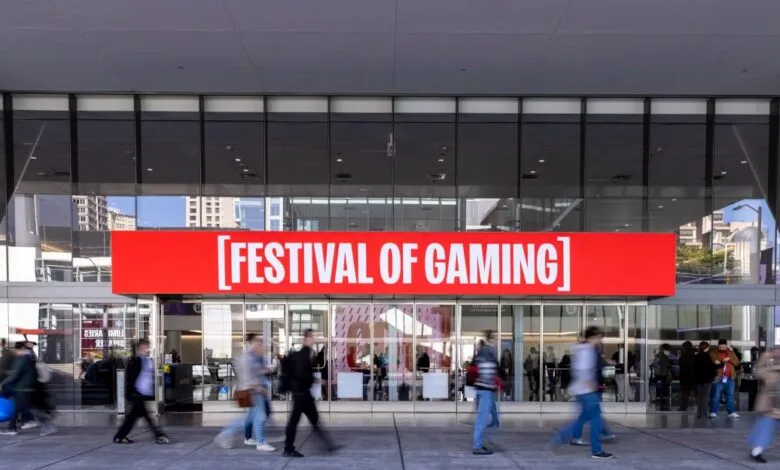
– AI tools for game development, like AI-generated NPCs and QA assistants, were prominently showcased by vendors at the GDC Festival of Gaming.
– Despite the industry pitch, most indie developers at the event were strongly against using AI in their games, valuing the human element and craftsmanship.
– Developers criticized AI-generated content for looking generic, cheap, and lacking the unique, surprising quality of human-made games.
– Legal and copyright uncertainties surrounding AI-generated art present a significant barrier to selling games made with the technology.
– A major concern is that AI could reduce job opportunities and hinder the development of new talent in the game industry.
The halls of this year’s GDC Festival of Gaming were buzzing with talk of generative AI. Vendors promoted tools for creating AI-driven NPCs and even entire game worlds from simple prompts. Demonstrations ranged from a pixel-art fantasy environment built with Tencent’s AI to a Razer briefing showcasing an AI assistant that automatically logs QA issues. A packed presentation by Google DeepMind on playable AI-generated spaces underscored the pervasive theme. Yet, amidst this technological showcase, a significant absence was noted: AI was missing from the games on display.
In conversations with numerous developers, a near-universal skepticism emerged. Gabriel Paquette, developer of The Melty Way, captured a common sentiment: “I feel like the human mind is so beautiful. Why not use it?” This perspective was widespread, particularly among indie developers who frequently disavowed the technology. Many stated they would never incorporate AI, arguing it detracts from the essential human element of creation. Their stance aligns with industry sentiment; a recent GDC survey found 52 percent of respondents believe generative AI has a negative impact, a sharp rise from previous years. Some developers now explicitly market their games as “AI free.” The backlash against features like Nvidia’s DLSS 5, which in demos applied unconvincing AI-generated faces to characters, has likely deepened this resistance.
Proponents argue AI could revolutionize gaming by assisting developers with debugging and ideation while allowing players to personalize experiences. Google Cloud’s Jack Buser calls it “the largest transformation in the games industry” he has witnessed in three decades. For the creators themselves, however, the calculus is different. Adam and Rebekah Saltsman, co-founders of publisher Finji, emphasize that their acclaimed titles like Tunic are defined by “a specific person or persons’ fingerprints”,a handmade quality that includes surprise. “You can show people what it is, but you are going to break all of their expectations when they go and play it,” Rebekah notes. When asked if Finji would use generative AI, the answer was unequivocal: “Absolutely not,” says Adam.
Aesthetic and practical criticisms are frequent. Developers contend that AI-made games lack a human touch, often feeling generic or cheap. “I think it’s generic, I think it makes it feel cheap,” says Abby Howard of Black Tabby Games. Rebekah Saltsman is more direct: generative AI “just looks like crap.” For Matthew Jackson, developer of the comedy game My Arms Are Longer Now, there’s a fundamental creative mismatch: “AI is so not funny.” Beyond quality, significant legal problems complicate commercial use. The Saltsmans point out the lack of a clear legal framework for selling AI-generated output, a issue compounded by the fact that such art cannot be copyrighted.
This cautious stance extends across publishing. Panic, known for Untitled Goose Game, states it has “no interest” in AI-created products. BigMode, the publisher founded by Jason ‘videogamedunkey’ Gastrow, requires developers to confirm their game is “human-made.” Even Hasbro’s CEO has stated the company is not using AI in its game development pipelines. Underlying this resistance is a belief that AI removes the craft from game development. “The only way to get better at things is through the intense concentration of a career of applied craft,” argues Tony Howard-Arias of Black Tabby Games. Adam Saltsman adds that the challenge of writing code can positively push design, and that complexities difficult to program are often also hard for players to grasp.
There are also concerns about industry talent and jobs. In a sector plagued by layoffs, replacing human roles with AI could shrink opportunities and hinder the development of future talent. “Where do you get new talent in the future?” Tony Howard-Arias asks. For many, the core motivation remains a human connection forged through craftsmanship. “We tell human stories,” says Rebekah Saltsman, describing the profound link between a creator and a distant player experiencing their thousands of hours of work. Caring about that experience is “why we do this.”
A few developers acknowledge potential future utility, drawing parallels to bespoke AI models emerging in film and television production. Gabriel Paquette concedes AI may become more accepted later, but for now, he is committed to “100 percent” handcrafted work. “That’s something dear to me.” The prevailing mood suggests that for a significant segment of the development community, the soul of a game remains irreplaceably human.
(Source: The Verge)