80s Car Feature That Fits Today’s AI World
▼ Summary
– A 2026 NBC poll found that 46% of respondents did not have a favorable opinion of artificial intelligence.
– In the 1980s, technology like Chrysler’s talking car system was viewed with excitement and seen as futuristic.
– Chrysler’s Electronic Voice Alert, launched in 1983, used prerecorded messages to notify drivers about issues like open doors.
– Despite the popularity of shows like “Knight Rider,” many drivers found the system bothersome, leading Chrysler to include an off switch.
– The article contrasts the hopeful 1980s view with a current perspective where pervasive AI can feel dystopian and intrusive.
Public sentiment toward artificial intelligence remains divided, with a notable 2026 poll revealing nearly half of respondents view the technology unfavorably. As AI becomes increasingly embedded in daily life, some perceive its rapid integration as a step toward a dystopian reality. This cautious outlook stands in stark contrast to the technological optimism of the 1980s, an era when even a car that could speak felt like a thrilling glimpse into the future.
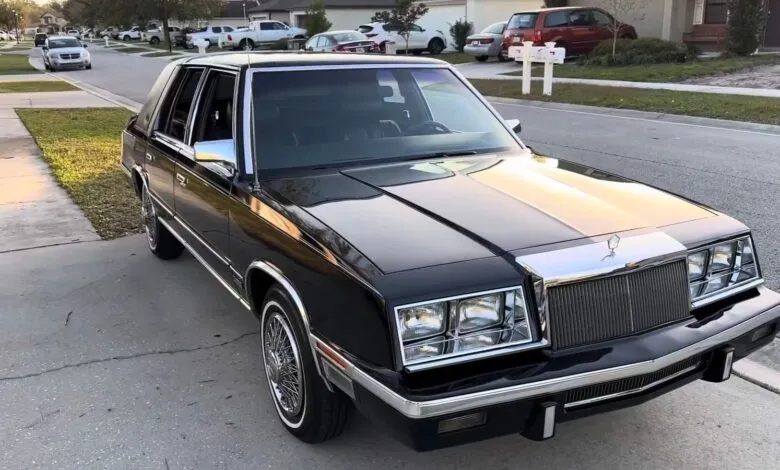
That vision was realized through Chrysler’s Electronic Voice Alert (EVA), a feature introduced in 1983. This system used a library of prerecorded messages to communicate with the driver about the vehicle’s status. Available in models like the New Yorker, LeBaron, and Laser, EVA would deliver verbal alerts such as “a door is ajar” or “fasten your seatbelt.” The technology was groundbreaking for its time, embodying the decade’s fascination with interactive electronics, even if the voice itself was distinctly robotic.
Given the immense popularity of shows like Knight Rider, which featured a charismatic talking car, Chrysler’s innovation seemed perfectly timed for success. Yet the reality proved different. Many drivers found the constant auditory notifications more irritating than helpful. In response, Chrysler discreetly added an off switch for the voice alerts, tucking it inside the glove compartment. This pragmatic design choice acknowledged a simple truth: even the most futuristic features must account for human preference and annoyance thresholds.
That lesson resonates powerfully in today’s context. Modern vehicles are equipped with advanced driver monitoring systems and, in some cases, autonomous functions that can assume momentary control. Within this environment of constant digital oversight, a persistent robotic voice offering reminders no longer seems extraordinary or out of place. It appears the once-novel concept of a communicative car has evolved from a quirky 80s feature into a foundational expectation for contemporary automotive technology, reflecting our broader acclimation to persistent machine interaction.
(Source: Jalopnik)