Kids’ Safety Bill Faces Major Cuts, Sparking Outrage

▼ Summary
– The Kids Online Safety Act (KOSA) may be revived in the House of Representatives without its central “duty of care” provision, which would have required platforms to protect kids from online harms.
– Supporters, including parents of children harmed online, believe the duty of care could prevent tragedies by imposing legal liability, while opponents fear it would lead to over-censorship of content like LGBTQ resources.
– Without the duty of care, KOSA would still introduce new standards, such as defaulting kids’ accounts to the highest privacy settings and limiting addictive features like infinite scroll.
– KOSA is expected to be part of a larger package of online safety bills, which could include measures raising concerns about digital surveillance and privacy, such as age verification requirements.
– The bill’s original Senate sponsors insist the duty of care is essential, but House Republicans may block KOSA unless it is removed, highlighting ongoing political divisions over the legislation.
A major legislative effort focused on protecting children online, the Kids Online Safety Act (KOSA), is reportedly facing significant revisions that could remove its most impactful component. For years, this proposed law has ignited intense debate between those demanding stronger safeguards for young internet users and others cautioning against potential censorship and privacy invasions.
Since its introduction, KOSA has garnered strong support from a coalition including parents who have lost children to online-related tragedies such as cyberbullying, sextortion, and illegal drug purchases. These advocates argue that imposing a legal duty of care on digital platforms would compel companies to proactively prevent harm, potentially saving lives. Opponents, however, have consistently warned that such a mandate might pressure platforms into excessively restricting content, including vital resources for LGBTQ+ youth. After passing the Senate with strong bipartisan backing last year, the bill stalled in the House. It was reintroduced in the Senate this past May, setting the stage for another contentious round of negotiations.
Recent discussions suggest that a revived version of KOSA in the House may proceed without the duty of care provision entirely. This potential change represents a major concession, effectively stripping the bill of what many consider its central enforcement mechanism. Lawmakers are rumored to be preparing a broader package of children’s online safety legislation for consideration once the government resumes normal operations.
For some long-standing critics of KOSA, eliminating the duty of care would address their primary objection, the fear that social media companies would preemptively remove legitimate and helpful content to avoid legal risk. Yet this potential victory could feel hollow if the overall legislative package includes other bills with similarly concerning implications for free expression online.
Sarah Philips of the digital rights group Fight for the Future explains that even though the duty of care wouldn’t explicitly require the removal of legal content, platforms would likely err on the side of censorship to mitigate their liability. She notes, “When it comes to tech policy, you have to think about how the companies will act, not just what the laws say.” The organization had been especially concerned about reduced access to LGBTQ+ resources, though several prominent LGBTQ+ advocacy groups have since withdrawn their opposition following earlier amendments to the bill.
Even without the duty of care, KOSA would still implement other protective measures. These include requiring that accounts for minors default to the most restrictive privacy and safety settings, and limiting addictive design features like infinite scrolling. Philips indicates that her organization could potentially support these elements, though the political focus has remained almost exclusively on the duty of care. For both supporters and opponents, the remaining provisions represent a significantly scaled-back version of the original legislation.
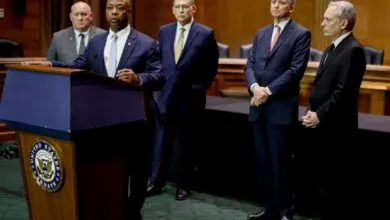
The Senate sponsors of KOSA remain firm that the duty of care is non-negotiable. Senator Richard Blumenthal (D-CT) stated, “There is no appetite for watering the bill down,” while Senator Marsha Blackburn (R-TN) emphasized that establishing a duty of care is “essential to protecting our kids and giving parents peace of mind.”
However, House Republicans, who blocked the bill previously, may once again prevent its passage unless the duty of care is removed or substantially changed. Last year, House Speaker Mike Johnson (R-LA) and Majority Leader Steve Scalise (R-LA) declined to bring KOSA to a vote after it cleared the Senate, citing concerns about free speech. Johnson labeled the provision “very problematic,” and Scalise warned it could “empower dangerous people.” According to Philips, the argument that KOSA might enable censorship is gaining traction, and she believes Democrats are not adequately addressing these concerns.
KOSA is expected to be part of a larger legislative package containing over a dozen online safety bills, likely to be reviewed by the House Energy and Commerce Committee post-shutdown. This package may include the Children and Teens’ Online Privacy Protection Act (COPPA 2.0), Sammy’s Law, which would permit parents to use third-party monitoring tools on social media, and the App Store Accountability Act, mandating age verification for app store users.
Organizations like Fight for the Future caution that some of these proposals could introduce new risks, such as increased digital surveillance and erosion of privacy. For instance, age verification requirements often raise significant data privacy issues, while tools allowing parental monitoring could lead to excessive online tracking of children.
Some parent advocates express willingness to consider alternatives to the duty of care, provided they achieve the same goal of protecting children without placing undue burdens on families. Yet they remain skeptical about whether an effective compromise is possible. Maurine Molak, who lost her son David to suicide following severe cyberbullying and social media addiction, shared that parents are bracing for a final bill that looks nothing like the version they tirelessly advocated for, hoping not to be “blindsided” by the outcome.
Thus far, the bill’s sponsors have kept the latest draft under wraps. Molak noted that while parent input was “very welcomed and accepted in the Senate,” the reception in the House has been different. Statements from House co-sponsors and Energy and Commerce Committee leadership did not clarify the future of the duty of care. A committee spokesperson mentioned that they will “examine numerous proposals that seek to protect kids,” emphasizing that no single bill can address all online threats.
Republican co-sponsor Rep. Gus Bilirakis (R-FL) continues to treat KOSA as a “top priority” and has urged Democrats to help reopen the government to advance the legislation. Democratic co-sponsor Rep. Kathy Castor (D-FL) praised the Senate’s version which retained the duty of care, and encouraged House Republican leaders to listen more to families worried about a weakened bill and less to tech executives who “value profits over the best interests of kids.”
Philips criticizes the political framing of KOSA as a comprehensive fix, calling it a “cop out” from addressing underlying societal issues like healthcare and childcare. She argues that many core problems families face are being redirected as “Big Tech issues” rather than being tackled directly through substantive policy.
The prolonged and uncertain legislative process has taken an emotional toll on the parents championing this cause. Deb Schmill, whose daughter Becca died from fentanyl poisoning after purchasing drugs through social media, has invested her “heart and soul” into advocating for KOSA, even relocating to Washington for several months. She reflects, “This is not only about our children’s legacy. It’s knowing that if we fail, and when we fail, other children die. And that’s a lot of weight to carry. And so it’s heartbreaking, it’s frustrating, it’s maddening to go through this process and see nothing come of it.”
(Source: The Verge)