Vampire: The Masquerade – Bloodlines 2 Review: A Bloody Disappointment
▼ Summary
– Vampire: The Masquerade – Bloodlines 2 is a disappointing sequel that fails to live up to its legendary predecessor, offering a shallow action experience instead of a deep RPG.
– The game features a lifeless, empty world with repetitive environments and minimal interactive elements, making exploration dull and unengaging.
– Its narrative is rigid and poorly paced, with limited role-playing opportunities and inconsequential choices that undermine player agency.
– Combat is described as bad, with buggy mechanics, repetitive encounters, and overpowered enemies that become frustrating to deal with.
– The game is a technical mess on PlayStation 5, suffering from frequent crashes and significant frame rate drops during transitions.
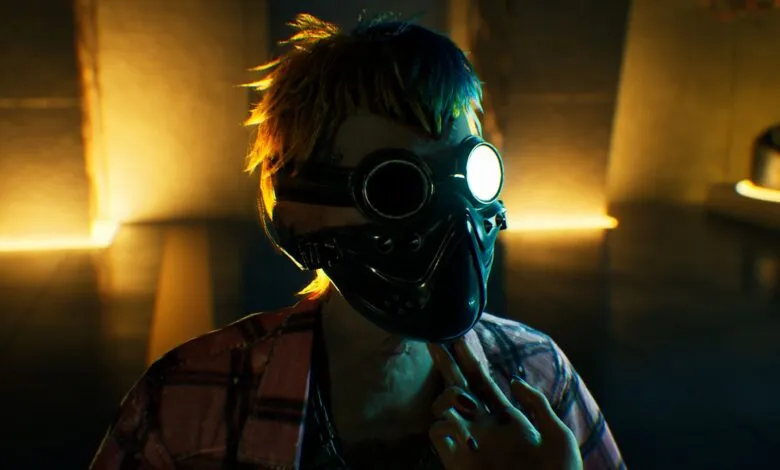
Vampire: The Masquerade – Bloodlines 2 arrives as a deeply disappointing sequel that fails to capture the magic of its revered predecessor. Instead of delivering the rich role-playing experience fans expected, it presents a shallow, linear narrative set within a world that feels empty and unconvincing. The game struggles with apocalyptically bad pacing, repetitive combat, and a severe lack of player agency, making it a difficult title to recommend to anyone familiar with the original classic.
The setting is an alternate version of Seattle, a city caught in a struggle between the living and the dead. While the neo-noir art direction creates a striking visual atmosphere with foggy streets and vibrant neon lights, this appeal is only skin deep. The environment feels barren and constrained, with the action largely confined to a single city block. Random civilians wander about or stand motionless, repeating the same voice lines, while the absence of moving vehicles makes the streets feel sterile. A handful of buildings have interiors, but their inhabitants remain fixed in place, stripping the world of any sense of life or dynamism.
Exploration offers little reward. Aside from collecting marks for experience points, which you likely won’t need, and tackling a few bland side quests, there is almost nothing meaningful to do. Attacking civilians triggers a police response, with officers often spawning directly in front of you, leading to a quick and uninspired death animation. Compare this to the original game’s Santa Monica, a smaller map that nevertheless felt alive and encouraged creative use of vampire abilities between missions.
Storytelling is a major focus, yet it falls flat due to rigid structure and poor execution. You play as Phyre, an elder vampire awakened from a long slumber with the voice of a deceased detective named Fabien in your head. A mysterious mark on your hand limits your power, and you join forces with Fabien to solve his murder and remove the curse. While the premise holds potential, the narrative is extremely linear, offering few opportunities for genuine role-playing. Beyond selecting your gender and one of six vampire clans, your choices have minimal impact on the plot. Even your clan selection feels inconsequential, rarely influencing dialogue or events in any meaningful way.
The pacing is disastrous, split across three different time periods that alternate after each main quest. One segment is set in the 1920s and confined to tiny rooms, while the other two are modern-day. In two timelines, you control Fabien, trudging through deserted streets without access to Phyre’s traversal abilities like wall-climbing or gliding. These sections feel deliberately slow, forcing you to repeatedly backtrack between the same static locations to gather minor plot details. The payoff is unsatisfying, with a plot that lurches between predictable twists and outright nonsense.
Fabien possesses special abilities, such as conversing with imagined objects or corpses, but these can only be used at predetermined points. This design undermines any sense of detective work, as the game simply hands you the information needed to proceed. While Fabien’s madness as a Malkavian vampire adds some flavor, the writing fails to explore this concept in depth. The overall narrative is weaker than that of smaller titles like Vampire: The Masquerade – Shadows of New York, and the voice acting is inconsistent, decent for the main characters but often flat for supporting roles.
Combat provides a break from the walking segments but is itself deeply flawed. Buggy heavy and light attacks, sloppy finisher animations, and repetitive enemy encounters make fights feel tedious. Your chosen clan determines which abilities you can unlock, and some, like charming enemies to turn on each other, are enjoyable. However, the selection is limited, with no options for further development or augmentation. The ability to unlock powers from other clans by collecting specific blood types further diminishes the importance of your initial choice, undermining the RPG mechanics.
There is no inventory system, so you cannot keep weapons on hand, though you can temporarily use guns dropped by the handful of enemy types you face repeatedly. Early combat encounters are reasonably designed, but they soon devolve into overwhelming swarms of foes armed with overpowered ranged weapons, making later sections frustrating.
Technical performance on PlayStation 5 is problematic, with frequent crashes, some severe enough to force console reboots, and significant frame rate drops when entering or exiting buildings.
Ultimately, Vampire: The Masquerade – Bloodlines 2 is almost impossible to recommend. Fans of the original will find it a betrayal of everything that made the first game a cult classic, while newcomers would be better served by any other title in the World of Darkness universe. Even Werewolf: The Apocalypse – Earthblood offers a more engaging experience than this dull and disappointing release.
(Source: techradar)