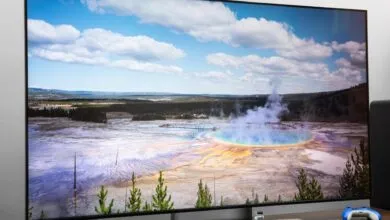
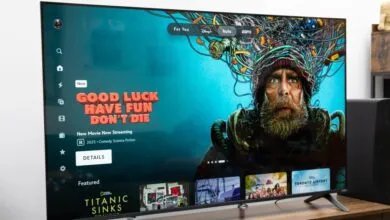
Sony RGB LED TV sets a new flagship standard
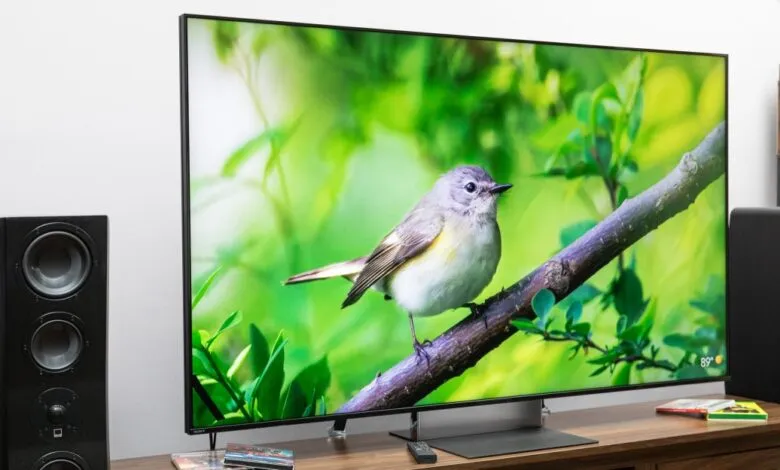
▼ Summary
– The Sony Bravia 9 II is an RGB LED TV with excellent color accuracy, high light output (measured at 3,800 nits for HDR highlights), and a best-in-class anti-reflective screen, making it the top performer for bright rooms.
– The 65-inch Bravia 9 II costs $3,600, which is $1,000 more than the similarly performing Bravia 7 II ($2,600) and $600 more than the Bravia 8 II OLED ($3,000).
– The Bravia 9 II has more dimming zones than the 7 II, reducing blooming from straight-on viewing, but off-angle blooming is more noticeable, with color bleeding into adjacent areas.
– The TV includes only two HDMI 2.1 ports, an ATSC 3.0 tuner, a USB-C rechargeable remote, and a lenticular stand with cable routing.
– Despite its strengths, the reviewer recommends OLED TVs like the Bravia 8 II for most people due to superior contrast, reserving the Bravia 9 II for spaces where reflections are a major issue.
The Sony Bravia 9 II is the most hotly anticipated TV to hit the market in years, and for good reason: it is an absolutely stunning RGB LED TV. I sat down with my son to watch Dungeons & Dragons: Honor Among Thieves , he is new to the roleplaying game but had never seen the film. The landscapes of Faerûn looked breathtakingly natural, while the spells cast by the Red Wizards of Thay exploded with vibrant, saturated color. Specular highlights in HDR truly pop, whether it was the glow of Xenk’s sword in the Underdark, the fiery explosions as Furiosa tears across the desert in Mad Max: Fury Road, or sunlight dancing on the waves in The Meg.
The Bravia 7 II, which I reviewed back in May, was already an impressive RGB LED TV. The new Bravia 9 II takes things further with more dimming zones, a superior anti-reflective screen, and higher peak brightness. However, the 65-inch 9 II carries a $1,000 premium over its sibling, and that gap widens with larger screen sizes. So the question is: does Sony’s flagship Bravia 9 II justify the extra cost?
Sony gave us a glimpse of its RGB LED backlight technology in an early prototype at its Tokyo headquarters in early 2025, and even then, it was remarkable. Historically, whenever a new display technology emerges, Sony’s flagship models tend to lead the pack, thanks to the company’s industry-leading processing and upscaling. The Bravia 8 II is the latest in a line of top-tier Sony QD-OLED TVs, and the original Bravia 9 was the best mini-LED TV when it debuted in 2024. With RGB LED TVs being the big TV story of 2026, expectations for the Bravia 9 II are sky-high.
Only two of its HDMI ports support version 2.1, but it does include an ATSC 3.0 tuner.
Like the Bravia 7 II , and many of this year’s premium models , the Bravia 9 II uses RGB LEDs for its backlight. Instead of the blue backlight that has been standard for years, it employs clusters of individual red, green, and blue LEDs. These blend their light to produce a wider color gamut than blue-based LED TVs could ever achieve.
The Bravia 9 II shares the same processor as the 7 II. Both feature the same excellent lenticular stand , easily the coolest TV stand design I’ve seen in a long time , and both restrict HDMI 2.1 to just two of their four ports. Perhaps next year Sony will finally catch up with the rest of the high end and offer four HDMI 2.1 ports.
In terms of grayscale and color performance, the Bravia 9 II is at least as good as the 7 II, though it shares the same SDR issue with reds appearing oversaturated and not as bright as they should be. In Professional mode, gamma and EOTF tracking are even better than on the 7 II, delivering suitably detailed shadows and proper image depth. Colors like sky blue, foliage, and especially skin tones look wonderful. While grayscale measures (and appears) slightly blue, it didn’t bother me in any of the content I watched.
Its great color accuracy, high light output, and anti-reflective screen make it the best bright-room TV available.
The Bravia 9 II can get seriously bright: I measured HDR highlights at 3,800 nits and a full-field white screen at 885 nits. The Bravia 7 II maxed out at 2,200 nits for highlights, though its full-field brightness is nearly identical at 848 nits. So for everything except the very brightest specular highlights, the two Sony RGB LED TVs offer similar real-world brightness. There are brighter TVs out there , like the TCL X11L , but for the vast majority of content, the 9 II delivers plenty of punch with both HDR and SDR (provided you turn it up from its default Professional mode setting, which is optimized for dark rooms, or switch to the slightly less accurate Cinema mode).
Sony’s picture processing algorithms also play a crucial role in how well brightness and color are used, setting the brand’s image quality apart from competitors. With curtains open and sunlight streaming through the windows, I watched several World Cup matches via an ATSC 3.0 antenna, and the Bravia 9 II’s image detail was clearly visible.
The anti-reflective screen is phenomenal at scattering ambient light without compromising black levels.
Beyond picture performance, a few key features distinguish the Bravia 9 II from the 7 II.
The most noticeable upgrade is the anti-reflection screen, which is the best I have ever seen. Bright lamps or windows are reduced to a dim glow that is incredibly hard to see when anything is playing on the TV. Even with the set turned off, reflections on the screen fail to draw my attention. The effect degrades as you move off angle, but it wasn’t distracting until roughly 70 degrees off axis , a pretty extreme angle for watching TV, even with a large group.
Sony Bravia 9 II specs Display type: RGB LED HDR formats: Dolby Vision, HDR10, HLG OS: Google TV HDMI inputs: 2 x HDMI 2.1 (one with eARC); 2 x HDMI 2.0 Audio support: Dolby Atmos, DTS:X Gaming features: 4K/120Hz, ALLM, VRR Sizes available (inches): 65, 75, 85, 115
The Bravia 9 II also has more dimming zones than the 7 II. More zones allow for finer control of backlight transitions from light to dark areas, which usually reduces blooming (where bright light bleeds into adjacent dark sections). That holds true for the 9 II for the most part. From straight on or slightly off angle, blooming is handled very well. There is a slight glow around subtitles or a dim haze around fireworks. Blooming became more noticeable at the far ends of my 8-foot couch, but it is still better than the Bravia 7 II or other RGB LED TVs (though not better than the TCL X11L mini-LED TV). It remains an LED TV, so some degree of blooming is inevitable.
When I stood further off angle beside my couch, though, blooming worsened , and not just around subtitles. I noticed both white and color bleeding into neighboring colors. Apple TV features a Peanuts screen saver, mostly showing Snoopy around his doghouse. From an off angle, I could see white from his body extending into the yellow background. I would not recommend the Bravia 9 II primarily for large groups, as viewers at the edges will have a different experience than those in the center. This is not an issue I recall seeing on the Bravia 7 II, and since the accentuated blooming occurs off axis, I wonder if it is related to the anti-reflective coating.
The Bravia 9 II comes with a USB-C rechargeable remote and the same lenticular stand as the 7 II. It runs Google TV, which felt quick and intuitive during my testing. A slot in the back of the stand routes cables behind the lenticular screen, keeping them hidden from view. The combination of excellent brightness and great color accuracy makes images genuinely engaging.
Even with the minor off-angle quirks, there is no doubt that the Sony Bravia 9 II is the best RGB LED TV currently available. Its great color accuracy, high light output, and anti-reflective screen make it the best bright-room TV on the market. But the 65-inch sample I reviewed , the smallest size offered , costs $3,600, while the Bravia 7 II is $2,600 at 65 inches and comes in sizes as small as 50 inches. Even the 65-inch Sony Bravia 8 II OLED is $3,000.
I thoroughly enjoyed my time with the Sony Bravia 9 II, and I am confident anyone would love having one at home. Even so, there are other TVs I prefer, even within Sony’s own lineup. The Bravia 8 II, which delivers the pixel-level control only an OLED can provide, would be my first choice. Contrast remains king in our eyes, and OLED still leads in that category. If you really want an RGB LED TV but don’t want to spend top dollar on the 9 II, the Bravia 7 II gives you most of the same performance (minus the anti-reflective screen). The one scenario where the Bravia 9 II truly shines is in a room where reflections are a major concern. There is no denying that the Bravia 9 II is a remarkable achievement in LED TV performance. But for most people, I will still recommend an OLED.
(Source: The Verge)