Kimi: Threat or Menace?

▼ Summary
– Moonshot AI released Kimi K3, an open source model that trails proprietary leaders like Claude Fable 5 and GPT 5.6 Sol but shows frontier-level performance in evaluations.
– The announcement coincided with Xi Jinping’s speech at a Shanghai AI conference and contributed to a 1% Nasdaq drop as investors sold chip stocks like Nvidia.
– Tech figures like David Sacks and Travis Kalanick criticized US regulations and alleged Chinese model distillation, echoing debates from DeepSeek’s R1 release in January 2025.
– OpenAI’s Dean Ball argued Kimi’s performance isn’t due to distillation, warned of potential “AI communism” from open-weight models, and suggested US agencies create regulatory fear around Chinese models.
– Editor Shakeel Hashim countered that concerns are overblown because Kimi likely lacks dangerous capabilities and China will restrict its own open models once they become powerful.
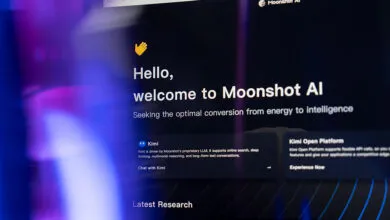
Chinese AI startup Moonshot AI has rolled out an upgraded version of its Kimi model, reigniting global conversations around China’s role in open source AI and the intensifying race for technological supremacy. According to Moonshot, while the Kimi K3 still falls short of top-tier proprietary systems like Claude Fable 5 and GPT 5.6 Sol, it delivers “frontier-level performance” across internal evaluations, surpassing all other tested models. Independent reviews from platforms such as Arena.ai and Vals AI confirm that Kimi now competes with leading frontier models.
The release coincided with Chinese President Xi Jinping’s address at the World AI Conference in Shanghai, and it appears to have rattled Wall Street. The Nasdaq dropped roughly 1% on Friday, as investors unloaded shares in chipmakers like Nvidia, signaling renewed anxiety about China’s AI advancements.
For those who recall the uproar following DeepSeek’s open source R1 model in January 2025, the ensuing commentary from tech leaders feels all too familiar. But the stakes are higher now, set against the backdrop of the Trump administration’s tariff war with China, ongoing national security debates around companies like Anthropic, and the looming IPOs of major AI firms.
David Sacks, former AI czar under Trump and now co-chair of the President’s Council of Advisors on Science and Technology, framed Kimi’s progress as a warning. He argued that the U. S. is “tying itself in knots” with bans on new data centers, state-level regulations, and proposals for federal oversight of frontier models. “This is how you lose the AI race,” he said, while also taking a swipe at Anthropic, calling its Claude model an example of “woke lobotomized models.”
Travis Kalanick, former Uber CEO, revived complaints about Chinese firms “distilling off” American AI models, meaning they train on outputs from U. S. systems. “If distillation isn’t enforced against, then everyone should be able to distill from everyone else,” he wrote, adding that American models would otherwise be at a disadvantage. Notably, U. S. models have also been built using Chinese outputs, including those from Kimi.
Dean Ball, head of strategic futures at OpenAI, offered a more nuanced take. He described Kimi as “a very good model” whose performance likely can’t be chalked up to distillation alone. Ball expressed surprise that the Chinese state continues to allow open sourcing of such capable models, given potential risks. He warned that the “probable outcome of an open-weight-model-dominant world is full AI communism,” where AI becomes a state-provided “public good” akin to digital infrastructure. Ball called this a “dystopian hellscape” and suggested the Trump administration would eventually need to create “regulatory risk around the use of open-weight Chinese models.” He proposed issuing soft law through federal agencies to generate FUD , fear, uncertainty, and doubt , without outright banning open source. “A Federal Reserve Advisory Bulletin found that there may be backdoors in Chinese AI models,” he suggested as an example. “It needn’t be that well justified. You just create enough regulatory risk that every regulated enterprise backs off.”
Shakeel Hashim, editor of the AI publication Transformer, pushed back against the alarmism. He argued that Kimi “likely does not have dangerous cyber capabilities,” and that the Chinese government will face “extremely similar incentives” to restrict open Chinese models once they reach that threshold. In other words, the panic may be premature.
(Source: TechCrunch)