Sony’s First RGB TV Blends Art and Technology

▼ Summary
– Sony’s Bravia 7 II uses RGB LED backlighting with individually driven red, green, and blue LEDs to produce brighter, more colorful images than standard LED TVs.
– Color crosstalk, where one color bleeds into adjacent pixels, is visible in test patterns but rarely noticeable during normal movie and TV viewing on the Bravia 7 II.
– In Professional mode, the TV delivers accurate SDR colors and vibrant HDR images with 2,200 nits of brightness, though red is oversaturated and light grays are slightly too bright.
– The TV covers 88% of the BT.2020 color gamut, but the benefit is limited since most content is not mastered for that wide color space.
– The Bravia 7 II has a reflective screen and only two HDMI 2.1 inputs, which is a drawback compared to competitors, but its excellent processing and picture quality justify its higher price over cheaper RGB LED models.
Sony has officially entered the RGB LED arena with the Bravia 7 II, and it’s a fascinating blend of cutting-edge engineering and artistic precision. Alongside the flagship Bravia 9 II, this new model represents Sony’s first foray into a technology that aims to bridge the gap between traditional LED and OLED performance. But can it justify its premium price tag in a market already crowded with contenders from Hisense, TCL, and Samsung?
Unlike conventional LED TVs that rely on a blanket of blue or white backlights, the Bravia 7 II uses individual red, green, and blue LEDs. This approach lets the display produce a wider, more vibrant color palette without leaning so heavily on the color filter. Sony drives each LED independently, granting it exceptional control over the color mix. The result is a picture that feels richer and more nuanced, especially in scenes where subtle gradations matter.
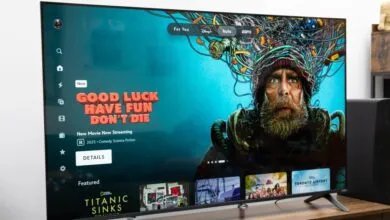
The elephant in the room for any RGB LED TV is color crosstalk. This occurs when light from one color bleeds into adjacent zones, distorting nearby pixels. In test patterns, I could see it clearly: a green rectangle would cast a faint halo into the surrounding space. However, in real-world viewing, it was barely perceptible. The most obvious example came from my Apple TV interface, where the blue of the Prime Video tile slightly tinted the white text. On rare occasions during movies, a red glow from Snoke’s throne room in The Last Jedi subtly shifted skin tones when I paused and pixel-peeped from inches away. But from a normal viewing distance, it simply didn’t matter. During Mad Max: Fury Road or the F1 Canadian Grand Prix, I never noticed a single distraction.
Switch to Professional picture mode, and the Bravia 7 II delivers a stunningly accurate image. SDR content shows excellent grayscale and color fidelity, though reds run slightly oversaturated. HDR grays are a touch brighter than ideal, but the overall vibrancy is impressive. With a peak brightness of 2,200 nits, the TV has plenty of headroom for most content, even if it doesn’t match the TCL X11L or last year’s LG G5 OLED. Blooming is well-controlled for an LCD, but it still can’t rival the pixel-perfect contrast of OLED.
One of the biggest selling points of RGB backlighting is its expanded color gamut. In testing, the Bravia 7 II covered 88 percent of BT.2020. That’s a remarkable figure, though the practical benefit is limited until more content is mastered to that standard. Watching Planet Earth II, the lush greens of Ecuadorian jungles and the iridescent blues of hummingbirds looked spectacular. The Sony is far more accurate than the Hisense UR9 in these scenes, but the payoff remains niche for now.
A curious feature in the Professional menu lets you switch the backlight from color to white light. This eliminates any color crosstalk entirely, but it also drops the color gamut coverage to just 73 percent of BT.2020. It’s an interesting option for purists, but its practical value is questionable.
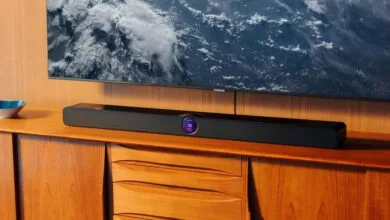
Design-wise, the Bravia 7 II has some clever touches. The pedestal stand features a lenticular screen that visually hides cables hanging behind it, offering a clean, almost transparent look. It’s a nerdy and genuinely useful solution to cable management. However, the decision to include only two HDMI 2.1 inputs (one of which is the eARC port) feels dated. In 2026, most competitors offer full support across all four ports. If you plan to connect a soundbar and multiple high-refresh-rate gaming consoles, you’ll run into limitations.
The screen itself is quite reflective. While it doesn’t produce the rainbow artifacts seen on some TCL and Hisense models, it doesn’t do much to mitigate glare from lamps or ceiling lights. If your room is bright, the Bravia 9 II with its anti-glare panel is a better choice, though it costs at least $1,000 more.
Pricing remains Sony’s traditional sticking point. The 65-inch Bravia 7 II retails for $2,600, which is $600 more than the Hisense UR9 and $500 more than the Samsung R85H. Based on my testing, the superior accuracy and processing of the Sony justify the premium over the Hisense. I haven’t yet evaluated the Samsung, but the Bravia’s image quality is hard to fault.
The remote is light and responsive but lacks backlighting, and the battery-powered design feels a bit behind the times. Still, these are minor complaints. For anyone who prioritizes picture quality and can live with the HDMI limitations, the Bravia 7 II is an excellent choice. If you can control the light in your room, an OLED like the LG C6 might still be the better option for its perfect blacks. But for a bright living room, the Sony delivers a beautiful, vibrant picture that makes color crosstalk a non-issue in real-world use.
(Source: The Verge)