Warhammer 40K: Dawn of War 4 Promises Its Most Brutal Combat Yet
▼ Summary
– The original Dawn of War game was a gateway to the Warhammer 40K universe, making players care deeply about their squads through customization and upgrades.
– Dawn of War 4 introduces a procedural “combat director” system that generates synced melee animations based on units’ relative sizes, weights, and power levels.
– Animating the primarch Lion El’Jonson presents a unique challenge due to his legendary status, wild fighting style, and need to visually distinguish him from standard Space Marines.
– The game’s more zoomed-out perspective and larger battles required animations with more movement and clear silhouettes to keep the action readable.
– Faction-specific building animations, like Orks dropping structures as junk from orbit, add personality and inform the visual design for other factions like the Space Marines and AdMech.
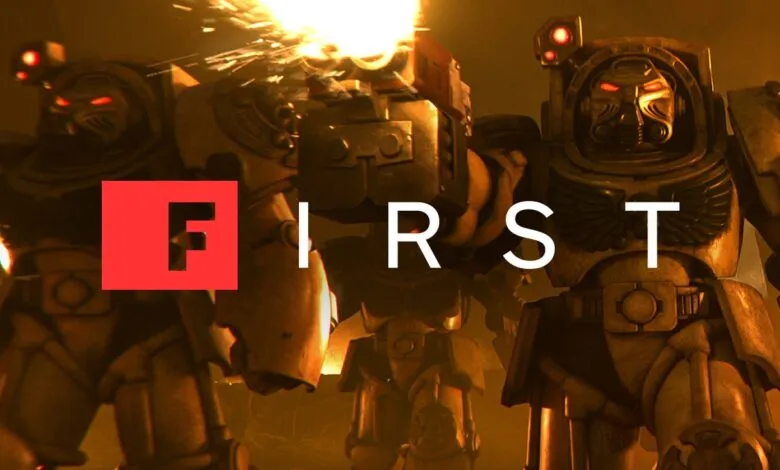
The upcoming Warhammer 40,000: Dawn of War 4 is shaping up to deliver the most visceral and brutal real-time strategy combat the series has ever seen. While the tabletop miniatures offer a static form of admiration, the digital battlefield of Dawn of War has always been about dynamic, heart-pounding conflict. This legacy of spectacular kill animations and intense atmosphere is being pushed to a new frontier by developer King Art Games. We spoke with the game’s animation director, Thomas Derksen, to understand how they are revolutionizing in-game violence and bringing unprecedented life to the grimdark universe.
For Derksen, much like countless fans, the original Dawn of War was a pivotal introduction to Warhammer 40K. He remembers the immediate impact of its squad mechanics. “The first thing that stood out was having a squad of Space Marines I could equip and upgrade,” he explains. “It made me care about them as individual fighters on the battlefield, not just as disposable resources.” That sense of connection was magnified by the game’s signature spectacle. “Seeing a Dreadnought grab an Ork and crush it in its fist was something I’d never witnessed in a game before. It brought those epic, imagined moments to life in real time.”
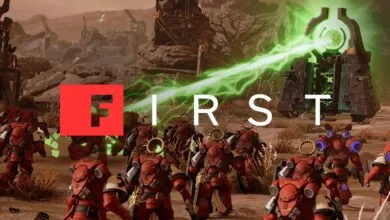
That tradition of synchronized kill animations is a series hallmark, but Dawn of War 4 aims to evolve it into something far more comprehensive. The team has developed a sophisticated “combat director” system that generates procedural melee exchanges. Every clash between units is now a unique, synced interaction, factoring in the fighters’ relative size, weight, and strength. This means the brutality isn’t reserved for final blows; it permeates every tense struggle, from a desperate parry to a bone-shattering counterattack.
Accommodating the vast scale of 40K’s roster, from puny Gretchin to hulking Dreadnoughts, required an innovative approach. The team categorizes units into distinct power levels. “A Gretchin will never fight a Dreadnought the same way another Dreadnought would,” Derksen notes. “We had to create action sets that fit specific matchups.” There is intentional overlap, allowing for brutal brawls between similarly-tiered units like Terminators, while ensuring smaller creatures have their own chaotic, scrum-like fights, often ending with them being hurled aside by larger combatants.
The scale of conflict isn’t just about unit size. Battles in Dawn of War 4 are larger than ever, requiring the animation system to maintain clarity even when the camera is zoomed out to oversee the sprawling carnage. “We introduced more movement and dragging during combat,” Derksen elaborates. “Fighters will wrestle each other across the ground. As a player, you need to be able to read the silhouette and understand the flow of battle at a glance.”
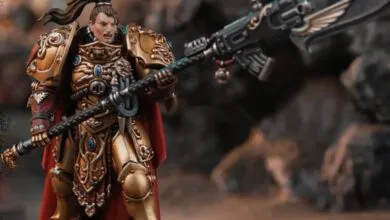
Adding to the monumental challenge is the debut of a primarch on the RTS battlefield. Lion El’Jonson of the Dark Angels will appear in the campaign, and animating such a legendary figure presented unique hurdles. “Space Marines are already difficult to get right; you have to convey their superhuman power and size,” says Derksen. “A primarch is on a completely different level. He has a wild, distinctive fighting style. Capturing that majesty and ferocity was a huge undertaking all by itself.”
This attention to faction personality extends beyond combat to the very act of building a base. Each race’s structures are deployed with unique flair that reinforces their identity. Ork buildings, for instance, are literally dropped from orbit as a heap of scrap that noisily assembles itself. “We wanted it to look like junk falling from the sky,” Derksen describes. “We considered the physics, the speed, the weight, and just let it crash down, then tweaked it until it looked suitably scrappy.” This contrasts sharply with the precise, intentional drop-pods of the Space Marines or the neatly clicking components of the Adeptus Mechanicus, using the Orks’ chaotic aesthetic as a baseline to define the others.
Recreating the 40K universe in an RTS is always a colossal endeavor, and the team was acutely aware of the ambition. “We knew we were biting off more than we could chew,” Derksen admits. The reward, however, is seeing intelligent moments emerge organically from the new systems. He recalls watching a scene where Bladeguard Veterans dynamically reacted to threats from multiple directions. “You see them notice an Ork approaching from behind, dispatch it, then deal with another from the side. These fighters begin to feel aware of their surroundings. We hope players discover and cherish these small, spectacular moments as much as we do.”
(Source: IGN)