Unfolding the Future: My Samsung Z Trifold Experience
▼ Summary
– The reviewer strongly prefers the new Z Trifold foldable phone over a single-hinge model, finding its tablet-like form more compelling to use.
– The Z Trifold features two inward-folding hinges, is launching in the US in Q1 of this year, and is expected to be very expensive.
– In use, the device is surprisingly springy when opening, has specific folding instructions to avoid warnings, and is thick when closed but very thin when open.
– The phone’s large screen and Samsung DeX desktop mode make it feel like a potential all-in-one device, replacing a tablet or laptop for some tasks.
– The reviewer concludes the Trifold occupies a unique space between a smartphone, tablet, and computer, enabled by software like a specific Adobe Lightroom version.
The Samsung Z Trifold isn’t just another folding phone; it represents a bold step toward consolidating your digital toolkit into a single, transformative device. After extensive hands-on time, it becomes clear this isn’t merely an iteration but a reimagining of what a portable computer can be. My experience with a conventional single-hinge foldable left me rarely unfolding it, but the Z Trifold’s design practically demands interaction, creating a compelling case for leaving your tablet and laptop behind.
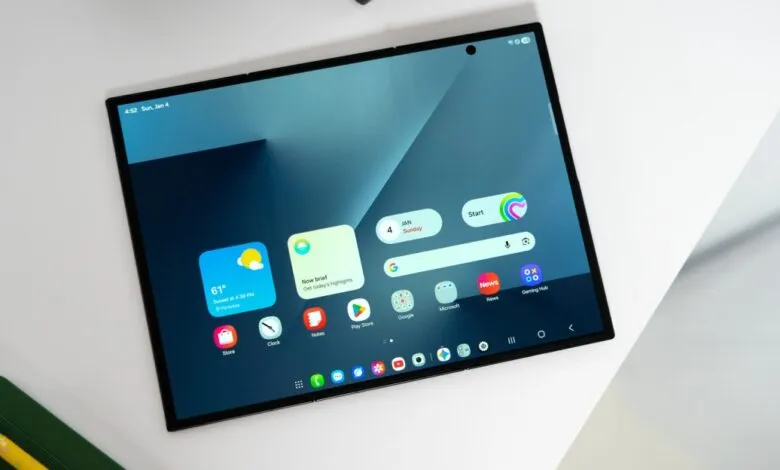
Spending time with the Z Trifold confirmed a fundamental shift: it feels less like a phone and more like a portable tablet with unparalleled flexibility. The dual-hinge design, which folds inward, creates a surprisingly springy mechanism. When picked up from a stand, it almost eagerly snaps into its fully open, tablet-sized form. Folding it requires a specific sequence, placing the left panel down first to avoid the camera bump, a process enforced by a strong haptic buzz and an on-screen notification if done incorrectly. This attention to detail underscores its sophisticated engineering.
While the device is notably thick when closed, it becomes impressively thin once fully unfolded. The cover screen is long and narrow, reminiscent of early Galaxy Z Fold models, and it fits into roomy pockets, though it may be cumbersome for tighter clothing. The back panel is a fingerprint magnet, and using the device folded on a table introduces a significant wobble, minor quirks in an otherwise polished package. The true magic, however, lies in opening it up. The urge to unfold it is irresistible, transforming it from a compact phone into a expansive screen perfect for productivity and media.
What truly sets the Z Trifold apart is its potential as a standalone workstation. The integration of Samsung DeX is a game-changer, offering a full desktop experience with multi-window support directly on the device itself, without needing an external monitor. This capability, combined with the large canvas, makes accessories like a Bluetooth keyboard and mouse not just optional but genuinely appealing. It’s easy to envision this setup replacing a work laptop for many tasks, a notion that felt particularly poignant after recently traveling through airports with both a computer and a young child.
The vision becomes even clearer with software optimizations. Learning that a specific version of Adobe Lightroom is being developed for the Trifold highlights its unique positioning. It occupies a novel space between a smartphone, a tablet, and a laptop, a hybrid device that could finally fulfill the promise of carrying one gadget for everything. The Z Trifold, while currently available in Korea and expected in the US soon at a predictably premium price, offers a glimpse into a more integrated and efficient mobile future. It’s a device you’ll find yourself constantly folding and unfolding, not out of novelty, but because each form unlocks a genuinely useful new mode of interaction.
(Source: The Verge)