Mira Murati Returns to the Spotlight with Caution
▼ Summary
– Mira Murati, now CEO of Thinking Machines Lab, gave her first major media appearance in 18 months to raise the company’s profile amid growing competition from OpenAI, Anthropic, and xAI.
– She previewed “interaction models” that process continuous audio, text, and video in 200-millisecond intervals, aiming to capture real-time human communication nuances like interruptions and pauses.
– Murati defended her role as interim CEO during OpenAI’s November 2023 turmoil, stating her decisions protected the mission and team, but admitted she would have pushed for more information and transparency in hindsight.
– She expressed concern over the concentration of AI decisions in too few hands, emphasizing the need for structural checks rather than relying solely on individual leaders’ character.
– Murati downplayed high-profile researcher departures from Thinking Machines as normal organizational volatility and dismissed compensation as the primary driver, stating she doesn’t focus on “killing the competitor.”
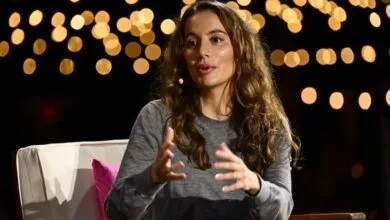
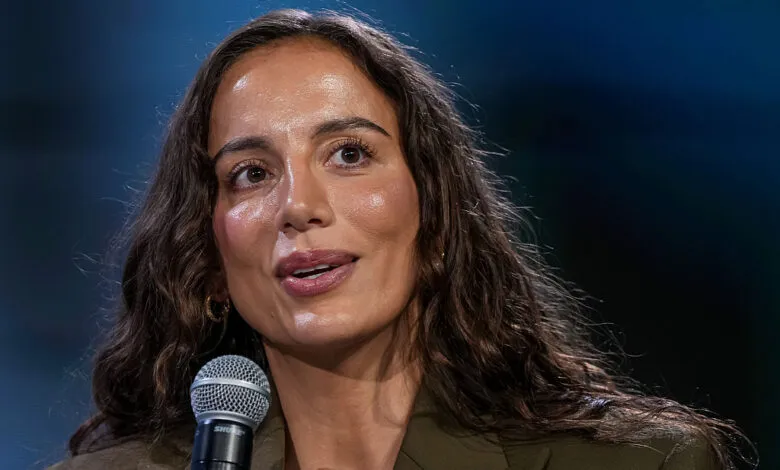
Mira Murati has never been entirely at ease on a conference stage. During her tenure as CTO of OpenAI, she was present but rarely the face of the company. As the CEO of her own venture, Thinking Machines Lab, she has been even more elusive. That made her appearance with Bloomberg in San Francisco on Thursday , her first major media interview in roughly 18 months , a moment worth watching, even if she chose her words with evident caution.
The timing is strategic. Thinking Machines has spent the better part of a year and a half operating quietly: raising capital, recruiting researchers, and shipping a single product called Tinker, an API for fine-tuning open-source AI models. Meanwhile, the companies competing for the same talent, customers, and headlines have grown increasingly dominant. OpenAI, where Murati spent six years as CTO, remains a constant fixture in the news cycle. Anthropic’s momentum dominates current conversation. And xAI, Elon Musk’s AI venture, has been integrated into SpaceX ahead of what many expect to be a massive public offering, drawing its own gravitational pull on attention and investment. In this environment, staying heads down has diminishing returns. At some point, you have to make some noise just to remind the market you exist.
Murati used the Bloomberg appearance to do exactly that , and little more. She offered a preview of what Thinking Machines calls “interaction models,” which she described as a fundamentally different kind of AI interface. Instead of the turn-based, prompt-and-response dynamic that defines most AI products today, she told interviewer Emily Chang, the company’s models are designed to process continuous streams of audio, text, and video in 200-millisecond intervals. The goal is to capture the texture of human communication , interruptions, mid-thought corrections, even pauses to think , in something closer to real time. But Murati was careful to frame this as a first step, not a finished product, and she declined to provide a specific release date.
She also addressed the episode that first thrust her into the public spotlight: the chaotic week in November 2023 when OpenAI’s board fired Sam Altman and she became interim CEO. Inside OpenAI, it came to be called “the blip.” Murati said she felt clear about her decisions in each moment , that protecting the mission and the team was the through-line that made the choices feel obvious, even as the situation appeared to be unraveling from the outside. She said the company would have “imploded” without her involvement during that strange five-day stretch and its immediate aftermath. But she acknowledged that clarity of intent is not the same as clarity about consequences. In retrospect, she said, she would have pushed harder for more information, a better transition plan, and greater transparency. What she did not say , at least not directly , is whether she thinks things turned out well.
When asked whether she still trusts her former boss, she sidestepped the question, steering the conversation toward a larger concern she returned to several times: the concentration of consequential decisions in too few hands , not just at OpenAI but across the industry. Her worry, she said, is less about the character of any individual leader (though she acknowledged that matters) and more about the absence of structural checks. Good people make bad calls. Well-intentioned organizations drift. Too much attention has been paid to virtue and too little to governance, she suggested.
Chang also pressed her politely on the departures of several high-profile researchers from Thinking Machines in recent months , a subject Murati has largely avoided in public and that she downplayed on Thursday. First, she said, building a frontier AI lab from scratch compresses years of normal organizational volatility into months. She also acknowledged that compensation , the nine-figure packages that have become standard currency in the war for AI talent , captures people’s imaginations, but she suggested it isn’t usually the whole story. To some audience laughter, she said of her own competitive instincts, “When I wake up in the morning, I am not thinking about how to kill the competitor.”
Chang naturally asked about what comes next for AI broadly, including for the humans who AI companies once said would be empowered by AI but who have more recently grown fearful of mass job displacement , not to mention a future where AI is used to create chemical weapons. Murati, who was born in Albania and speaks with a slight Eastern European accent, was measured in her response. She pushed back on the framing of inevitable dystopia or inevitable utopia, arguing that neither outcome is predetermined and that the period we are in right now is the one that will determine which way things go. Still, she said , and not for the first time during the interview , that if humans take their hands off the wheel too soon, the future will look very different, and not better.
(Source: TechCrunch)