Palantir’s chore jacket signals a lifestyle brand pivot
▼ Summary
– Palantir released a $239 blue and black chore coat as part of its merch store, which sold out its 420 units on the first day despite criticism labeling it “evil boring French workwear.”
– Palantir is marketing itself as a lifestyle brand, with employees stating that wearing its clothing signals support for “warfighters” and Western institutions, though the merch lacks overt patriotic slogans.
– The company’s merchandise serves as a way for fans and investors to signal brand alignment, with collectors like Connor and Alex viewing the items as conversation pieces or symbols of support for Palantir’s mission.
– Palantir’s merch designs, such as a “SILICON VALLEY DROPOUTS” sweatshirt, have been criticized as derivative and out-of-touch, with fashion experts noting the company cannot easily buy its way into cultural coolness.
– Other tech firms like OpenAI and Anthropic have also used merchandise to build brand identity, with Anthropic’s “thinking” cap drawing lines between its tools and competitors, while OpenAI had a similar “Still thinking” cap a year earlier.
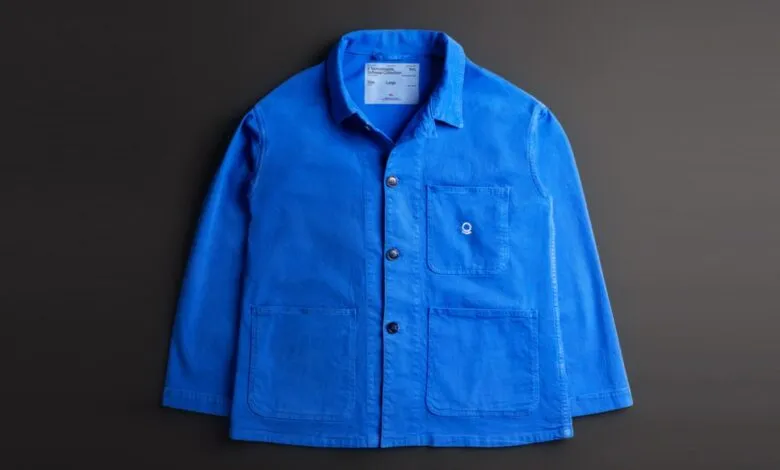
In late April, Palantir , the data analytics firm best known for its defense contracts and work with U.S. Immigration and Customs Enforcement , added a new item to its merchandise lineup: a $239 chore coat in bright blue or black. The jacket, with a small Palantir logo on the breast pocket, draws from 19th-century French workwear, a style popularized in menswear by photographer Bill Cunningham. But for many, the offering was more than just a piece of clothing.
A TikTok critic called it “Evil boring French workwear for evil boring guys,” while fashion commentators questioned why a company that champions U. S. military strength wouldn’t opt for American workwear inspiration. Regardless, all 420 units sold out by the end of the day. (Palantir declined to comment.)
For over a year, Palantir has been positioning itself as a lifestyle brand. In a recent GQ interview, a company employee explained that Palantir’s mission is to give the U. S. and its allies the best software capabilities, and that wearing its merch allows others to align with that ideology. The clothing doesn’t feature overt patriotic slogans or military iconography. Instead, it serves as a subtle signal for insiders and supporters. As fashion journalist Avery Trufelman, host of Articles of Interest, put it: “It’s kind of a bad move to say you want to be cool , that’s not cool. But the initial aspiration is really, really smart.”
The link between fashion and the military is nothing new. Bomber jackets, combat boots, and khakis all have military origins. Even Patagonia has worked with the military. But Palantir’s merch is different: it’s not tactical gear for soldiers. It’s a way for knowledge workers to signal brand loyalty. Menswear writer Derek Guy notes that the chore coat is “a very fashionable garment at the moment for that kind of class.”
Palantir already has a cult following, partly because it has made some investors wealthy. Retail investors and fans track the company obsessively, and Palantir communicates directly with them , even hiring a former Reddit moderator for its communications team. Merchandise turns these fans into walking advertisements.
Connor, a Palantir fan who also owns merch from Tesla, Google, and Apple, says wearing tech-branded clothing “is a nod towards technology and brands I like or am associated with because that’s a part of my personality.” Alex, another collector who owns Palantir items dating back to the early 2000s, sees the company as a foil to other tech firms that “parasitically” extract user data. He wears Palantir gear hoping to start conversations about misconceptions , but says most people just mutter under their breath or post about him online. One barista asked if he supported using Palantir technology to kill Palestinians. (Palantir has said Israel uses its tech for “war-related missions.”)
Palantir’s merch ambitions go beyond basic T-shirts. The company told GQ it will launch a tennis collection in June. But some items show the limits of tech companies trying to project taste. A white crewneck sweatshirt reading “SILICON VALLEY DROPOUTS” in bold red lettering closely resembled Off-White designs by Virgil Abloh. Guy says you “can’t design your way into coolness like that. It takes a much larger effort.”
Alex, who has a creative background, skipped that piece, calling it “distasteful.” He believes the tech guys buying this merch live in a bubble where style is fed to them by algorithms and is already out of vogue by the time they adopt it.
Ultimately, any Palantir logo is inseparable from the company’s controversial business. Supporters wear it to signal alignment or financial ties; critics see it as a marker of something rotten. Palantir’s merch strategy generates social media buzz and energizes its base, but building cultural cachet around a brand mired in criticism is a much harder sell.
The sold-out chore coat echoes a similar effort by OpenAI, which produced its own blue chore coat in 2024 , though without a GQ article to hype it. And it contrasts with Anthropic’s recent pop-up in New York’s West Village, where attendees lined up for coffee and a free baseball cap embroidered with “thinking.” Fans called it “culturally coherent,” a clear signal that Anthropic’s tools are for creatives and thinkers, not just scale-chasers. Palantir’s merch, by comparison, speaks to a different audience: one unapologetically aligned with Western military power.
(Source: The Verge)