Lucid Announces Consumer-Ready Autonomous Cars
▼ Summary
– Lucid is developing a Level 4 autonomous driving system for its Gravity SUV, powered by Nvidia Drive AV, enabling self-driving within limited areas without human intervention.
– This Level 4 system is more achievable than Tesla’s Level 5 FSD and aligns with autonomous vehicles from Waymo and Zoox, though it differs in fleet operation and maintenance.
– Lucid will integrate Nvidia’s Drive AGX Thor computers into its EV platform, relying on Nvidia’s software to simplify updates and avoid the burden of ongoing maintenance.
– Nvidia’s industrial platform allows Lucid to digitally model production lines first, optimizing robot path planning, safety, and reducing commissioning time for manufacturing.
– Lucid aims to monetize its advanced autonomous system by capitalizing on consumer interest in driver assists, similar to GM’s Super Cruise, which sees high post-trial adoption rates.
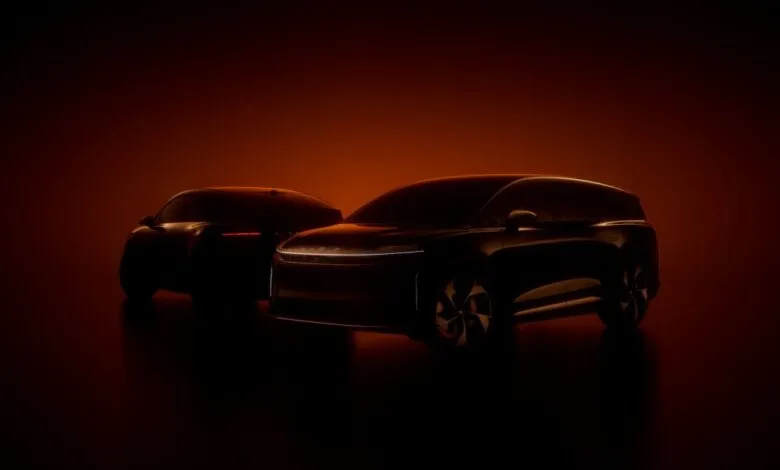
For those invested in the graphics processing unit market, recent developments from Lucid Motors signal promising growth opportunities. The electric vehicle manufacturer has unveiled a significant advancement in its autonomous driving technology, moving closer to consumer-ready self-driving cars. This progression hinges on a powerful partnership with Nvidia, whose Drive AV platform is set to turbocharge Lucid’s driving assistance features.
Initially, Lucid plans to release a more sophisticated version of its partially automated driving assist for the Gravity SUV. Following that, the company aims to deploy a Level 4 autonomous system. This system will be capable of operating the vehicle from point to point without any human input, though it will function within a predefined geofenced area or other limited operational domains. This approach is notably more constrained and realistically attainable than the ambitious Level 5, go-anywhere autonomy targeted by systems like Tesla’s FSD. It aligns more closely with the Level 4 autonomous vehicles under development by firms such as Waymo and Zoox, which are typically maintained and operated by commercial fleets.
To achieve Level 4 capabilities, Lucid will integrate a pair of Nvidia Drive AGX Thor computers into its new midsize electric vehicle platform. Relying on Nvidia’s comprehensive software stack means Lucid can avoid the continuous, complex task of maintaining and updating the system’s core intelligence. Jensen Huang, Nvidia’s founder and CEO, emphasized the transformative nature of this collaboration. He stated that as vehicles become software-defined supercomputers on wheels, they present a fresh chance to reinvent mobility with integrated intelligence at every stage. He confirmed that partnering with Lucid is speeding up the arrival of a future dominated by AI-powered, autonomous transportation, all built upon Nvidia’s full-stack automotive platform.
Consumer acceptance of driver assistance systems is growing, as seen with technologies like General Motors’ Super Cruise. Reports indicate that approximately forty percent of customers opt to pay for Super Cruise once their initial three-year complimentary trial concludes. Lucid is undoubtedly hoping that providing a substantially more advanced system, one that demands no human oversight while active, will become a major revenue stream.
Another aspect of the Lucid and Nvidia partnership could have an even greater effect on financial performance. Nvidia’s industrial platform will enable Lucid to digitally design and simulate its production lines before any physical implementation. This digital twin approach allows the automaker to model autonomous manufacturing systems, refine robot path planning, enhance worker safety, and significantly reduce the time required for factory commissioning. By perfecting the production process in a virtual environment first, Lucid can achieve greater efficiency and cost-effectiveness when building its next-generation electric vehicles.
(Source: Ars Technica)