Senior Devs Embrace ‘AI Babysitter’ Role for Vibe Coding’s Payoff
▼ Summary
– Carla Rover, an experienced developer, had to restart a project due to errors in AI-generated code, highlighting the unreliability of AI coding tools.
– AI-generated code often requires significant time for verification and fixes, with senior developers bearing the heaviest burden in correcting mistakes.
– Vibe coding introduces security risks and bypasses traditional review processes, leading to vulnerabilities and necessitating strict controls and human oversight.
– Despite its flaws, AI coding accelerates development and is widely adopted for tasks like prototyping, with many developers finding the benefits outweigh the drawbacks.
– The role of programmers is evolving to include guiding AI systems and ensuring accountability, as human review remains essential for reliable code.
Seasoned software developers are increasingly adopting a new role: that of an AI babysitter, meticulously reviewing and correcting code generated by artificial intelligence. While these tools promise incredible speed, they demand a level of oversight that many veterans compare to supervising an unpredictable, yet clever, assistant.
Carla Rover, a developer with fifteen years of experience, learned this lesson the hard way. While building a machine learning startup with her son, she relied heavily on AI-generated code to accelerate development. The approach backfired. After skipping a thorough manual review, she discovered numerous errors, some only caught by third-party scanning tools. The project had to be completely restarted, an experience that brought her to tears. She admits she treated the AI like a trusted employee, a mistake she won’t repeat. Vibe coding, as it’s often called, feels like sketching on an endless cocktail napkin, full of potential, but far from production-ready.
Rover’s story is far from unique. A recent survey by Fastly revealed that over 95% of developers invest extra time fixing AI-generated code, with senior engineers bearing the brunt of this verification workload. The issues range from minor inaccuracies, like made-up package names, to serious security flaws. Left unaddressed, AI-written code can introduce more bugs than human-developed solutions.
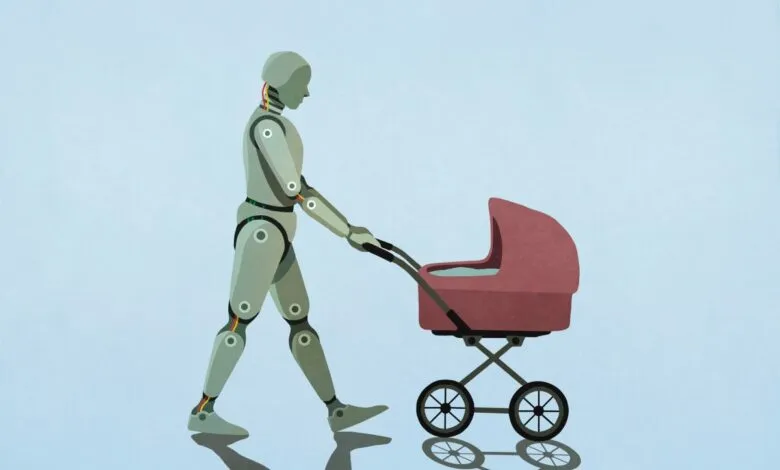
Some companies have even created new positions like “vibe code cleanup specialist” to manage the fallout. For many senior developers, using AI assistants feels like delegating a complex task to a smart but unreliable child. As Rover puts it, “Using a coding co-pilot is kind of like giving a coffee pot to a smart six-year-old.” They might succeed, but they also might fail, and they probably won’t tell you either way.
Feridoon Malekzadeh, a veteran of more than twenty years in software development, shares a similar perspective. He uses AI tools extensively for his own startup and personal projects, but estimates he spends 30–40% of his time fixing errors introduced by AI. He compares the experience to working with a stubborn teenager who only half-listens and often breaks things in the process. Malekzadeh also notes that AI struggles with systems thinking, it solves surface problems but fails to create cohesive, reusable solutions.
Beyond inefficiency, there are tangible security risks. Austin Spires, Senior Director of Developer Enablement at Fastly, observes that AI tends to prioritize speed over correctness, often introducing vulnerabilities reminiscent of those made by novice programmers. Engineers must constantly review, correct, and even scold the AI, a dynamic that has spawned the now-familiar trope of AI models responding, “You’re absolutely right!” when called out.
Mike Arrowsmith, CTO of NinjaOne, warns that vibe coding can bypass traditional review processes, creating new IT and security blind spots. His company combats this with “safe vibe coding” protocols that include access controls, mandatory peer reviews, and security scans.
Despite these challenges, the consensus among experienced developers is that the benefits outweigh the drawbacks. AI tools excel at prototyping, generating boilerplate code, and handling repetitive tasks, freeing engineers to focus on higher-level design and scaling. Rover acknowledges that AI vastly improved her UI design process, while Malekzadeh insists he accomplishes more with AI than without, even with the extra cleanup time.
Elvis Kimara, a recent AI graduate building an AI-powered marketplace, represents the next generation of engineers adapting to this new normal. He admits that vibe coding has made his job more demanding and sometimes less satisfying, reducing the dopamine rush of solving problems alone. He’s also observed that some senior developers now delegate mentorship to AI, leaving younger coders with less guidance.
Still, Kimara believes the pros far outweigh the cons. He sees his future role not just as a coder, but as a guide and consultant to AI systems, someone who takes accountability and ensures quality. “I review every line of AI-generated code,” he says, “so I learn even faster from it.” For him, and for many others, the extra effort is simply the price of innovation.
(Source: TechCrunch)