Uber plans to turn its drivers into a sensor grid for self-driving tech
▼ Summary
– Uber plans to eventually equip its human drivers’ cars with sensors to collect real-world data for autonomous vehicle (AV) companies and others training AI models.
– The plan is a long-term extension of Uber’s AV Labs program, which currently uses a small dedicated fleet, not the driver network.
– Uber’s CTO stated the bottleneck for AV development is data, not technology, as companies lack capital to collect diverse scenarios themselves.
– Uber is building an “AV cloud” of labeled sensor data for 25 partner AV companies, including a shadow mode feature to test models on real trips.
– Uber aims to democratize data access, though its equity investments in AV players and proprietary data give it potential leverage over the sector.
Uber has a bold long-term strategy that extends far beyond simply connecting riders with drivers: the company envisions outfitting its human drivers’ vehicles with sensors to collect real-world data for autonomous vehicle (AV) companies, and potentially for other firms training AI models on physical-world scenarios.
Praveen Neppalli Naga, Uber’s chief technology officer, shared this vision during an interview at TechCrunch’s StrictlyVC event in San Francisco on Thursday evening. He framed it as a natural evolution of AV Labs, a program the company launched in late January.
“That is the direction we want to go eventually,” Naga said about equipping human drivers’ cars with sensors. “But first we need to get the understanding of the sensor kits and how they all work. There are some regulations , we have to make sure every state has [clarity on] what sensors mean, and what sharing it means.”
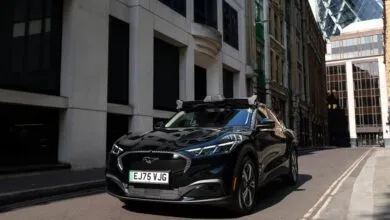
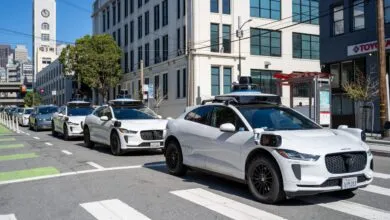
Currently, AV Labs operates using a small, dedicated fleet of sensor-equipped cars that Uber manages itself, separate from its driver network. But the company’s ambition is far grander. With millions of drivers worldwide, even a small fraction of those vehicles transformed into rolling data-collection platforms would give Uber a scale that no individual AV company could match on its own.
The core insight behind the program, Naga explained, is that the main obstacle for AV development is no longer the technology itself. “The bottleneck is data,” he said. “[Companies like Waymo] need to go around and collect the data, collect different scenarios. You may be able to say: in San Francisco, ‘At this school intersection, I want some data at this time of day so I can train my models.’ The problem for all these companies is access to that data, because they don’t have the capital to deploy the cars and go collect all this information.”
Positioning itself as the data layer for the entire AV ecosystem is a shrewd move, especially since Uber abandoned its own self-driving car ambitions years ago , a decision co-founder Travis Kalanick has publicly called a major mistake. Many industry observers have questioned whether Uber, without its own AV fleet, might eventually become irrelevant as self-driving cars proliferate globally.
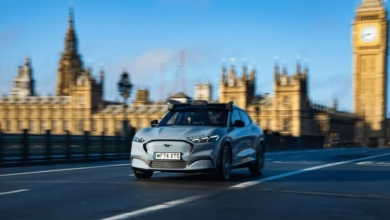
Uber currently partners with 25 AV companies, including London-based Wayve, and is building what Naga called an “AV cloud”: a library of labeled sensor data that partner companies can query and use to train their models. Partners, which Uber plans to invest in more aggressively, can also use the system to run their trained models in “shadow mode” against real Uber trips, simulating how an AV would have performed without deploying a physical vehicle on the road.
“Our goal is not to make money out of this data,” Naga said. “We want to democratize it.”
Given the clear commercial value of what Uber is constructing, that stance may not hold forever. The company has already made equity investments in numerous AV players, and its ability to offer proprietary training data at scale could give it significant leverage over a sector that currently relies on Uber’s ride marketplace to reach customers.
(Source: TechCrunch)