B2B Marketers: AI for Execution, Not Strategy
▼ Summary
– B2B marketers primarily use AI for tactical execution and efficiency, with 78% viewing it as a productivity tool.
– There is significant distrust in AI for strategic marketing work, with only 6% trusting it for brand positioning.
– The most commonly used AI tools are ChatGPT, Microsoft Copilot, and Google Gemini, with Salesforce Einstein being a notable B2B-native platform.
– Investment in AI for marketing is increasing, with 71% of companies planning to raise their AI spend in the next year.
– The central challenge is not whether to use AI, but how to apply it with clear strategy and appropriate safeguards.
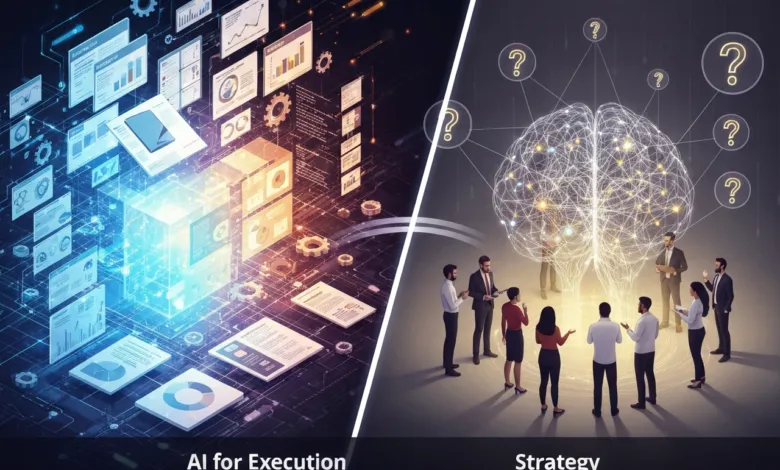
For B2B marketing teams, artificial intelligence has become a powerful engine for driving productivity and streamlining day-to-day tasks, yet its role in shaping high-level strategy remains limited and met with significant caution. A recent industry report highlights this clear divide in adoption and trust. The vast majority of professionals, about 78%, view AI primarily as a productivity or task engine, leveraging its capabilities for tactical execution rather than visionary planning. This focus on efficiency underscores a current reality: AI is a tool for getting work done faster, not for making the most critical business decisions.
When the conversation shifts from execution to strategy, confidence plummets. The same study reveals that only a tiny fraction, a mere 6% of marketing leaders, trust AI to inform brand positioning. Slightly less than half, 44%, feel comfortable using it to support broader strategic decisions. This trust gap indicates that while AI can generate content or analyze data, marketers are hesitant to delegate the nuanced, creative, and risk-laden work of defining a company’s market identity and long-term direction to an algorithm. The human elements of intuition, experience, and relationship-building are still seen as irreplaceable in the strategic realm.
The tools currently in favor reflect this preference for familiar, execution-oriented assistance. B2B marketers most frequently turn to widely known platforms like ChatGPT, Microsoft Copilot, and Google Gemini. These tools often entered the workplace through personal use before being integrated into official workflows. Among more specialized solutions, Salesforce Einstein stands out as the leading B2B-native AI platform, identified by 14% of marketing leaders as the most crucial AI tool in their arsenal, likely due to its deep integration with customer relationship management data and processes.
Despite this strategic hesitation, investment in marketing AI is accelerating, not slowing. An impressive 71% of companies plan to increase their AI spending over the next year. This commitment signals a broad consensus that AI has a permanent and growing place in the marketing function. The central question for leaders is no longer about whether to use AI, but how to apply it with clear guardrails and for genuine strategic advantage. The path forward involves harnessing AI’s undeniable power for efficiency while thoughtfully defining the areas where human judgment must lead, ensuring technology amplifies strategy rather than attempting to set it.
(Source: MarTech)