SEO’s Blind Spot: What Happens After the Click
▼ Summary
– The article argues that traditional SEO strategies focusing solely on driving traffic are obsolete due to the rise of AI and changing user behavior.
– Search engine results pages now yield zero clicks for a majority of queries, forcing marketers to prioritize conversion-oriented content over vanity metrics.
– Job roles in the industry are evolving to include skills like CRO and AEO, reflecting a need for holistic growth engineering rather than isolated traffic generation.
– Brands must create intentional user experiences that stand out from competitors to ensure organic clicks result in meaningful business conversions.
– Success requires aligning SEO efforts with the entire sales funnel to support KPIs, rather than treating traffic acquisition as the final goal.
The Hidden Gap Between Clicks and Revenue
For years, the primary metric for search engine optimization was simple: drive traffic. The assumption was that once users landed on a site, the sales or marketing teams would handle the rest. However, this approach has created a significant blind spot in modern digital strategy. As LLMs and AI-driven interfaces reshape how users discover information, the traditional top-of-funnel model is crumbling. We are witnessing a shift toward more branded searches and users entering the funnel at varied stages, making it imperative to look beyond mere visibility.
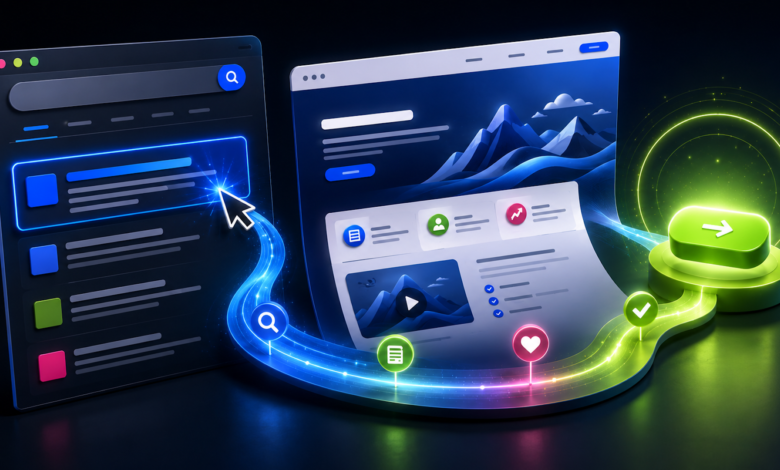
The core issue is that getting people to the website is no longer the end goal; it is merely the beginning. If content fails to align with broader business KPIs, that traffic becomes meaningless. Historically, SEO specialists were tasked with growing visitor numbers, leaving conversion optimization to other departments. This siloed mentality is obsolete. In today’s competitive landscape, SEO content must drive the right traffic,visitors with a high probability of converting,while supporting the entire customer journey.
The Devaluation of Organic Clicks
The value of an organic click has diminished significantly due to changes in search behavior. Recent data from Semrush indicates that approximately 68% of searches on traditional engines result in zero clicks. Users are increasingly finding answers directly within search results or via AI overviews, bypassing the need to visit a webpage altogether. Consequently, the traffic that does reach a site often comes from direct or branded sources rather than broad, top-of-funnel discovery.
This reality demands a more intentional approach to content creation. With so much “white noise” online, failing to differentiate your brand means drowning in a sea of sameness. Traffic alone rarely moves the needle on business revenue. Without a focus on conversion rate optimization (CRO), even high-volume traffic can be a waste of resources. To survive this shift, brands must ensure that every interaction contributes to measurable outcomes, not just page views.
Evolving Roles and Responsibilities
Job descriptions in the marketing sector are evolving to reflect these changes. Titles such as content and growth engineers are becoming common, encompassing responsibilities that blend SEO, CRO, and sometimes AEO (Answer Engine Optimization). The old notion that organic growth stops at driving traffic is gone. Competitors are too numerous for businesses to rely on volume alone.
Modern SEO specialists must now consider how their content supports conversions from the outset. By integrating user experience principles and conversion strategies into their workflow, they help brands stand out. This holistic view ensures that content does not just attract eyes but also persuades actions. Ignoring this integration risks creating content that ranks well but fails to engage users meaningfully.
Symptoms of a Broken Funnel
When SEO efforts focus solely on traffic without regard for conversion, specific negative patterns emerge in analytics. These symptoms indicate that users are stalling rather than progressing through the sales funnel. Common indicators include:
- Vanity metrics rise, while actual revenue remains flat.These trends suggest that while the content attracts attention, it fails to provide the necessary context or motivation for users to take the next step. Analytics reports and heat maps can reveal these bottlenecks, showing exactly where and why potential customers disengage.
Optimizing for Dual Success
Conversely, when SEO strategies optimize for both traffic and conversions, the results are transformative. Reconnecting the funnel allows users to move smoothly toward their goals. Positive trends in this scenario include:
- A noticeable climb in demo or trial requests.By using A/B testing platforms like SEOTesting.com or Convert.com, marketers can identify what drives user action. Instead of letting the funnel stall, these strategies actively guide users toward conversion, providing leadership with clear evidence of ROI.
Building Experience-Driven Content
Users today expect more than just information; they demand an experience that demonstrates an understanding of their problems. To transform generic SEO content into high-converting assets, marketers must adopt several key practices. First, deeply understand your ideal customer profile (ICP) by engaging with sales teams, reading reviews, and analyzing support calls. Incorporate trending language and specific worries into your content to resonate with your audience.
Second, speak directly to the individual reader. Avoid broad, impersonal messaging. Instead, create a close-up perspective that makes the user feel seen and understood. Third, make the next step obvious and easy. Use clear calls to action (CTAs) repeated at logical points throughout the page. If a user has to hunt for how to proceed, you have likely lost them.
Additionally, cut friction wherever possible. Simplify forms and remove jargon or inflated language that complicates the message. Structure content for scannability, using headers and summaries like TL;DRs to help users find context clues quickly. Most visitors want to know if you can solve their problem and how to act immediately, rather than reading academic-style reports.
Accountability Beyond Rankings
The future of SEO lies in search experience optimization, which merges traditional SEO with CRO principles. This approach ensures that every visitor receives the experience needed to take the next step in the funnel. If content brings traffic but offers no path forward, its value to the business is questionable.
However, when content truly understands user needs and guides them toward action, it shifts from generating clicks to generating value. When leadership sees that SEO efforts move key performance indicators (KPIs), the role transforms from a tactical function to a strategic asset. By focusing on the journey after the click, SEO marketers become indispensable drivers of business success.
(Source: Search Engine Land)