AI Personalized Search: Your Practical How-To Guide
▼ Summary
– AI-powered search in 2026 personalizes answers for individual users, moving beyond traditional ranking based on relevance and authority.
– Two people asking the same question can receive different AI-generated answers, tailored to their personal context like search history and location.
– Search and social platforms are converging, with AI drawing from sources like YouTube, Reddit, and TikTok, while social platforms themselves function as search engines.
– AI personalization relies on multimodal inputs (text, images, voice) and contextual signals (conversations, calendar, app usage) to provide individualized recommendations.
– Brands must build recognized entities and loyal audiences across multiple platforms, as AI systems reward credibility and direct user relationships over simple keyword rankings.
The same search query no longer guarantees the same answer. In 2026, the most significant shift in digital discovery isn’t simply that AI generates answers,it’s that those answers are now tailored to individual users.
Traditional search engines ranked webpages based on relevance, authority, and popularity. Today’s AI-powered search experiences, including Google AI Overviews, Google AI Mode, Claude, ChatGPT, Perplexity, and other large language model interfaces, are engineered to understand the searcher as much as the search query itself. Instead of asking, “What is the best answer?” search systems now ask, “What is the best answer for this particular individual?” Grasping how AI personalizes search is the first step toward adapting your SEO strategy.
The roots of this shift go deeper than many realize. For years, SEO professionals talked about “ranking No. 1” as if everyone saw identical results. That was never entirely true. Google has long personalized search using signals like location, language, device type, search history, and geographic intent. A user searching for “coffee shop” in Seattle naturally got different results than someone in Miami. Mobile users had different experiences from desktop users. Returning users saw recommendations influenced by past searches. This personalization has been part of modern search for over a decade. What’s changed is the scope. Instead of adapting results based primarily on location or language, AI systems now tailor responses to the individual behind the query.
The shift from universal rankings to individual recommendations is profound. Traditional search engines ranked webpages, asking, “Which page best answers this query?” Modern AI-powered search asks, “Which answer is most helpful for this specific person at this exact moment?” Large language models synthesize information from across the web while incorporating an expanding set of contextual signals. As a result, two people can ask the exact same question and receive noticeably different answers,not because one result is objectively “better,” but because each answer is adapted to the individual’s context.
Search and social are converging, a common misconception being that they remain separate disciplines. They’re becoming part of the same discovery ecosystem. Historically, search answered specific questions, social platforms created awareness, and websites served as the primary destination. Today, those boundaries are fading. AI systems learn from and reference information published across multiple platforms, including YouTube, Reddit, LinkedIn, X, TikTok, Instagram, Threads, podcasts, public forums, and community discussions. Meanwhile, social platforms are becoming search engines in their own right: people search TikTok for restaurant recommendations, seek real-world reviews on Instagram, use YouTube as a how-to engine, browse Reddit before purchases, and turn to LinkedIn for expertise and professional credibility.
Recently, this dynamic was amplified with the introduction of social platform reporting in Google Search Console. If you conduct news searches during major events, you may see an X carousel at the top of results, alongside emoji reaction buttons. The link between search and social continues to strengthen. Smart brands respond by integrating their search and social teams into a cohesive function rather than operating as siloed groups. The modern customer journey no longer follows a straight line from Google to a website. Instead, discovery happens across an interconnected network of search engines, AI assistants, social platforms, creator communities, and recommendation systems.
Large language models don’t think in terms of channels or landing on a single resource with the “best” answer. They synthesize information from a diverse range of sources. An AI-generated answer might simultaneously incorporate your website, YouTube videos, LinkedIn articles, customer reviews, interviews, Reddit discussions, local business profiles, news coverage, and structured business information. Your digital reputation functions as an interconnected knowledge graph rather than a collection of isolated marketing channels. Consequently, many digital strategists are shifting from traditional SEO toward overall visibility, brand mentions, and discoverability.
As AI systems become more personalized, they also become more selective. They’re less interested in pages that simply target keywords and more interested in identifying brands that consistently demonstrate expertise across multiple environments. With LLM platforms still evolving,marked by ongoing inconsistencies and misinformation,Google’s E-E-A-T framework has taken on broader scope and greater influence. Your visibility depends on whether AI can answer questions like: Is this organization credible? Is this information consistently supported elsewhere? Do experts reference this brand? Does this company publish original insights? Is this brand active across the places people seek information? These are reputation questions, not just ranking questions.
How deep does the personalization rabbit hole go? Several technologies have converged to make search fundamentally more personal. AI systems now understand previous conversations, search history, location, device content, current activity, images, voice, preferences, calendar events, Gmail (when permission is granted), shopping behavior, app usage, and multimodal inputs. Google has publicly stated that search is evolving into a more intelligent, agentic experience that uses personal context to provide more useful answers and even complete tasks on a user’s behalf. Rather than producing a universal ranking, search generates individualized recommendations.
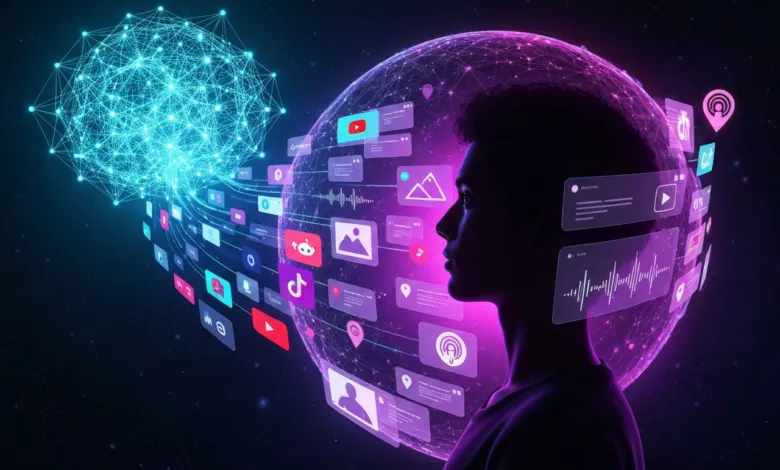
Personalization doesn’t exist without multimodal search. One of the biggest reasons search feels much more personal in 2026 is that AI systems are no longer limited to understanding written text. Modern search is multimodal, meaning it can interpret and combine multiple forms of information simultaneously, including text, images, audio, video, voice, documents, and live context. For brands, this means discoverability is no longer confined to webpages. Every digital asset can become part of the search experience. A product photo may appear in Google Lens results. A YouTube video transcript may be cited in an AI-generated answer. A podcast interview can reinforce your expertise. A LinkedIn article can help establish topical authority. An Instagram Reel demonstrating a process may answer a user’s visual search. Search has evolved from retrieving documents to understanding information regardless of format.
Every piece of content becomes searchable. Historically, SEO focused on optimizing HTML pages because search engines primarily indexed webpages. Today, AI systems understand images and infographics, short-form videos, long-form video transcripts, podcasts and audio, PDFs and presentations, product photography, maps and local business information, social posts, customer reviews, structured data, and user-generated content. In many cases, these assets are no longer supporting content,they’re the content being discovered. The practical implication is that brands should think beyond “content marketing” and instead manage a portfolio of searchable assets that can be surfaced across AI-powered experiences.
Search is becoming ambient. Multimodal search is also changing when people search. For decades, search was an intentional activity: users opened a browser, typed a query, and reviewed a list of links. Today, search is woven into everyday moments. People search by speaking into their earbuds while walking, by taking pictures of products in a store, or by asking follow-up questions without restarting the conversation. AI assistants retain conversational context, allowing discovery to unfold naturally rather than as a series of disconnected keyword searches. Search is becoming less of a destination and more of a continuous, interactive layer that helps people interpret the world around them.
This evolution fundamentally changes how you should think about optimization. Every digital touchpoint contributes to discoverability. A strong multimodal strategy includes descriptive alt text and accessible imagery, video transcripts with clear speaker attribution, original charts, diagrams, and infographics, structured data that identifies people, organizations, products, and events, consistent branding across websites, social profiles, podcasts, and video channels, high-quality visual assets that image search systems can interpret, documents and downloadable resources with searchable text rather than image-only PDFs, and original research, case studies, and data visualizations that AI systems can reference and cite.
The new goal is to become a recognized brand. Although SERP position still matters, AI-driven discovery rewards recognizable brands, not just highly ranked pages. Brands should become recognized entities that AI systems understand, trust, and confidently recommend. That objective requires building authority not only on your website, but also across the broader digital ecosystem where search, social, video, local listings, reviews, and AI overlap. Success is becoming less about winning a single ranking and more about building a trusted, visible, and connected brand wherever people and AI systems look for answers. This expands SEO into a broader practice of helping brands earn recognition and visibility across a personalized, AI-mediated discovery ecosystem.
What other tactics can brands use to stand out in this new era of personalized audience engagement?
First, give users a reason to make you a Preferred Source. Google’s Preferred Sources feature in Top Stories allows signed-in users to prioritize news publishers they trust. While brands can’t force inclusion, they can encourage loyal audiences to favorite them through consistent, high-quality content and clear calls to action. Educate your audience by publishing a standalone article explaining how to set up Preferred Sources, or add a button at the top of your articles to simplify the process. Include related messaging in newsletters and social posts for loyal followers. Invest in recurring coverage that gives users a reason to return. Build recognizable editorial voices rather than anonymous content. Google previously stated that “people are twice as likely to click through to a Preferred Source.” As publishers experience lower click-through rates from AI Overviews, that potential advantage is difficult to ignore. In May, Google announced that Preferred Sources would expand to AI Overviews and AI Mode, giving brands another opportunity to increase their visibility.
Similarly, the Follow feature in Google Discover allows signed-in users to prioritize publishers and creators in their feeds. This rollout coincides with Google’s increased emphasis on social content in Discover, further blurring the line between search and social. These newer features complement longstanding ways users curate what they see, including “Not interested,” “Hide this source,” “More like this,” site search, and SERP navigation tabs.
Second, build an audience, not just organic traffic. AI systems recognize brands with direct relationships with users. Encourage visitors to subscribe to newsletters, download apps, opt in to notifications, follow social channels, create accounts, subscribe on YouTube, save Google Business Profiles, join community groups, and follow authors. Publishing updates more frequently can also encourage your audience to rely on your content. Maintain breaking news coverage, quarterly updates, annual refreshes, seasonal explainers, and trend analyses. These touchpoints meet timely audience needs and strengthen brand familiarity across multiple platforms.
Third, encourage repeat visits. Returning users send stronger trust signals than one-time visitors. Brands should create recurring columns, weekly insights, ongoing video series, and interactive tools. The objective isn’t simply to attract traffic,it’s to become part of an individual’s regular routine.
Fourth, publish across multiple platforms. Modern discovery happens everywhere. Extend your editorial strategy beyond your website. Create complementary content on LinkedIn, YouTube, Reddit, TikTok, Facebook, Instagram and Threads, podcasts, and industry newsletters. Social platforms appear within search experiences. These modules can uncover content gaps and inspire new articles. Editorial teams should optimize captions, hashtags, alt text, spoken keywords, on-screen text, and video descriptions. User behavior tells AI systems which creators and platforms are trustworthy and worth citing.
Fifth, invest in author recognition. Personalization happens around people as much as brands. Feature real authors, executive thought leadership, subject matter experts, interviews, and conference presentations. Further amplify the reach of in-house contributors through original research, proprietary data, “boots-on-the-ground” videos, benchmark reports, downloadable resources, expert commentary, and visual explainers. People often follow individuals before organizations. Strong author credentials improve discoverability across AI search.
Sixth, make every asset searchable. Don’t hide valuable expertise inside formats AI can’t easily understand. Include transcripts for videos, alt text for images, captions for social posts, structured data, descriptive filenames, and searchable PDFs. The more formats AI can interpret, the more opportunities you create for personalized discovery.
Seventh, build strong internal linking based on user journeys. Organize internal links around logical next steps rather than related keywords alone. For example, an explainer on “best hiking clothes” can link to a beginner hiking guide, hiking checklist, trail safety FAQ, best national parks ranking, and backpack review roundup. This approach mirrors how users naturally progress through topical research.
Eighth, optimize for follow-up questions. Personalized AI search is conversational and often driven by questions backed by specific intent. Starting with a general topic, you can build a content strategy shaped by personal preferences, ultimately providing information tailored to the individual user. For example, a general query like “What’s a good dinner recipe?” can lead to follow-up questions about dietary preferences, social preferences, time restrictions, resource restrictions, or trending recipes. Additional conversational context clarifies intent, eliminates repetitive input, refines recommendations, maintains continuity, and improves personalization. You aren’t competing to answer the first question,you’re competing to stay useful throughout an entire AI-assisted conversation. Every follow-up question creates another opportunity to increase brand visibility. You can also answer questions before they’re asked by conducting exploratory research in Reddit discussions, community forums, and social comments. User-generated content has become influential. Tapping into related spaces can help brands turn recurring questions into editorial content before competitors strike.
Ninth, create content for different experience levels. Personalization means beginners and experts often receive different responses. Develop content for beginners, intermediate users, advanced professionals, executives, educators, and students. Interactive content can also help brands meet the needs of different experience levels. Develop calculators, quizzes, assessments, recommendation tools, and interactive maps. Different audiences need different applications, imagery, FAQs, and insights. The broader your content offering, the more user intent levels you can satisfy.
Tenth, strengthen your entity across the web. AI recommendations depend on understanding who your organization is. Maintain consistent information across your website, Google Business Profile, LinkedIn, email communications, industry associations, conference speaker pages, and podcast appearances. Entity consistency helps AI connect your digital signals and build trust with your audience.
Eleventh, increase localized editorial production. Personalization relies on location signals. Create neighborhood guides, city pages, regional comparisons, local event coverage, and location-specific FAQs. Even national brands can capitalize on local search intent. Reflect how people talk and search locally to create a more personal user experience that fosters long-term loyalty.
Twelfth, measure relationship metrics, not just rankings. Traditional SEO reporting emphasized rankings, impressions, and clicks. Modern discoverability should also track AI citation frequency, AI Overview appearances, Discover visibility, Google Top Stories inclusion, social search impressions, YouTube search traffic, referral traffic from LLMs, branded search growth, and return visitor rate. These metrics better reflect whether you’re building an ongoing relationship with your audience.
In 2026 and beyond, brands also need to convince people they’re worth following, subscribing to, and choosing repeatedly. Those direct relationships shape the personalized experiences people receive from search engines, AI assistants, and social platforms. The brands that thrive in this digital landscape won’t just publish content,they’ll cultivate loyal audiences whose preferences become signals AI systems can recognize and amplify.
(Source: Search Engine Land)