Why Microsoft’s AI Ad Strategy Matters for PPC Managers
▼ Summary
– Microsoft announced AI updates focused on a vision where businesses must be relevant to both humans and AI systems, as AI-driven traffic is growing 8x faster than human traffic.
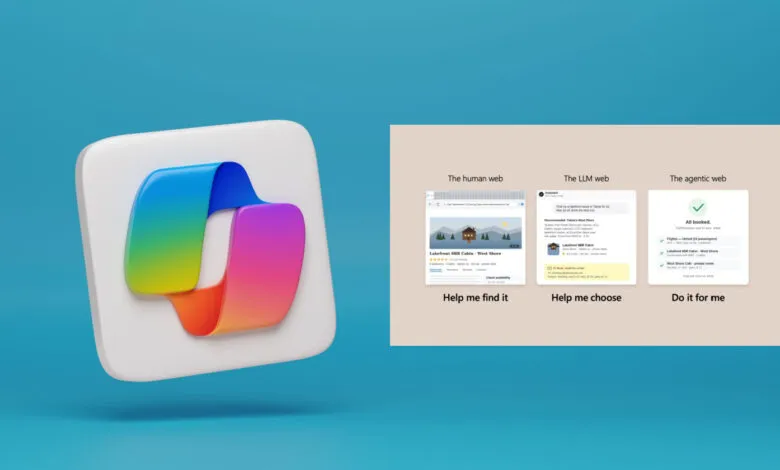
– The company describes three parallel customer journey realities: the Human web, the LLM web, and the Agentic web, where AI systems influence decisions before traditional ad interactions.
– A key tool is AI Visibility in Microsoft Clarity, which helps businesses understand how AI systems discover and cite their content, addressing a blind spot in performance reporting.
– The Audience Generation feature lets advertisers describe ideal customers in natural language, recommending targeting settings that can uncover adjacent audience segments for testing.
– Product data quality is becoming critical beyond Shopping campaigns, as clean, accurate data influences product surfacing across AI recommendations, comparison journeys, and agent-assisted buying.
Microsoft’s latest wave of AI updates is generating plenty of headlines, and most coverage will naturally zero in on the individual launches. New targeting options, diagnostics, commerce tools, Copilot enhancements, and campaign features all deserve attention. But what stood out to me was the broader vision connecting them.
Microsoft isn’t just talking about better ads. They’re describing a transformed internet where businesses must stay relevant to both human audiences and the AI systems that increasingly guide their decisions. In their announcement this week, AI agents are identified as the fastest-growing audience segment. The company reports that automated traffic is growing 8x faster than human traffic, AI-driven sessions nearly tripled in 2025, and agentic browser traffic has surged roughly 8,000% year over year. These visitors don’t browse like people. They evaluate, select, and act. If a brand’s data is weak, incomplete, or untrusted, they move on.
That reality reshapes what modern performance marketing may require. Visibility inside AI answers, stronger product data, better measurement, faster diagnostics, audience precision, and clearer control over automation all become more critical in this environment.
Google is pushing similar themes, especially around product feeds, automation, and AI-assisted search. But Microsoft’s recent announcements offer a distinct perspective on where advertiser value may emerge as discovery and buying behavior continue to evolve. Beneath the product updates lies a bigger question for PPC teams: how do you compete when the next valuable audience may not always be human?
Microsoft Is Selling a Different AI Future
Most platform announcements focus on what a new feature does. Microsoft spent more time explaining why advertiser behavior may need to change. Their framework centered on three parallel realities: people still searching on their own (the Human web), people using AI to compare options (the LLM web), and AI systems taking action on behalf of users (the Agentic web).
What they’re really saying is that customer journeys are less linear and are finally being recognized as such. For years, many PPC teams optimized around the click because it was the clearest measurable moment. Someone searched, clicked, landed, and converted. That model still matters, but it no longer explains every influence that leads to a sale.
If an AI assistant narrows the shortlist before a search happens, the brand has already won or lost ground. If a shopping assistant compares shipping speed, loyalty perks, and product availability in seconds, the decision may be shaped before the landing page visit. If an agent eventually completes more transactions directly, structured data and transaction readiness become part of media performance. That is why this announcement deserves more attention than a standard product roundup. Microsoft is describing a future where paid media performance depends on more than media settings.
Why This Matters for PPC Managers
Many advertisers still operate with a channel mindset, and those channels often sit within different teams (Search, SEO, CRM data, Analytics). That separation becomes harder to sustain if buying journeys are influenced by connected systems rather than isolated clicks. This is where the role of PPC teams can start to expand and evolve.
Strong practitioners will always need campaign skills. They also need to spot when the real constraint sits outside the account, bring the right teams together, and push improvements that create better inputs for the platform. Having these skills becomes your advantage as a PPC marketer down the road when campaign management and optimization become automated.
How Microsoft’s AI Vision Takes a Different Approach
Google remains the largest force in paid search and continues to launch strong AI updates across bidding, creative, search experiences, and campaign management. This is not about Google falling behind. What stood out to me was where Microsoft placed its focus. A lot of AI discussion still centers on better ads, faster automation, or the next big interface. Microsoft spent more time talking about how buying behavior is changing and what advertisers may need to do differently.
Their view suggests the audience is no longer only the customer. It can also be the AI system helping compare products, narrow options, recommend brands, or complete tasks on someone’s behalf. That is where I think Microsoft’s message becomes more interesting than a standard product launch. They are pushing marketers to think beyond clicks and impressions and pay closer attention to how decisions are being shaped before a traditional ad interaction ever happens. If that shift continues, many teams will realize they were optimizing the final step of the journey while missing the earlier moments that influenced the outcome.
AI Visibility in Microsoft Clarity Is Their Competitive Advantage
If I had to choose the most useful announcement for marketers, I would put AI Visibility in Microsoft Clarity near the top of the list. Why? Because it speaks to a blind spot many businesses may already have. A lot of performance reporting has been built around clicks, visits, and conversions that happen in trackable sessions. As AI tools start summarizing answers, citing brands, and influencing decisions before someone reaches a site, that model becomes less complete.
Some brands may already be winning attention in those moments. Others may be losing ground. Many likely cannot see either clearly today. That is what makes this update so interesting. Microsoft is giving businesses a way to understand how AI systems discover, cite, and surface their content. You do not need to advertise on Microsoft for that to matter. SEO teams, content teams, e-commerce leaders, and paid media teams all have a reason to care about how their brand appears in AI-driven experiences. My bigger view is that tools like this will eventually become normal. Right now, Microsoft is one of the first major platforms speaking clearly about the problem and trying to give marketers something actionable to measure.
Audience Generation Could Be More Useful Than It Sounds
Audience Generation may sound like another setup feature, but I think it deserves more attention than that. Microsoft describes it as an AI-powered audience assistant where advertisers can describe an ideal customer in natural language and receive recommended targeting settings, including demographics, locations, in-market signals, and dynamically generated audiences.
What interests me most is how this could improve strategic thinking, not just save time during campaign creation. Many advertisers already know their obvious audience. But strong audience strategy often depends on ideas a team does not think to test. For example, an advertiser may know they want “young professionals interested in fitness.” They may not think about adjacent areas where those consumers spend time, neighborhoods with stronger purchase intent, seasonal behaviors tied to events, or combinations of signals that reveal higher-value segments. That is where a tool like this can become valuable. Used thoughtfully, it can help marketers find new angles to test, challenge stale audience assumptions, and build stronger targeting plans than they may have created manually.
How Microsoft Is Turning That AI Vision Into Practical Tools
A broader vision only matters if it shows up in tools advertisers can actually use. That is where Microsoft’s recent updates become more interesting.
Explainability Is Part of the Product
One of the more useful launches was performance shift root-cause analysis inside the Microsoft Advertising Platform. When results move sharply, most marketers don’t need another dashboard. They need to know what changed and the clear “why.” Without the why, marketers can’t identify how to improve campaigns or pivot strategy. Getting to that answer faster can save hours of manual work. It can also help teams act with more confidence instead of making reactive changes. Google is thinking in a similar direction with its Ads Advisor experience. The opportunity for marketers is not choosing one assistant over another. It is using these tools to reduce analysis time and spend more time on better decisions.
Guardrails Still Matter
Microsoft also emphasized brand exclusions, term exclusions, and messaging constraints tied to AI-powered products like AI Max. It mimics where Google has gone with their AI Max direction and broader advertiser controls across automated products. That matters because many advertisers are not operating in a world where they can simply turn everything on and hope for the best. Legal review, brand standards, regulated categories, stakeholder approvals, and internal risk tolerance all shape how new tools get adopted. That is why control features deserve more attention than they usually get. They are often what make adoption possible in the first place.
Product Data Continues to Be Bigger Than Shopping Campaigns
One of the clearest signals from both Microsoft and Google right now is that product data is starting to matter far beyond traditional Shopping campaigns. Clean titles, accurate availability, pricing consistency, strong attributes, shipping details, and trustworthy structured data can now influence how products are surfaced across search experiences, AI recommendations, comparison journeys, and agent-assisted buying flows. That is exactly why I wrote last week that Google’s product feed strategy points to the future of retail discovery. Product data is no longer just supporting Shopping campaigns. It is becoming part of how platforms understand inventory, evaluate relevance, and decide what gets shown in newer discovery environments. Microsoft’s recent announcements point to the same shift through a different lens. Google is emphasizing Merchant Center and commerce surfaces. Microsoft is emphasizing agentic commerce, Copilot experiences, and AI visibility. Feed health is becoming a growth issue, not just an operations issue.
What Advertisers Are Saying
Navah Hopkins, the Microsoft Ads Liaison, took to LinkedIn to share her thoughts on these updates. She highlighted diagnostics, clearer explanations, and the idea that marketers should decide what they own, what they share with AI, and what they delegate. That framing reflects how adoption actually happens inside businesses. Teams rarely hand over everything at once. They test where trust has been earned. She also pointed to Microsoft Clarity as an increasingly valuable source of behavioral insight as AI-driven experiences grow.
Mark Creusen added: “The owning and sharing bit always pops for me. Way easier to chill about AI when you just mark out what’s ‘yours’ and what you’re happy to throw to the bots instead of trying to wrangle it all. Otherwise teams just end up dragging each other to burnout mountain.”
Frederick Vallaeys focused on another risk: invisibility. In his write-up after Microsoft’s partner event, he argued that many businesses may be unprepared for AI-driven discovery and cited Microsoft’s discussion around sites still blocking AI agents through robots.txt. He also highlighted strong early commerce statistics shared at the event, including higher purchase likelihood after Copilot interactions and conversion lifts tied to Brand Agents.
What This Means for Your Campaigns
The bigger lesson from Microsoft’s updates is that campaign performance may increasingly be shaped by factors that sit outside the traditional campaign build. That includes how your products are structured, how clean your measurement setup is, how well your audiences reflect real buying behavior, and whether your brand is visible in AI-assisted discovery moments before a search click ever happens.
Below are a few areas worth reviewing that can help shape a broader operating mindset:
- Product data quality: If your feeds are incomplete, outdated, or inconsistent, the risk may extend beyond Shopping campaigns. Product titles, availability, pricing, shipping details, and attributes can influence how platforms understand and surface your inventory across emerging discovery experiences.
Looking Ahead
Microsoft’s biggest advantage may not be trying to out-Google Google. It may be continuing to invest where it already has a credible edge: advertiser workflow tools, B2B audience intelligence through LinkedIn, clearer visibility into AI-driven discovery, and commerce experiences built for a world where assistants help shape decisions. That is a different lane, and it could be a valuable one for marketers if Microsoft keeps executing. The next year will likely tell us whether these announcements were a strong signal of where the platform is headed or simply another round of product updates.
Which of Microsoft’s new AI features, if any, would you seriously consider testing in your own campaigns?
(Source: Search Engine Journal)