Asus ROG Zephyrus G14 (2025) Review: Powerhouse Performance, Scorching Heat
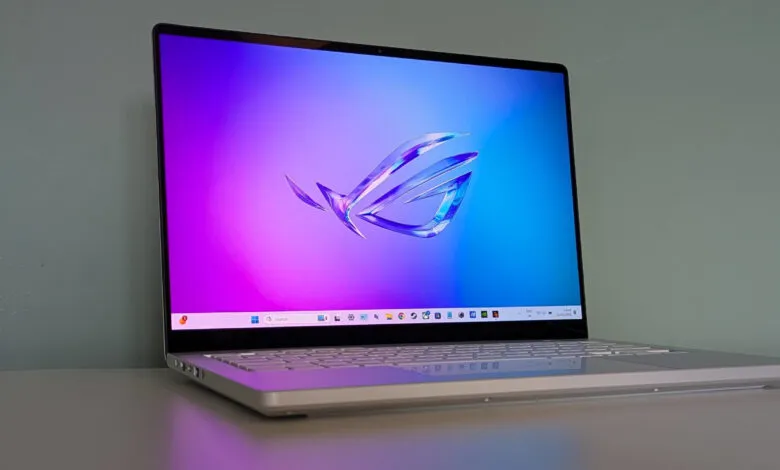
▼ Summary
– The Asus ROG Zephyrus G14 (2025) is a remarkably thin, lightweight, and compact gaming laptop that prioritizes portability without sacrificing high-end performance.
– It delivers excellent gaming performance with high frame rates on its sharp, vibrant 3K OLED display, even at maximum graphics settings.
– A significant drawback is its poor thermal management, as the laptop generates excessive fan noise and becomes uncomfortably hot on its rear and underside during use.
– The battery life is notably poor, lasting just over two and a half hours in testing, which is short even for a gaming laptop.
– Positioned at a premium price point starting above $2,000, it faces strong competition from rivals like the Razer Blade 14, which offer better cooling and battery life for a slightly higher cost.
The Asus ROG Zephyrus G14 (2025) delivers powerhouse gaming performance in a remarkably portable package, though its impressive capabilities come with significant thermal trade-offs. This compact machine proves that you don’t need a massive chassis to run the latest titles at high settings, but managing the resulting heat becomes a primary consideration for potential buyers. While it stands as a compelling option for gamers who prioritize mobility, the device faces stiff competition from rivals that offer better cooling solutions at similar price points.
One of the most striking features of this gaming laptop is its discreet appearance. It looks more like a premium ultrabook than a traditional gaming machine, with the only obvious gaming cue being a diagonal LED strip on the lid. The build quality feels solid throughout, with minimal lid wobble and premium materials that convey durability. Where it truly shines is in its physical dimensions, exceptionally thin and light by gaming laptop standards, making it genuinely easy to transport.
Despite its compact footprint, Asus managed to include a surprisingly comprehensive port selection. You get two USB-C ports (both supporting Power Delivery and DisplayPort), two USB-A connections, an HDMI port, a headset jack, and even a microSD card reader. This connectivity options put many larger gaming laptops to shame and enhances the device’s versatility for both gaming and productivity tasks.
Performance is where the Zephyrus G14 truly excels, with the RTX 5070 Ti configuration delivering exceptionally high frame rates even at maximum graphics settings. Testing with demanding titles like Cyberpunk 2077 showed consistently smooth gameplay between 200-230 frames per second with ray tracing enabled. The 14-inch OLED display complements this performance beautifully, offering vibrant colors, excellent contrast, and a sharp 3K resolution that makes games look stunning. The 120Hz refresh rate ensures buttery-smooth motion during fast-paced action.
However, achieving this level of performance comes with noticeable compromises. The cooling system produces significant fan noise even in Performance mode, and despite the audible effort, the laptop develops concerning heat levels in specific areas. While the keyboard deck remains reasonably cool during use, the area above the keyboard and the underside can become uncomfortably hot during extended gaming sessions. This thermal behavior suggests that using a laptop cooling pad would be advisable for serious gamers.
The typing experience deserves praise, with keys offering satisfying tactile feedback and decent travel distance. The keyboard layout is generally well-proportioned, though the arrow keys suffer from some size reduction. The large touchpad provides smooth navigation but can interfere with gaming due to its placement relative to the WASD keys. Fortunately, a dedicated shortcut key allows for quick disabling when needed.
Battery life represents another significant compromise, lasting just over two and a half hours during video playback tests. This falls short of what competing models like the Razer Blade 14 and Acer Nitro V 15 can achieve, both of which offer substantially longer runtime. The device does support quick charging, reaching full capacity in approximately 90 minutes, which somewhat mitigates the limited battery endurance.
Pricing positions the Zephyrus G14 at the premium end of the market, starting around $2,100 for the base configuration. While this undercuts direct competitors like the Razer Blade 14 slightly, the price difference may not justify choosing the Asus given the thermal limitations. The Razer alternative offers comparable performance with better heat management, while budget-conscious gamers might find the Acer Nitro V 15 provides adequate gaming capability at a significantly lower price point.
For those who value portability above all else and can tolerate the thermal characteristics, the Zephyrus G14 (2025) represents a viable option. Its combination of raw power, excellent display quality, and compact design will appeal to frequent travelers who need gaming capabilities on the go. However, users who prioritize cool, quiet operation or extended battery life would be better served by considering alternative options in the competitive compact gaming laptop segment.
(Source: techradar)