Next-Gen Social Apps: What Comes After Instagram
▼ Summary
– Retro is a photo-sharing app from ex-Instagram staff focused on private friend connections and memory recall, with privacy controls.
– Cosmos offers a curated, AI-free inspiration space for creatives, allowing color, keyword, or image searches and collaborative collections.
– Indigo provides a unified app to access both Mastodon and Bluesky decentralized networks, with cross-posting and customization tools.
– Corner is a social map app where users curate and share lists of favorite local and global places, with a Gen Z focus.
– Divine is a Vine reboot hosting original archived videos and enabling new six-second clips, backed by Twitter co-founder Jack Dorsey.
For years, the social media landscape has been dominated by familiar giants: Meta, Google, Snapchat, TikTok, and X. But a fresh wave of startups is challenging that status quo, building smaller, more personal networking experiences designed to connect people with close friends, niche interests, and tight-knit communities. If you’re ready to step away from Big Tech’s grip, these next-gen social apps offer compelling alternatives, many of which are already resonating with Gen Z and younger users eager to build new networks from scratch.
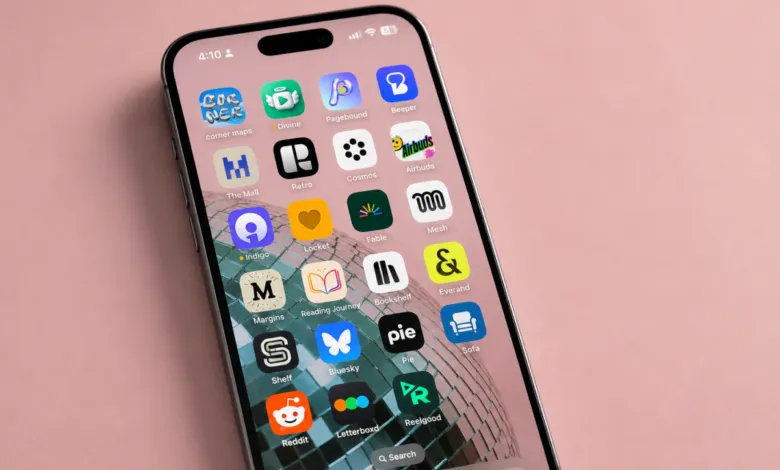
Retro is a thoughtfully designed photo-sharing app that prioritizes private connections with real friends. Created by two former Instagram team members, Nathan Sharp and Ryan Olson, it lets you highlight weekly photos, dump images into albums, and control who sees more than your most recent month’s content. It’s a refreshing return to authentic, memory-focused sharing without the noise.
Cosmos positions itself as a “space for inspiration,” offering an escape for creatives tired of AI-generated clutter on Pinterest. You can search by color, keyword, or image, curate a profile that reflects your personal taste, follow friends and tastemakers, and collaborate on collections. It also doubles as a shopping tool for discovering products that match your style.
Indigo solves the dilemma of choosing between Mastodon and Bluesky by letting you use both in one app. With a unified timeline, cross-posting capabilities, custom feeds, and extensive personalization tools, it’s a polished solution co-created by Ben McCarthy, known for the Obscura app line.
Corner calls itself “Google Maps but social,” and it lives up to that description. With over 125,000 users, it’s a platform for curating and sharing favorite places locally and abroad. You can “gatekeep” your lists or make them public, discovering everything from the best dumplings to queer nightlife and indie bookshops. It feels like Google Maps redesigned for 2026, with a distinctly Gen Z energy.
Divine is the Vine reboot you’ve been waiting for. Built by early Twitter employee Evan Henshaw-Plath, it hosts roughly 500,000 videos from nearly 100,000 original Vine creators and lets you make your own six-second loops. Early Vine stars like Lele Pons and JimmyHere have already returned, and the project has financial backing from Jack Dorsey’s nonprofit, “and Other Stuff.”
Mesh isn’t a social network in the traditional sense, but it’s an invaluable tool for managing your connections. Think of it as a personal CRM on steroids: it tracks bio changes, posts, and publications from your network across LinkedIn and X, then prompts you to reconnect on your own schedule. Acquired by Automattic in 2025, it plans deeper integration with Beeper, the universal messaging app.
Fable has evolved beyond a simple book tracker. Now bundled with Everand (owned by Scribd), it offers access to 1.5 million ebooks and audiobooks. Your ratings and reviews sync to Fable, where you can see recommendations and join virtual book clubs. It’s a serious contender to Goodreads, though the book-tracking space is crowded with options like Bookshelf, Reading Journey, Margins, TBR, and PageBound.
Locket pioneered the idea of putting friends directly on your iPhone’s Home Screen. Its live widget updates with new photos or messages, and you can respond via lightweight chat. Weekly photo dumps and artist follow features add to the appeal, making it a simple, intimate way to stay connected.
Airbuds finally gets music social networking right, something Apple and Spotify never quite managed. You share what you’re streaming, react with emojis or selfies, play clips of friends’ recent songs, and engage in music quizzes or taste-matching challenges. It’s a fun, interactive music community that feels natural and engaging.
The Mall turns online shopping into a social experience. Its universal feed tracks new releases from your favorite fashion brands and others with e-commerce storefronts. You can browse friends’ collections for inspiration and discover new brands tailored to your style. Currently available on iOS via waitlist.
Shelf offers a private way to organize your taste in music, movies, TV, books, and more. By default, your shelf is private, so it’s not about clout but about keeping a personal history of your interests. You can browse friends’ shelves for discovery, get personalized recaps, and explore trend breakdowns. It’s a refreshingly low-pressure alternative to traditional social media.
(Source: TechCrunch)