Why Googlebook Laptops Still Lack a Reason to Exist
▼ Summary
– Google’s “Googlebook” announcement showed the merger of Android and ChromeOS, with Gemini AI at its core, but only demonstrated a new “Magic Pointer” cursor feature that will also come to Chrome.
– The rest of the Googlebook preview included features like “Create your Widget” and phone mirroring, which are either coming to Android phones or already exist on ChromeOS.
– The author argues Google hasn’t given a compelling reason for Googlebook to exist, as it offers a blown-up Android experience without desktop-class apps like the Adobe suite.
– The author notes that smartphones are now powerful enough for most AI tasks, so Googlebook’s AI focus doesn’t differentiate it from existing devices.
– The author concludes that Googlebook made a poor first impression, lacking a clear vision compared to competitors like Apple’s MacBook Neo or even ChromeOS.
We have been hearing for months about Google’s quiet shift to bring its laptop ambitions under the Android umbrella. Now, with the official reveal of “Googlebook,” the company has finally shown its hand. And honestly, I am struggling to see why anyone should care.
This edition of the 9to5Google Weekender is part of our newsletter that breaks down the biggest stories in the Google ecosystem, with added analysis and perspective. You can sign up to get Weekender in your inbox every weekend, plus our daily roundups.
The big unveiling came earlier this week during “The Android Show,” where Google also detailed several new features headed to Android later this year. There is plenty to look forward to on the phone side. But when it comes to this new laptop effort, I am having a hard time getting excited.
Why the skepticism? Because Google has not actually shown anything of real substance yet. Let’s walk through what was shared.
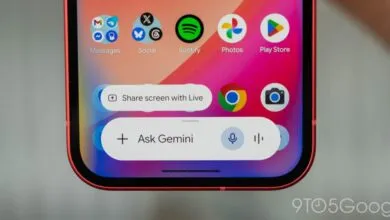
The announcement begins by positioning “Googlebook” as the fusion of Android and ChromeOS, “built with Gemini’s helpfulness at its core.” Naturally, Gemini is the star of the show. Google demonstrated a new cursor called Magic Pointer, which lets users activate Gemini and interact with on-screen content simply by wiggling the mouse. That is a genuinely clever idea. Giving users faster access to AI tools that already work best when they have context is smart. But here is the catch: that same feature is also coming to the Chrome browser. So it is not exclusive to this new hardware.
Beyond Magic Pointer, the rest of the “Googlebook” preview is surprisingly thin. There is support for “Create your Widget,” a feature that is also rolling out to Android phones. The laptop will let you mirror apps from your phone and offer “Quick Access” to files stored on your Android device. That last one? ChromeOS has had it for years.
And that is the entire feature set.
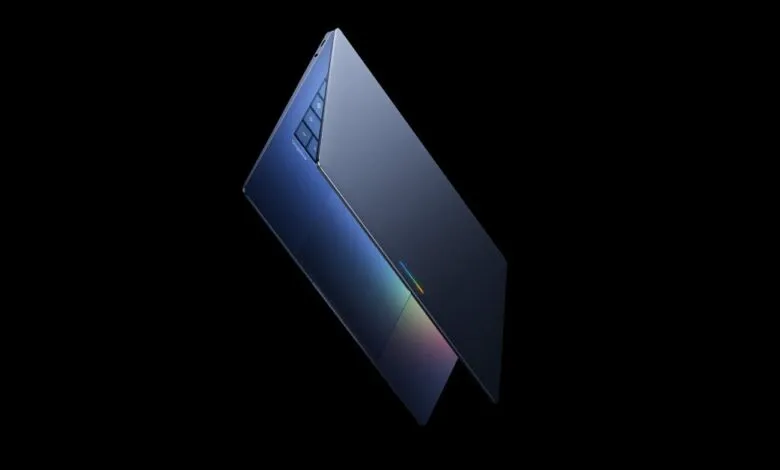
The announcement wraps up by hyping “premium hardware” and a signature “Glow Bar” that will define the “Googlebook” design language.
As first impressions go, this is a weak one. Google is essentially pitching a laptop that runs a blown-up version of Android, with a headline feature that is not even exclusive to the device. It feels like Google is trying to build an AI-first laptop, but that misses the point of why people buy laptops in 2026.
We all carry powerful computers in our pockets. Smartphones are already capable of handling most AI tasks, and AI itself does not care about the device you are using. Showing off demos where you can combine images a little faster does not sell me on using AI on a laptop. For younger generations especially, the smartphone is the primary device for getting things done. A laptop exists to fill the gaps: more demanding work like video or photo editing, or tasks where a keyboard and larger screen are simply more efficient. “Googlebook” will naturally handle the latter, but it is the former that raises concerns.
Android is a capable operating system. But unless Google is making serious moves to bring desktop-class applications like the full Adobe suite to this platform, I am not sure what “Googlebook” actually offers.
Even setting that aside, Google has not shown anything that proves this new platform is better than what it replaces. ChromeOS has a bad reputation, sure. But it secretly offers a lot of power through Android and Linux app support. Are we really throwing that away for a pure Android experience?
Google may have surprises in store. But “Googlebook” has made a terrible first impression. “It’s not ready yet” is not a valid excuse. With public opinion of Windows at a low point and Apple reshaping the narrative with the MacBook Neo, this is Google’s moment to go all in and clearly articulate its vision. A Magic Pointer and a few recycled ChromeOS features are simply not enough.
As things stand today, Google has not given me a reason to be excited about “Googlebook.” Or a reason for it to exist at all.
But maybe I am wrong. What do you think?
This Week’s Top Stories
The Android Show
While “Googlebook” dominated the headlines, Google’s “Android Show” also delivered news on “Gemini Intelligence” and some early details about Android 17.
Samsung releases One UI 8.5, drops One UI 9 in beta
Samsung had a busy week. One UI 8.5 is finally rolling out globally after months in beta, bringing the Android 16-based update to users. Meanwhile, One UI 9, based on Android 17, is now available on Galaxy S26 devices, though it appears to be a relatively minor update.
Fitbit Air first impressions
Before its full launch later this month, we went hands-on with Google’s new Fitbit Air. The hardware is impressive: lightweight, comfortable, and affordable. But we did run into some early software issues.
More Top Stories
From the rest of 9to5
9to5Mac: iOS 27’s new design leak sounds a lot like what I’ve been wanting most
9to5Toys: Microsoft’s upcoming compact cloud gaming controller with Wi-Fi 6 shows up in new leak
Electrek: Honda retreats to hybrids after failed EV bet triggers record $9 billion loss
Follow Ben: Twitter/X, Threads, Bluesky, and Instagram
(Source: 9to5google.com)