Apple Adds Cameras to New AirPods Pro 4: Here’s Why
▼ Summary
– Apple is developing new AirPods Pro models, possibly called AirPods Ultra or Pro 4, that integrate cameras for environmental sensing and AI-powered contextual awareness, aiming to enhance Siri’s interaction with surroundings.
– The cameras are designed for visual data capture, not photography, enabling features like object recognition, real-time language translation, and enhanced navigation without needing a phone.
– These AirPods are positioned as a strategic step toward lightweight augmented reality glasses, part of Apple’s broader plan to build an integrated wearable ecosystem.
– Key challenges include addressing privacy concerns about cameras, optimizing battery life for added processing, and improving Siri’s capabilities to compete with rivals like Google Assistant.
– The AirPods Pro 4 are expected to launch alongside the iPhone 18, though delays in AI or hardware optimization could push the release date.
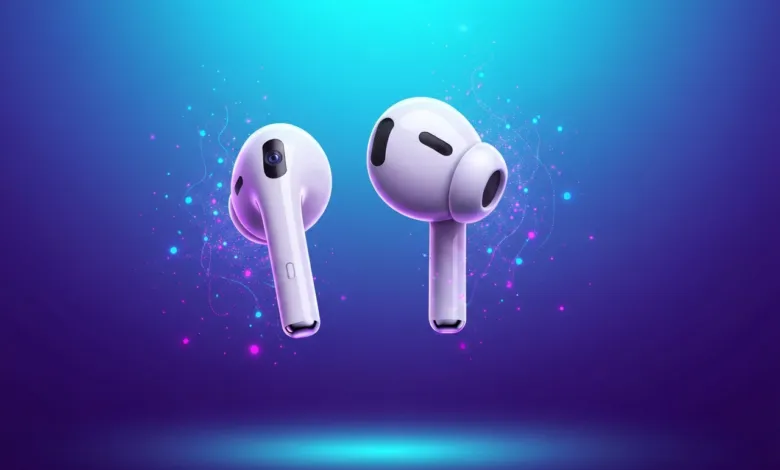
Apple is reportedly developing a next-generation version of its AirPods Pro, potentially branded as the AirPods Ultra or Pro 4, that will include built-in cameras. These are not for photography, but for environmental sensing and AI-powered contextual awareness, a move that could fundamentally reshape how users interact with wearable technology. By giving Siri a visual understanding of the world, these earbuds aim to make everyday tasks more seamless, positioning themselves as a stepping stone toward lightweight augmented reality (AR) glasses. Yet, the success of this ambitious project hinges on solving critical issues around privacy, battery life, and Siri’s current performance relative to competitors.
The core innovation in the AirPods Pro 4 is the integration of cameras designed solely to capture visual data from your surroundings. This allows Siri to recognize objects, read signs, or provide contextual information without you ever needing to pull out your iPhone. Imagine navigating a foreign city: your AirPods could identify a landmark, translate a menu, or offer directions entirely through voice interaction. This hands-free, context-aware capability is designed to make technology feel less intrusive and more intuitive, bridging the gap between current wearables and the AR future Apple envisions.
These cameras unlock a range of practical, real-world applications. Users could benefit from object and text recognition for scanning documents or identifying products. Real-time language translation could become effortless in multilingual settings. Enhanced navigation would provide precise, turn-by-turn guidance in complex environments like airports or busy city centers. By merging AI with environmental data, Apple aims to create a wearable that anticipates your needs, streamlining daily interactions and reducing the friction of switching between devices.
This project is a deliberate, strategic step toward Apple’s long-rumored AR glasses. By introducing AR-like features into a familiar, popular product like AirPods, Apple can gradually acclimate users to the concept of augmented reality. The AirPods Pro 4 are not an end product but a critical component of a larger ecosystem designed to seamlessly integrate wearables, iPhones, and Macs. This approach allows Apple to test and refine AI-driven, context-aware features before launching a more ambitious headset, solidifying its position at the forefront of wearable technology.
Despite the promise, significant hurdles remain. Privacy concerns are paramount; cameras on earbuds could be perceived as a surveillance risk. Apple must implement rigorous on-device processing and transparent data policies to build trust. Battery life is another major challenge, as continuous camera and AI processing will drain power quickly. Furthermore, Siri’s current capabilities lag behind Google Assistant and Amazon Alexa, potentially limiting the effectiveness of these new features. Overcoming these obstacles is essential for the AirPods Pro 4 to deliver on their potential.
Apple’s established ecosystem provides a powerful advantage. Seamless integration with iPhones, iPads, and Macs ensures a cohesive user experience, encouraging adoption among loyal customers. By framing the AirPods Pro 4 as a natural extension of existing devices, Apple can appeal to tech-savvy consumers eager for the latest innovations. This interconnected approach allows users to maximize the device’s potential, making it a compelling upgrade for those already invested in the Apple ecosystem.
The wearable market is increasingly crowded, with Google, Meta, and OpenAI all developing AI-powered devices. Apple’s entry with camera-enabled AirPods signals its ambition to lead in AI-driven user experiences. To maintain its edge, the product must offer practical, tangible benefits that surpass competitors. Focusing on usability, innovation, and deep ecosystem integration will be key to strengthening Apple’s position in this rapidly evolving landscape.
Consumer trends favor adoption. AirPods enjoy a massive installed base with frequent replacement cycles. Even if some users do not fully utilize the new AI features, the appeal of owning the latest Apple product will drive sales. Apple’s marketing will need to balance innovation with practicality, positioning the AirPods Pro 4 as both a functional tool and an aspirational accessory. This dual appeal is critical for attracting both early adopters and casual users.
The AirPods Pro 4 are expected to launch alongside the iPhone 18, marking a major milestone. However, delays in AI development or hardware optimization could push the release. Apple appears committed to ensuring the product meets its high standards before release, prioritizing quality and reliability over speed. As anticipation builds, these AirPods are poised to become one of the most eagerly awaited releases in the wearable tech sector, potentially defining the next era of smart accessories.
(Source: Geeky Gadgets)