Gen Z Cycles Streaming for Single Shows, Skips Full-Price Games
▼ Summary
– 59% of Gen Z actively subscribe and unsubscribe to streaming services to access a single title, indicating platform loyalty is effectively dead.
– 62% of Gen Z refuse to pay full price for video games, and 71% no longer buy physical music.
– Gen Z is 13% more likely to attend a movie’s opening weekend than older generations, viewing it as a social experience.
– Streaming platforms should focus on IP with longevity, such as sagas like “Stranger Things,” to foster long-term loyalty.
– For gaming, new monetization models like subscriptions and free-to-play are the front door, with revenue shifting to season passes and virtual goods.
More than half of Gen Z consumers are churning through streaming subscriptions at a rapid pace, signing up only long enough to watch a single show or film before canceling. A new study reveals that platform loyalty among younger audiences has effectively collapsed, as 59% of Gen Z users admit they subscribe and unsubscribe specifically to chase one title.
The “Generations In Play: 2026 Audience Insights Report,” produced by Dentsu and IGN Entertainment, also finds that 62% of Gen Z refuses to pay full price for video games. Instead, they prefer to sample titles through subscription services like Xbox Game Pass or PlayStation Plus. The shift toward access over ownership is even more pronounced in music and home entertainment: 71% of respondents have stopped buying physical music, and 70% no longer purchase hard copies of TV shows or movies.
Yet there is a bright spot for Hollywood. The data shows Gen Z is the most theatrical generation, with a 13% higher likelihood of attending a movie’s opening weekend compared to older audiences. This suggests young viewers still crave the communal experience of a cinema, even as they abandon physical media at home.
The study was independently conducted by Kantar and UC Berkeley, surveying 6,250 “highly-engaged entertainment consumers” across the U. S., U. K., and Australia. Karl Stewart, senior vice president of marketing at IGN Entertainment, explained the methodology: “Generations in Play 2026 was built on independent research conducted with Kantar and UC Berkeley, then synthesized through IGN Entertainment’s first-party behavioral platform, IMAGINE. That combination is what makes it a behavioral map rather than just another trend report.”
Stewart added that IGN has observed three generations form their media habits inside its ecosystem over three decades. “What this research confirms is that each generation is running on a fundamentally different operating system,” he said. “The brands working with Dentsu now have a clearer view of how to reach each one on its own terms.”
Brent Koning, Dentsu’s global head of gaming, elaborated on the findings in a Q&A. When asked why Gen Z is 13% more likely to attend opening weekend, he said the research overturns conventional wisdom. “Gen Z treats theatrical attendance as a social and communal experience rather than a screen-worshiping exercise,” Koning noted. “They are thinking about the theatre as part of a longer overall day or evening experience, not simply a one-and-done event.”
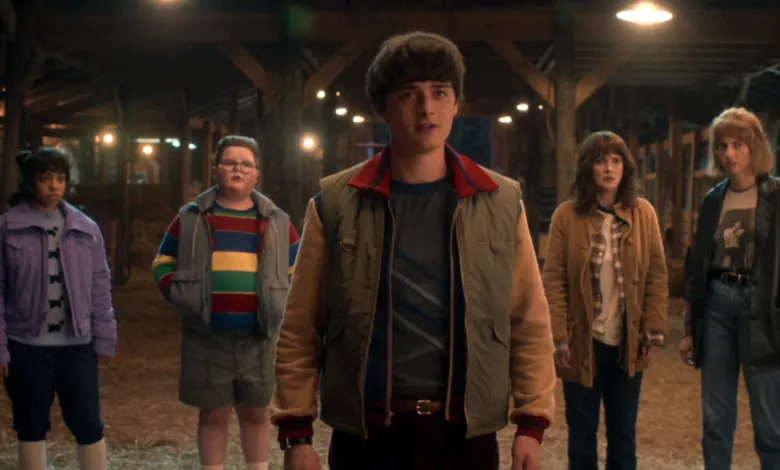
On the issue of streaming churn, Koning advised platforms to focus on IP with longevity rather than simply creating more content. “Loyalty actually centers on IP that has longevity. ‘Stranger Things,’ ‘Game of Thrones,’ ‘The Walking Dead’… these are sagas that keep audiences engaged and coming back for more,” he said. He also pointed out that when IP transitions between formats, it brings audiences with it, so those sagas can be borrowed.
Regarding sports consumption, Koning highlighted a generational divide in how content is delivered. “Gen Z wants to watch their golf on YouTube with Good Good, and Manchester United fans of a certain age would rather do a watch along with Mark Goldbridge,” he explained. “Rights holders treating broadcast and creator content as rival channels are kind of missing the point. Creator content is the gateway to the sport, not its replacement. You have to build parallel strategies for both.”
For gaming monetization, Koning said the question publishers should ask is how to convert access into commitment. “Subscriptions and free-to-play have become the regular front door nowadays, but what happens after players come through that door is where the new business models lie,” he said. “Season passes, in-world status, virtual goods… these are the new rules of monetization.”
Finally, on the broader shift to the access economy, Koning noted that music was the guinea pig. “The rest of entertainment is following the same curve but at quite different speeds, with some still living in denial,” he said. “While gaming and TV are mid-transition, theatrical and live events are the holdouts trying to find some margin in the experiential shift. Distributors can’t compete on catalogue size anymore, so they are trying desperately to be the platform you open first when you have twenty minutes. The home screen is the hottest battleground now.”
(Source: Variety)