PS5 DRM Expiry Issue Emerges, Sony Remains Silent

▼ Summary
– A theory suggests Sony’s new DRM issues stem from a 30-day offline license for digital purchases, designed to prevent refund fraud by requiring a PSN connection within 14 days to make the license permanent.
– The 30-day license check-in affects both PS4 and PS5 digital games, with tests showing games become unplayable offline if the CMOS battery is removed and the console cannot verify the license.
– The issue only impacts newly purchased digital software, not physical games or older purchases, and there is no evidence of permanent license revocation for failing the check-in.
– Some reports, including from preservation account Does It Play, indicate the DRM may be an unintentional bug caused by Sony fixing an exploit, not a deliberate feature.
– Sony has not issued an official statement, and inconsistencies in reporting (e.g., some users seeing the timer disappear) suggest the situation remains unresolved.
A credible theory surfaced on ResetEra from user Andshrew may finally explain the ongoing DRM confusion surrounding Sony’s PlayStation consoles. While the research appears sound and has been backed by preservation account Does It Play, no official statement from the manufacturer has been issued yet. So treat this as speculation for now.
The theory suggests that a temporary 30-day offline license is attached to newly purchased digital games. This is reportedly designed to close a loophole where some consumers downloaded games, immediately took their consoles offline, requested refunds, and kept the software. According to Andshrew’s findings, the license becomes permanent once you connect to the PlayStation Network (PSN) 14 days after purchase. From then on, the game remains playable offline indefinitely.
This timeline cleverly exceeds Sony’s two-week refund window, which applies only to digital software that has never been launched. The idea is that this new licensing system blocks the exploit. It also explains why some users saw the 30-day expiry timer disappear after reconnecting online.
Still, one has to wonder how many people were actually abusing this loophole and whether the inconvenience is worth it for Sony. If the theory holds, it should be easy to verify in the coming weeks. But a straightforward comment from the company would be far simpler.
To recap: newly purchased digital games now carry a 30-day offline license. If you connect to PSN anytime after day 14, the license becomes permanent, granting you offline access forever.
As of Tuesday, Sony has remained silent on the reported DRM issue. It’s now confirmed that the 30-day expiry timer affects software bought within the past few weeks on both PS5 and PS4. Whether this is intentional or a bug is still unknown.
Statements from customer support have appeared on social media, with some suggesting the 30-day check-in was deliberately added after the March 2026 system update. Others are less definitive. As always, take such statements with caution. Some agents may be chatbots, and many aren’t equipped to handle these technical questions.
We’ll keep pushing for an official statement from Sony and update as soon as we hear back.
There was earlier confusion about whether the PS5 was impacted by this alleged DRM, which requires an internet connection every 30 days to verify game licenses. Unlike the PS4, the PS5’s Game Information screen doesn’t show an expiry disclaimer. But Spawn Wave’s video confirms the issue affects PS5 as well.
In his test, four games were examined: Saint Slayer and Vampire Crawlers (both purchased digitally that day), Crimson Desert (purchased digitally about a month ago), and Pragmata (a physical copy). All booted normally when online and offline. However, after removing the CMOS battery from his PS5 Pro to confuse the console’s time verifier, Saint Slayer and Vampire Crawlers failed to load. Crimson Desert booted but showed a lock symbol, while Pragmata worked fine. The error read: “Can’t use this content. Can’t connect to the server to verify your license. Wait a while, then try again.”
Reconnecting to the internet restored all games to normal.
The biggest concern is that Sony may have introduced a new form of DRM. At best, this is a bug that needs fixing. If left unresolved, a failed CMOS battery combined with offline Sony servers could render digital purchases worthless. It’s worth repeating that there’s no evidence of licenses being revoked for missing the check-in, and only newly purchased games are affected. Still, the mounting evidence demands a response from the company.
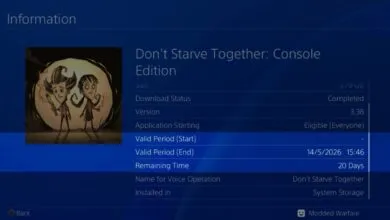
Monday afternoon brought no comment from Sony. The story hasn’t moved much since the weekend, but Modded Warfare’s video provides a solid summary. As noted, this issue currently only affects newly purchased PS4 software, with PS5 impact still unclear. The video shows that newly purchased games require a PSN handshake every 30 days. Removing the CMOS battery locks those games, making them unplayable. The timer resets when you reconnect, but the preservation risks are obvious if Sony ever shuts down its servers.
We still don’t know if this is a bug or intentional DRM. Only Sony can clarify.
Original reports caused alarm among PS5 and PS4 owners, suggesting owned software would expire after 30 days. But caution is warranted: reporting is inconsistent, Sony hasn’t commented, and some suggest the issue may have already been resolved.
What we know: some newly purchased PS4 games display a 30-day validity period. Our testing shows this only affects PS4 games bought recently. We couldn’t replicate it on PS5, though some claim they saw it there. Some reports say the timer resets after connecting online, but we couldn’t confirm that. Other unverified claims say licenses are revoked if you don’t connect before expiry, which would be lawsuit territory.
The issue first surfaced in late March but gained traction only now. A similar problem with PS3 and PS Vita in 2022 was resolved. Destruction Games, a preservation-focused account, says removing or dying CMOS batteries will lock games with the validity window. The CMOS battery keeps date and time for Trophy authentication, and it has a finite lifespan. An earlier PS4 firmware required PSN verification after battery replacement, raising fears about future offline play. Sony patched that in v9.00, making this new issue surprising five years later.
Some Reddit users claim the validity period recently disappeared from their games. Does It Play, citing an anonymous insider, says the issue is “unintentional” and resulted from Sony breaking something while fixing an exploit. They add that Sony has known about the confusing UI for a while but didn’t see it as urgent.
Our view: this is likely an error. The reporting is too inconsistent for it to be working as intended. Some see the error, others don’t, and it seems limited to newly purchased PS4 software. We’ll criticize Sony if this turns out to be intentional DRM, but for now, with no company communication and plenty of misinformation, stay calm. We’ll update when we hear back from Sony.
(Source: Push Square)