OpenAI Engineer Boosts Sales for Companies
▼ Summary
– Sarang Gupta developed an early interest in hands-on problem-solving, fixing household items and learning programming to create practical applications like a restaurant automation program.
– He pursued a dual degree in industrial engineering and business management, later building and launching entrepreneurial projects like a student lunch-planning app while in university.
– His career began in finance at Goldman Sachs, where he automated trade reconciliation processes, shifting his focus toward using data and software to improve operational workflows.
– After a master’s in data science, he worked at Asana leading the launch of AI-powered features before joining OpenAI in 2025 to help businesses adopt ChatGPT and build marketing models.
– Gupta is an IEEE senior member who uses the organization’s publications and network to stay current in AI and connect with other engineers, aligning with his goal to broadly disseminate AI’s benefits.
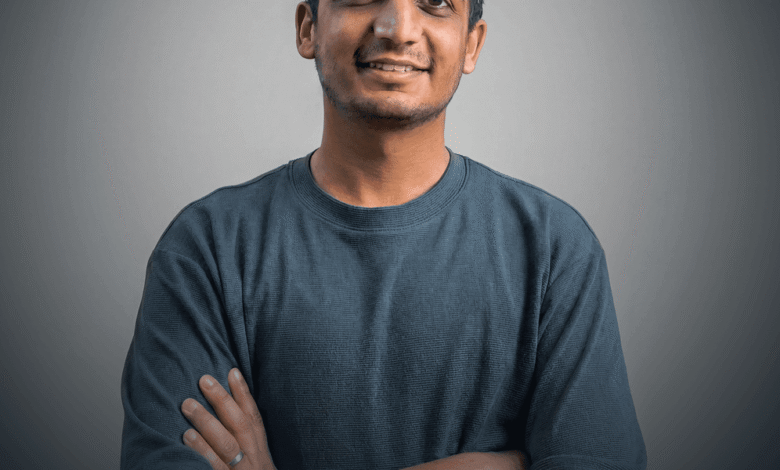
From a childhood spent fixing household appliances to a career shaping the future of artificial intelligence, Sarang Gupta’s journey is defined by a practical desire to improve how things work. Today, as a data science staff member at OpenAI, he applies that mindset to a critical mission: helping businesses successfully adopt and benefit from technologies like ChatGPT. His role on the go-to-market (GTM) team involves building the data-driven models and systems that empower sales and marketing, ensuring AI’s advantages reach a broad audience.
Gupta’s technical curiosity emerged early. After fixing a broken microwave plug with his father as a boy, he moved from hardware to software by age 11, learning Basic and Logo. He even created a program to automate ordering for a local restaurant. This blend of hands-on problem-solving and interest in real-world application guided his education. In high school in Tamil Nadu, India, he focused on physics, chemistry, and math, always leaning toward the practical uses of engineering. “I was always more interested in the applications: how to sell that technology or how it ties to the real world,” he recalls.
He pursued this vision at the Hong Kong University of Science and Technology through a dual degree program, earning bachelor’s degrees in industrial engineering and business management in just four years. Alongside his studies, he experimented with entrepreneurship, building a student lunch-planning app and running a small campus advertising business. After graduating in 2016, he entered the finance sector as an analyst at Goldman Sachs in Hong Kong.
At the bank, Gupta worked in operations, focusing on process optimization. His task was to identify and eliminate bottlenecks in trade settlement workflows. He spotted a major opportunity in automating trade reconciliation, a manual process where analysts compared spreadsheets to ensure transaction accuracy. By building internal tools that pulled data, ran checks, and flagged discrepancies automatically, he freed his team from repetitive tasks. This experience was formative. “It was my first real exposure to how software and data systems could dramatically improve operational workflows,” he says. It also cemented his desire to dive deeper into technology.
In 2018, with data science and AI gaining prominence, Gupta decided to return to academia. He enrolled in a dedicated master’s program in data science at Columbia University, focusing on the applied side of machine learning. A standout project involved collaborating with the Brown Institute and The Philadelphia Inquirer to address “news deserts,” or communities receiving scant coverage. Gupta’s team built tools to extract geographic data from articles, visually mapping coverage gaps so the newspaper could better allocate its reporting resources. This project resonated deeply with him, merging technical skill with tangible social impact.
After earning his degree in 2020, Gupta moved to San Francisco to work as a product data scientist at Asana. He focused on A/B testing for new features until a pivotal opportunity arose in 2022: leading the launch of Asana Intelligence, an internal team tasked with building AI-powered features into the platform. Despite initial doubts about his experience, he embraced the challenge. Within six months, his team delivered features like automatic project summaries and Smart Status, an AI tool that generates status updates by analyzing tasks and deadlines. “When you finally launch the thing you’ve been working on, and you see the usage go up, it’s exhilarating,” Gupta notes.
This period coincided with the launch of ChatGPT, which shifted his work toward assessing large language models (LLMs). Captivated by the generative AI inflection point, Gupta joined OpenAI in September 2025. The transition has been intense. “The pace is very different. Things move quickly,” he says. At OpenAI, he works with the marketing team to develop models that measure channel efficiency and impact, helping the company better understand and serve its customers.
Gupta, an IEEE senior member since 2024, actively uses IEEE resources to stay current. He regularly consults IEEE publications and the IEEE Xplore Digital Library to follow advancements in AI and data science. He also values the member directory for networking. “It’s been a great way to connect with other engineers,” he says. “It inspires me, and it’s something I really enjoy and cherish.”
Looking ahead, Gupta is committed to the AI space, driven by its vast potential for task automation and personal enhancement. He shares that AI tools have even helped him improve his own writing and communication. His overarching goal remains clear: “I want AI’s benefits to reach as many people as possible.” Whether optimizing business processes or empowering individuals, he is focused on unlocking practical solutions that make a measurable difference.
(Source: Ieee.org)