Google AI Helps Boston Dynamics Robot Dog Read Gauges
▼ Summary
– Google DeepMind’s new Gemini Robotics-ER 1.6 model enables robots to perform high-level reasoning and task planning.
– This AI model allows robots, like Boston Dynamics’ Spot, to accurately read complex analog gauges and thermometers.
– The robots can also conduct visual inspections using sight glasses to see inside tanks and pipes.
– These capabilities are being tested for robotic inspection duties in industrial facilities, including Hyundai factories.
– The improvements result from an ongoing collaboration between Google DeepMind and Boston Dynamics.
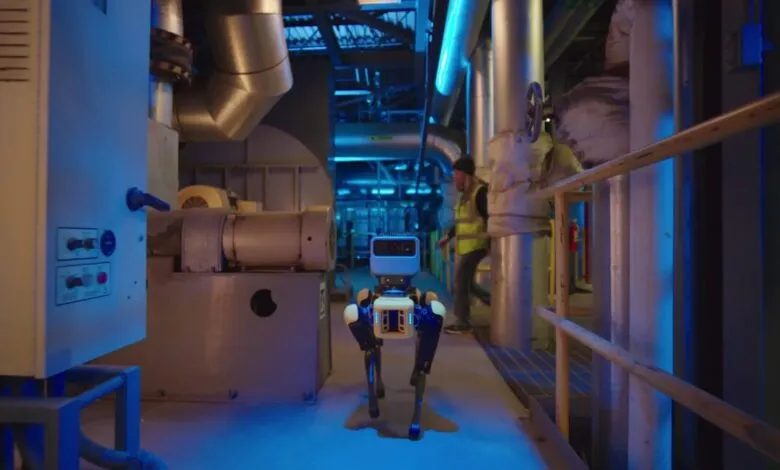
A significant advancement in industrial automation is emerging as Boston Dynamics’ Spot robot gains the ability to interpret analog instruments. This new skill is powered by a specialized AI model from Google DeepMind, designed to give machines better embodied reasoning for navigating and understanding physical workspaces. The technology enables the quadruped robot to autonomously read pressure gauges and thermometers while patrolling factory floors, transforming routine inspection tasks.
The core of this upgrade is the newly released Gemini Robotics-ER 1.6 model, which acts as a high-level reasoning system for robotic planning and task execution. A key breakthrough is its capacity for complex visual reasoning, allowing it to accurately decipher the multiple needles, fluid levels, and tick marks on intricate dials. It can also perform visual inspections through sight glasses, the transparent windows on tanks and pipes. This performance leap is a direct result of the strategic partnership between Google DeepMind and Boston Dynamics.
Boston Dynamics is actively deploying its robots, including both quadruped and humanoid models, across various industrial settings. Trials are underway within facilities owned by its parent company, Hyundai Motor Group. The Spot robot is being tested as a mobile inspector that patrols large areas, a role that demands precise interpretation of diverse visual data from equipment. By automating these visual inspection duties, the technology aims to enhance safety and efficiency, allowing human workers to focus on more complex problem-solving.
(Source: Ars Technica)