F1 Japan: Fast Corners Altered for 2026 Grand Prix
▼ Summary
– Formula 1 is entering an unplanned five-week break because the Gulf war has canceled races in Bahrain and Saudi Arabia.
– The 2026 cars have less aerodynamic downforce, allowing them to follow each other more closely and creating more exciting racing than in 2025.
– A major new challenge is the 2026 hybrid power unit, which requires heavy energy regeneration that is difficult on tracks with few braking zones like Suzuka.
– The new hybrid rules successfully attracted manufacturers like Audi and Ford by aiming for a near 50:50 split between combustion and electric power.
– F1 will hold crisis talks on April 9 to address the energy deficit problems caused by the new hybrid systems.
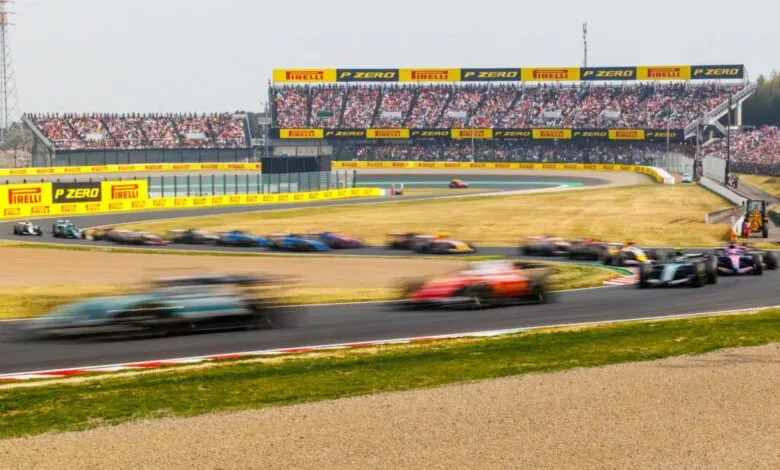
The 2026 Formula 1 season has reached an unexpected pause. Following the Japanese Grand Prix, the championship enters a five-week break after geopolitical tensions forced the cancellation of races in Bahrain and Saudi Arabia. This interruption may provide a necessary moment for reflection across the paddock. Teams, drivers, and officials are still grappling with the profound challenges introduced by this new generation of cars, challenges that were starkly evident at the iconic Suzuka Circuit.
On a positive note, the racing itself delivered genuine excitement, a dramatic improvement over the processional and overtake-starved events of 2025. A significant reduction in aerodynamic downforce has successfully allowed cars to follow more closely through corners. Yet, the weekend also highlighted a critical and growing concern: the sport may have backed itself into a technological corner with its latest hybrid power unit regulations. The gravity of the situation is acknowledged at the highest levels, with crisis talks scheduled for April 9 to seek a viable path forward.
The core issue lies in the new hybrid power trains. These systems pair a 1.6-liter V6 internal combustion engine, producing 400 kW, with a 350 kW electric motor. Achieving this near 50/50 power split was a cornerstone of the 2026 rules, designed explicitly to attract major automotive manufacturers. The strategy worked, drawing commitments from Audi, Ford, Cadillac, and Honda. The electric motor is powered by a 1.1 kWh battery, but depending on the circuit, cars are permitted to deploy between 8 and 9 MJ of electrical energy per lap. This creates a fundamental requirement: drivers must recover that substantial energy while on track.
This was manageable at a circuit like Shanghai several weeks ago. Its layout, filled with low- and medium-speed corners and heavy braking zones, allowed for multiple battery recharges per lap through regenerative braking. Suzuka presented a completely different challenge. With far fewer opportunities to brake heavily, drivers could only regenerate approximately 3.65 MJ of the permitted 8 MJ this past weekend. At full deployment, that leaves less than 12 seconds of available electric boost. To compensate for this severe energy deficit, teams are forced to use a technique called superclipping. This involves diverting power from the internal combustion engine through the electric motor, effectively using it as a generator, which saps overall performance and contradicts the system’s intended design.
(Source: Ars Technica)