NASA’s Nuclear Propulsion Plan for Mars Missions
▼ Summary
– NASA is pausing work on the lunar Gateway space station to focus on building a surface base on the Moon.
– Approximately $4.5 billion has been spent on Gateway hardware, with some components already built and in testing.
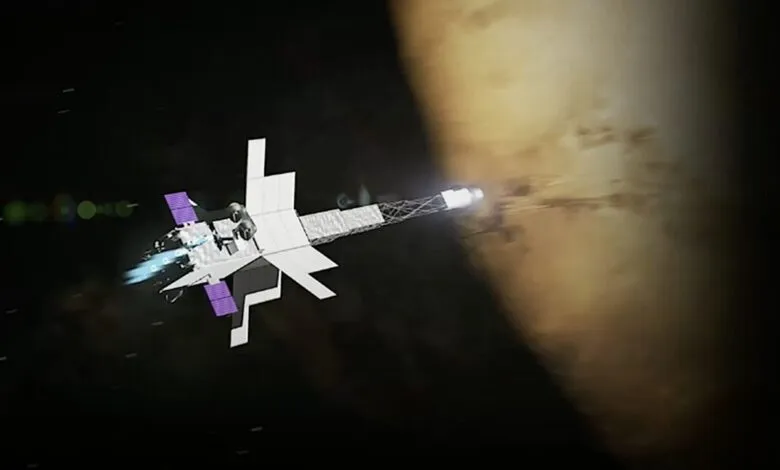
– The core Power and Propulsion Element will be repurposed for a new nuclear-electric propulsion demonstration mission.
– NASA has a history of canceled nuclear propulsion projects, including Project Prometheus and the more recent DRACO program.
– Nuclear technology is valuable for deep-space missions and lunar bases due to its efficiency and ability to operate without sunlight.
NASA’s recent strategic pivot, shifting focus from a lunar-orbiting Gateway station to establishing a permanent surface base on the Moon, aligns with broader national space policy objectives. This move, however, leaves a significant question: what becomes of the substantial hardware already developed for the Gateway program? Since its formal inception in 2019, the agency has invested nearly $4.5 billion into this human-tended lunar outpost, with components currently under construction and testing at facilities worldwide.
The most flight-ready element is the Gateway’s Power and Propulsion Element (PPE). Under the revised exploration plan, NASA intends to repurpose this core module for a groundbreaking demonstration of nuclear-electric propulsion in deep space. This announcement marks the latest chapter in a long and costly history of developing nuclear technologies for spaceflight, an endeavor that has seen more starts and stops than tangible successes.
Over two decades ago, NASA initiated Project Prometheus, a nuclear-electric propulsion effort that was ultimately canceled. More recently, a collaboration with the Pentagon’s DARPA agency began work on the DRACO program, which aimed to develop a nuclear-thermal rocket engine. That program was also terminated last year. Despite these setbacks, the potential benefits of nuclear power in space remain compelling. For robotic missions venturing into the outer solar system, where sunlight is too weak for effective solar power, nuclear reactors provide a reliable energy source. Closer to home, they could sustain lunar habitats and equipment throughout the two-week-long lunar night.
The advantages of nuclear propulsion are clear in terms of efficiency. The technology generally manifests in two forms. Nuclear-thermal rockets generate higher thrust by using a reactor to superheat a propellant like liquid hydrogen. In contrast, nuclear-electric engines offer lower thrust but far greater fuel efficiency over long durations. The defunct DRACO mission was pursuing the nuclear-thermal approach, while NASA’s newly proposed demonstration will focus on the nuclear-electric path, leveraging the existing Power and Propulsion Element as its testbed.
(Source: Ars Technica)