AI Adoption High, But Consumer Trust Remains Low
▼ Summary
– AI usage is rising quickly with 60% of consumers using AI tools weekly, but trust is lagging as only 13% say they completely trust it.
– AI is actively influencing purchases, with 41% of consumers buying an AI-recommended product in the past six months and 27% researching one further.
– Consumers are grouped into four AI personas based on usage and trust, with Enthusiasts (high use/trust) and Evaluators (high use/caution) together making up nearly 70%.
– The most frequent AI users, like Enthusiasts, are also the most critical, with 40% noticing low-quality AI-generated marketing content multiple times per week.
– Consumer AI interactions are becoming more conversational, with 78% including personal context in prompts and 30% using eight or more words.
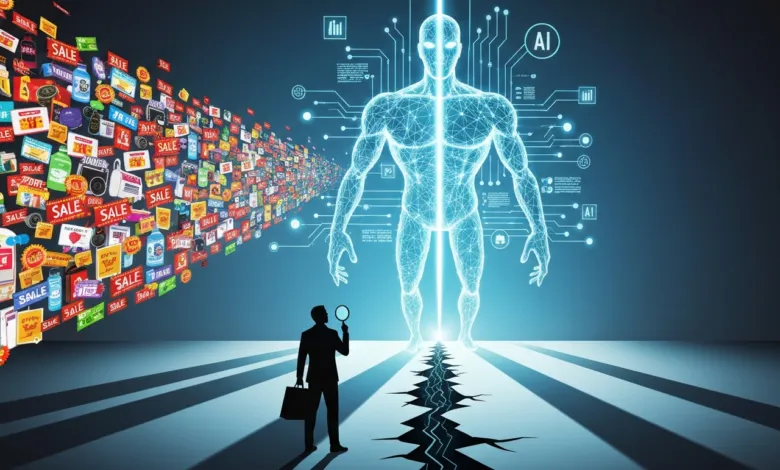
Artificial intelligence is rapidly becoming a standard part of the shopping journey, yet a significant disconnect exists between how often people use it and how much they actually trust it. A recent global survey of nearly 8,000 consumers reveals that while 60% now use AI tools at least weekly, a mere 13% say they completely trust AI. This gap between adoption and confidence is the central challenge for modern marketers. Consumers are clearly integrating AI into their research and decision-making processes, but they are doing so with a healthy dose of skepticism, treating it as a helpful assistant rather than an unquestioned expert.
The influence on purchasing decisions is already substantial. The data shows that 41% of consumers purchased a product recommended by AI within the past six months, with another 27% saying AI introduced them to a product they later researched further. This positions AI as a powerful discovery engine, with over one in five consumers now starting their journey with AI tools when learning or evaluating a purchase. However, trust in the technology is not keeping pace with this rapid adoption. People are using AI to narrow choices and gather ideas, but they still feel a strong need to verify the information before taking action.
To better understand this dynamic, the research segments consumers into four distinct personas based on their usage frequency and trust levels. AI Enthusiasts, representing about 26% of consumers, combine high usage with relatively high trust and are already incorporating AI into everyday decisions. Notably, 43% of this group have purchased multiple previously unknown products based on an AI recommendation. AI Evaluators also use AI frequently but more cautiously, relying on it for research while validating suggestions before buying. Together, these two groups account for nearly 70% of the consumer base.
The remaining personas are more reserved. AI Skeptics understand and occasionally use the technology but remain wary of its role in marketing. AI Holdouts, making up about 21% of consumers, rarely use AI for shopping and strongly prefer human guidance. The key insight is that the divide is not simply between users and non-users; it’s a spectrum ranging from trust to cautious use to outright skepticism.
Interestingly, the study uncovered that the most frequent AI users are also its harshest critics. Among AI Enthusiasts, 40% report noticing low-quality or generic AI-generated marketing content multiple times per week. This suggests that as consumers become more familiar with AI tools, they also become more adept at recognizing when brands rely too heavily on automated, subpar content. For marketers, this raises the stakes: poor AI execution will likely be spotted first by the very audience most engaged with AI-driven experiences.
Consumer interaction with AI is also evolving search behavior. Unlike traditional keyword-driven queries, AI prompts are becoming longer and more conversational. The research found that 78% of consumers include emotional or personal context in their prompts at least some of the time, with 30% now using eight or more words when interacting with these systems.
The overarching conclusion points to a clear reality: AI use is mainstreaming, but trust is developing at a much slower rate. Consumers are comfortable using AI to explore and discover, but their trust in the answers depends entirely on the quality and usefulness of the experience. For brands, simply appearing in AI-driven environments is only the first step. The more difficult task is earning the confidence of consumers who are still deciding how much to believe.
(Source: MarTech)