McKinsey’s Blueprint for Positionless Marketing Success
▼ Summary
– The primary obstacle to using AI in marketing effectively is not the technology itself, but organizational human factors that prevent teams from acting independently and decisively.
– Successful transformation requires a “Positionless Marketing” model, which frees marketers from fixed roles and silos to execute tasks independently, as demonstrated by Caesars Entertainment drastically reducing campaign time.
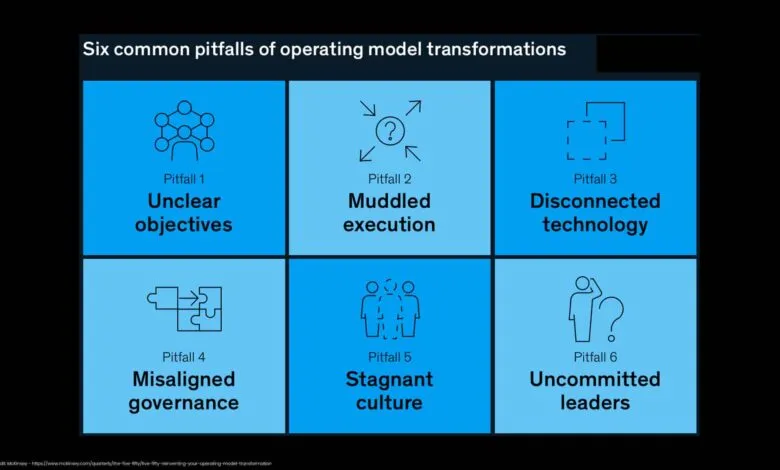
– According to McKinsey, six key pitfalls block this transition, with five being organizational issues like unclear objectives, misaligned governance, and a stagnant culture, not technological limitations.
– Implementing this change involves a fundamental organizational redesign around value creation, focusing on clear outcomes, streamlined processes, and empowering talent beyond traditional job titles.
– The results of adopting Positionless Marketing include dramatically faster execution and greater impact, as shown by cases where campaign times were slashed from weeks to hours and purchase rates increased significantly.
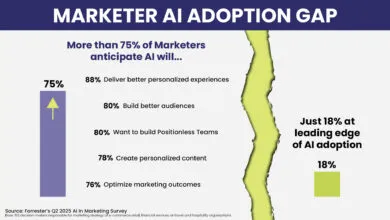
Acquiring the latest AI tools for marketing is a straightforward purchase, but empowering marketing teams to wield that technology independently, decisively, and at scale presents a far greater challenge. The primary barrier isn’t the software; it’s the organization itself. For decades, marketers have pursued the same fundamental objective: moving in lockstep with the consumer. This means reacting to individual needs in real time, delivering pertinent messages at the perfect moment, and maximizing customer lifetime value to foster loyalty and boost returns. While the goal remains constant, the technological means to achieve it are in a state of perpetual advancement.
Modern AI offers unparalleled capabilities for analyzing consumer data and generating personalized communications instantly. Yet, the pace of technological innovation continues to outstrip most teams’ ability to harness it effectively. The core issue is structural. Most marketing departments are not organized to extract the full potential from the tools they already own. This doesn’t mean progress is absent. Teams that have successfully bridged this gap are witnessing transformative outcomes.
Consider the experience of Caesars Entertainment, which slashed campaign execution time from five days to a mere five minutes. Asadul Shah, Vice President of Player Revenue Strategy, described the shift as “a massive game changer.” Previously, marketers manually compiled targeting lists across disparate systems, coordinated with multiple platforms, and waited for engineers, analysts, and creative teams before launching any initiative. This resulted in an operation too sluggish to target players with the necessary precision and timeliness.
By partnering with Optimove to unify data, orchestration, and execution on a single platform, Caesars revolutionized its approach. Shah observed that marketing became “not just more efficient; it is more responsive to what our players actually need in the moment.” Crucially, technology alone wasn’t the silver bullet. Caesars adopted a Positionless Marketing framework, liberating its team from rigid roles and granting every marketer the authority to execute any task independently. The platform provided the capability, but Caesars built the team structure to activate it. This synergy between technology and human ingenuity made the positionless model a reality.
Organizations achieving this level of transformation are executing what McKinsey terms “organizing to value.” This philosophy involves a fundamental rethinking of structure, decision rights, and accountability, reshaping a marketing team into an engine built for continuous value delivery. In practical terms, this means evolving into a positionless team focused on optimizing customer lifetime value, driving loyalty, and delivering measurable ROI. The journey, however, is often blocked by common organizational pitfalls.
McKinsey’s research reveals six fundamental barriers that prevent companies from adopting Positionless Marketing. Only one involves technology, while the remaining five stem from internal leadership and team dynamics. A common starting point is ambiguous goals, which steer teams toward measuring activities rather than genuine business results. When objectives are poorly defined, work naturally reverts to a series of role-based tasks and handoffs, losing sight of the ultimate impact.
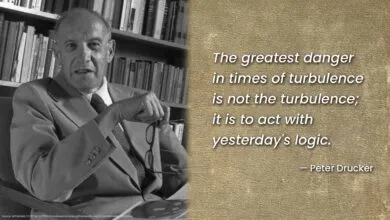
These symptoms define an assembly-line approach to marketing, the exact opposite of a positionless model. In such rigid structures, valuable insights stay locked with analysts, creative vision resides solely with designers, and activation depends entirely on engineers. Value consistently disappears in the spaces between these specialized silos. This assembly-line concept was built for control and predictability, not for the core purpose of any business, which, as Peter Drucker noted, is to create and keep a customer.
To break this cycle, McKinsey proposes an “Organize to Value” framework. This blueprint advocates for a foundational shift: structuring the entire organization around creating value for customers, defining clear outcomes, and enabling execution with as little friction as possible. This approach sets the stage for a positionless operation, building an environment where teams can effectively work to retain customers for life. Practical implementation starts by applying these principles to the areas that most directly affect how work gets done.
The first step is to forge a shared sense of purpose and encourage empowered behaviors. Leaders must clarify the underlying “why” behind every action, going beyond simply stating what needs to be delivered. This common understanding allows team members to make swift, independent decisions without needing to seek permission for each minor choice. Next, work must be restructured around specific outcomes, with clear accountability assigned for each result. Examine current workflows to pinpoint where approval steps cause delays without contributing meaningful value. Introduce cross-functional flexibility in stages, avoiding the disruption of a complete overnight reorganization.
Leadership plays a crucial role in establishing a transparent decision-to-execution flow that includes explicit expectations for speed. Processes should be designed to facilitate smooth workflow, not to function as tools of control. Effective governance provides necessary consistency without becoming a barrier to action. When it comes to technology and AI, the goal should be to unlock entirely new value, not just to automate outdated tasks. Similarly, talent should be deployed based on the demands of the work at hand, not restricted by formal job titles or traditional departmental boundaries.
The ultimate aim is to empower marketers to operate beyond their conventional roles. When purpose, accountability, process, and technology are properly aligned, marketers can step across functional lines and execute campaigns independently, truly becoming positionless players. In this model, success is measured by the value delivered to the business and the customer, not by compliance with a rigid job description.
This organizational transformation requires sustained commitment, but the cost of preserving an inefficient assembly-line structure is far greater. This model was never designed to deliver customer value in the first place. The results from early adopters validate the effort. Beyond the case of Caesars, the organization FDJ United adopted positionless marketing to eliminate platform overlaps and reduce dependencies between teams. They managed to cut campaign launch time from six weeks down to a few hours, with end-to-end campaigns now executed by a single marketer. A major retailer achieved a 16.1x increase in purchase rates while saving 300 working hours per year without increasing team size, demonstrating how the framework scales impact without requiring more personnel.
The urgency to act is accelerating. The necessary tools, including advanced AI and integrated data platforms, already exist. They can generate creative variations, identify real-time signals, and coordinate actions across channels instantly. However, simply overlaying this sophisticated technology onto an old assembly-line structure creates only a superficial illusion of progress. The same inefficient handoffs and delays remain intact. Speed might improve at the individual task level, but the central bottleneck in the process persists unchanged.
External pressures continue to mount. Customers increasingly expect personalized, experiences, and competitive landscapes grow more complex by the day. Marketing leaders who postpone this evolution will likely discover their rivals have already completed the transformation. Those who move first are securing a decisive competitive advantage. McKinsey’s analysis corroborates what top-performing organizations already understand: the right organizational structure and the right technology work together to unleash human potential. Even the most talented individuals will underperform when trapped in an ineffective system, and the world’s most advanced AI tools will fail when constrained by an outdated operational model. The path forward is clearly mapped, and Positionless Marketing represents the necessary destination.
(Source: MarTech)