OpenAI Wins Legal Battle Against xAI in Trade Secrets Case
▼ Summary
– A US court dismissed xAI’s lawsuit against OpenAI, granting xAI the option to refile with modified claims.
– The judge ruled that xAI’s current claims did not point to any misconduct by OpenAI itself, only to the actions of former employees who left for OpenAI.
– Specific allegations involved employees retaining chats or accessing information, but the court found no indication OpenAI directed this behavior.
– This legal battle is part of a broader, contentious conflict between OpenAI and Elon Musk, who leads xAI and co-founded OpenAI.
– In response to the ruling, OpenAI called the lawsuit a baseless part of Musk’s “ongoing campaign of harassment.”
A significant legal victory for OpenAI arrived this week as a federal judge dismissed a lawsuit from Elon Musk’s xAI alleging trade secret theft and employee poaching. The ruling underscores the high bar for proving corporate misconduct in competitive hiring landscapes, particularly within the fiercely contested artificial intelligence sector. While xAI retains the option to amend and refile its complaint, the court found the current allegations insufficient to demonstrate any unlawful actions by OpenAI itself.
US District Judge Rita F. Lin granted OpenAI’s motion to dismiss the case, though she allowed xAI the chance to revise its legal claims. In her decision, Judge Lin pointed out a critical flaw in xAI’s argument: the lawsuit failed to connect the alleged misconduct of former employees directly to OpenAI’s corporate behavior. The judge noted that “xAI does not point to any misconduct by OpenAI” in its current claims, instead focusing on the actions of eight individuals who departed for the rival firm around the same period. There was no evidence presented that OpenAI directed those employees’ actions while they were still working at xAI.
The complaint detailed several accusations against former staff. It claimed two employees stole source code while communicating with an OpenAI recruiter, though the filing contained no allegation that the recruiter instructed them to do so. Other claims involved employees retaining work chats on personal devices, refusing to provide certifications about confidential information, and one unsuccessful attempt to access xAI data after starting at OpenAI. Judge Lin determined that none of these individual actions, as currently alleged, constituted illegal behavior attributable to OpenAI. The ruling emphasized the absence of specific allegations regarding the conduct of OpenAI as a company.
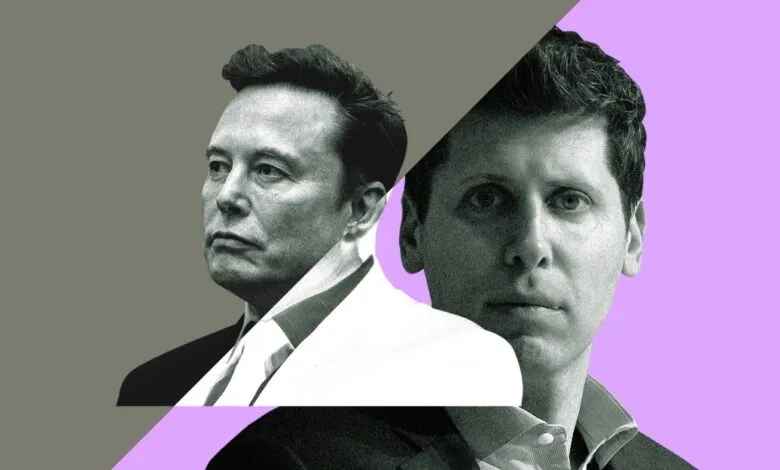
This legal skirmish forms just one part of a complex and increasingly acrimonious feud between OpenAI and Elon Musk, who is both the CEO of xAI and a former co-founder of OpenAI. The relationship between Musk and OpenAI CEO Sam Altman has deteriorated into a series of public disputes, featuring pointed exchanges on social media and a growing docket of lawsuits. Their most consequential legal battle centers on OpenAI’s structural shift from a nonprofit to a for-profit capped entity, a case slated for a jury trial later this year.
Following the court’s decision, OpenAI issued a statement on the social media platform X. The company welcomed the ruling, characterizing the lawsuit as “baseless” and describing it as “yet another front in Mr. Musk’s ongoing campaign of harassment.” This strong language reflects the deepening animosity between the two camps as they compete for talent, technological supremacy, and influence in shaping the future of AI. The dismissal, while not necessarily the final word on the matter, represents a procedural setback for xAI’s efforts to legally challenge OpenAI’s hiring practices.
(Source: The Verge)