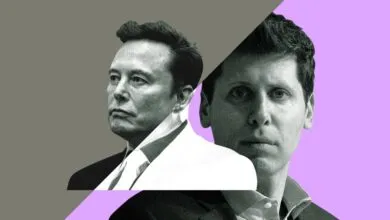
Elon Musk loses legal battle against Sam Altman
▼ Summary
– The advisory jury in Musk v. Altman reached a unanimous verdict, finding two claims barred by the statute of limitations and a third claim failing as a result.
– US District Judge Yvonne Gonzalez Rogers accepted the jury’s decision, though the verdict is technically non-binding as it is advisory.
– The jury found Musk’s claim for breach of charitable trust and the associated claim against Microsoft were barred by the statute of limitations, along with restitution.
– Musk stated on X that he will appeal, arguing the ruling was based on a “calendar technicality” rather than the merits of the case.
– Microsoft spokesperson Alex Haurek welcomed the jury’s decision, stating the facts and timeline were clear, and Microsoft remains committed to its work with OpenAI.
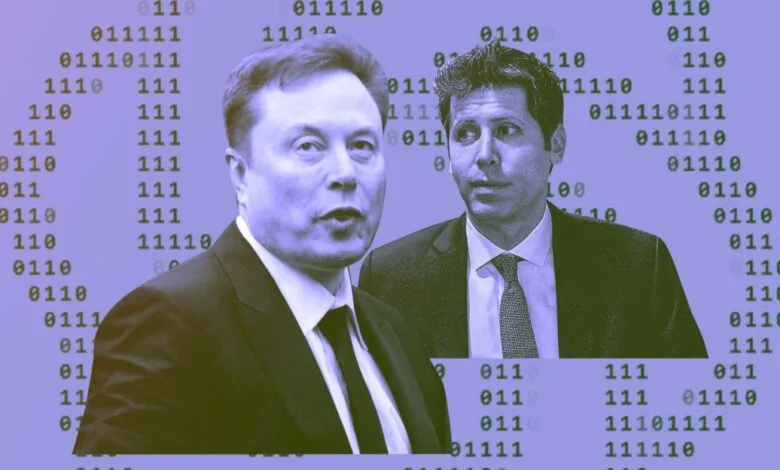
After roughly two hours of deliberation, a jury has delivered a unanimous verdict in the high-stakes Musk v. Altman case, the most closely watched tech trial of the year. The panel determined that two of Musk’s claims were time-barred by the statute of limitations, and a third claim collapsed as a direct result of that dismissal.
It is critical to note that this was an advisory jury, meaning its role was purely consultative. The group’s verdict is technically non-binding, serving only to provide an additional perspective to the court. The final authority rests with US District Judge Yvonne Gonzalez Rogers, who has accepted the jury’s decision.
Specifically, the jury found that Musk’s breach of charitable trust claim was filed too late, and the related allegation that Microsoft aided and abetted that breach also failed. The request for restitution was similarly rejected on procedural grounds.
OpenAI has not yet commented publicly on the outcome. On X, Musk posted a statement vowing to appeal, arguing that the judge and jury ruled “on a calendar technicality” rather than the “merits of the case.” He insisted that “there is no question to anyone following the case in detail that Altman & Brockman did in fact enrich themselves by stealing a charity. The only question is WHEN they did it!”
A Microsoft spokesperson, Alex Haurek, responded with a statement emphasizing clarity. “The facts and the timeline in this case have long been clear, and we welcome the jury’s decision to dismiss these claims as untimely. We remain committed to our work with OpenAI to advance and scale AI for people and organizations around the world.”
The trial, which dominated a federal courtroom in Oakland for three weeks, centered on Musk’s core accusation that OpenAI had abandoned its founding mission and that his initial funding was specifically designated for a nonprofit entity. Musk alleged that OpenAI CEO Sam Altman and company president Greg Brockman breached the organization’s charitable trust and engaged in unjust enrichment at his expense. He also accused Microsoft of complicity in that breach. Throughout the proceedings, both sides used every opportunity to discredit one another, and through salacious evidence and eyebrow-raising testimony, neither emerged looking more trustworthy than when the trial began.
(Source: The Verge)