Smart Glasses in Court: A Privacy Nightmare

▼ Summary
– A judge ordered the removal of Meta’s smart glasses in court, warning that unauthorized recording would be considered contempt.
– Courts have long-standing federal and state rules banning recording devices to protect proceedings, witnesses, and jurors.
– Smart glasses pose a unique challenge as they can record covertly, potentially bypassing bans and risking privacy.
– As smart glasses become more common and feature-rich, enforcing recording bans in courtrooms may become more difficult.
– Judges have broad authority to control devices in their courtrooms and are likely to respond strongly to prevent improper recording.
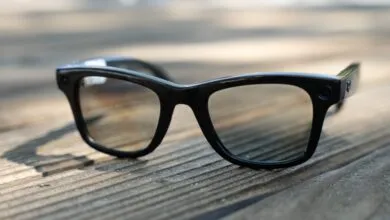
The presence of smart glasses in courtrooms is creating a significant legal and privacy dilemma, as their discreet recording capabilities challenge long-standing prohibitions on capturing court proceedings. This issue came to a head recently when Meta CEO Mark Zuckerberg’s team arrived at a Los Angeles courthouse wearing camera-equipped Ray-Ban smart glasses. Judge Carolyn Kuhl issued a stern warning, demanding the deletion of any recordings and ordering all individuals to remove their AI glasses, underscoring the judiciary’s immediate concern over covert surveillance. Even after this directive, at least one person was later observed wearing the glasses near jurors in a hallway, though attorneys clarified the device was not actively recording at that moment.
As these wearable devices grow in popularity, preventing unauthorized recording in sensitive legal environments is becoming increasingly difficult. The fundamental challenge lies in the glasses’ ability to capture audio and video without obvious signs of operation, potentially compromising the privacy and security of witnesses, jurors, and all case participants. While courtroom restrictions on recording are not new, the discreet nature of smart glasses represents a modern escalation of an old problem.
Federal courts have prohibited the recording or broadcasting of criminal proceedings since 1946 under Rule 53 of the Federal Rules of Criminal Procedure. This ban was expanded in 1972 by the Judicial Conference of the United States to include civil cases and areas surrounding courtrooms. A temporary exception for teleconferencing was made during the COVID-19 pandemic, but standard restrictions resumed in 2023. State laws exhibit more variation, with most permitting some form of recording, though typically with constraints such as judicial approval, limitations on what can be filmed, or specific allowances for credentialed media.
The rationale for these bans is well-established. Cameras can intimidate witnesses or jurors, alter behavior, and violate privacy, especially in cases involving minors who are often granted anonymity. Smart glasses like Meta’s introduce a new layer of risk because they can record without a judge’s knowledge or consent. Darío Maestro, Legal Director at the Surveillance Technology Oversight Project (STOP), emphasizes that these devices warrant strict scrutiny. He notes that courts have long restricted recording devices to protect proceedings’ integrity, and covertly recording glasses deserve at least the same level of control as a smartphone pointed at the witness stand.
Enforcement poses a practical hurdle. Unlike a phone that can be stored away, individuals who rely on smart glasses for vision correction may find a removal order burdensome. With Meta selling millions of pairs and companies like Apple reportedly developing their own models, widespread adoption could make consistent enforcement of bans more complex. Although the glasses typically include an LED indicator to signal recording, this light can be disabled or easily overlooked. Furthermore, their capabilities are expanding; a recent internal Meta memo revealed plans to integrate facial recognition technology, which would allow users to identify people by name, raising even greater privacy alarms.
For now, judges retain broad authority to control what devices enter their courtrooms. Alan Butler, Executive Director of the Electronic Privacy Information Center (EPIC), expects most judges to respond forcefully against any improper recording attempts, similar to Judge Kuhl’s decisive action. He pointedly observed that Meta’s legal team arriving at a trial about their platform’s dangers while equipped with invasive recording glasses was particularly ironic, but the judge’s firm response demonstrated that such conduct will not be tolerated. While outright bans on smart glasses in U.S. courtrooms remain uncommon, specific judicial orders are currently the primary and most direct method for addressing this emerging threat to judicial privacy and security.
(Source: The Verge)