TikTok’s Attention Mastery vs. Email’s Blind Spot

▼ Summary
– Email marketing remains highly effective, but its design often feels outdated and disconnected from modern online behavior.
– Modern attention spans have been reshaped by platforms like TikTok, which treat attention as something that must be immediately earned and sustained.
– Unlike TikTok’s intentional use of stacked visual, verbal, and text hooks, email marketing typically relies too heavily on the subject line alone.
– Email should adopt lessons from TikTok, such as using early CTAs and designing for scanning and interruption, rather than assuming linear reading.
– To stay relevant, email must evolve by understanding how people actually allocate attention, not by clinging to outdated 2001-era assumptions.
While predictions of its demise surface with every new digital trend, email marketing continues to deliver exceptional ROI and remains a cornerstone of direct customer communication. Yet, despite its proven effectiveness, a significant portion of promotional email feels outdated, seemingly crafted for an audience and an attention landscape that no longer exists. The core issue isn’t just about mobile optimization or button size; it’s a fundamental disconnect between email design and modern online behavior. Today’s consumers have been conditioned by platforms like TikTok, Instagram Reels, and YouTube Shorts, which operate on principles of instant engagement and earned attention, a stark contrast to the linear, text-heavy emails that still dominate many inboxes.
The real design challenge for email runs deeper than aesthetics. For years, promotional messages have followed a largely unchanged formula, born in an era of quieter inboxes and longer attention spans. Readers would open, start at the top, and scroll through. Now, attention is a fiercely contested commodity, fractured by constant notifications and infinite scrolls. Human behavior has evolved, but email marketing strategies have remained stubbornly static. While email retains advantages in trust and conversion, its approach to capturing and holding interest feels increasingly out of step with reality.
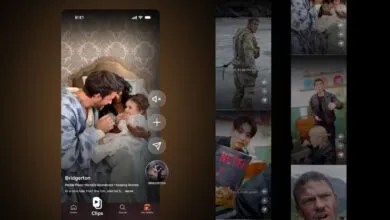
To understand this shift, we can look to the platform that has rewritten the rules: TikTok. Its success isn’t rooted in viral dances or trends, but in its brutal, real-time experiment in human attention. On TikTok, attention is never assumed; it is borrowed, negotiated, and can be revoked in an instant. Creators have mere seconds to justify a viewer’s continued engagement, knowing that a failure to captivate means an immediate, effortless swipe away. This environment has forced creators to master the art of the hook, not as a single element, but as a stacked system designed to stop the scroll.
Successful TikTok content typically employs a multi-hook model. A visual hook, using movement, contrast, or disruption, catches the eye immediately. A verbal hook, often delivered in the first few words of the audio, introduces curiosity or tension. A text hook, via on-screen captions, reinforces or reframes the moment, adding intrigue rather than straightforward explanation. These elements work in concert as an intentional system to earn and sustain attention.
Interestingly, email technically possesses similar components. The subject line acts as a verbal hook, the preheader offers supporting context, and the design provides visual signals. The critical difference lies in execution. TikTok uses these hooks as an integrated set, while email often treats them as separate, sometimes accidental, decisions. Most email campaigns place an unsustainable burden on the subject line alone, expecting it to be short, compelling, and clickable all at once, while the preheader is wasted and the opening copy defaults to bland context-setting. This reliance on a single point of failure is a fragile strategy in today’s crowded attention economy.
Structural differences are equally revealing. On TikTok, calls to action are introduced early and often, using low-effort micro-engagements like “keep watching” or “comment if you agree” to build momentum. Email, by contrast, traditionally saves the primary CTA for the bottom of the message, operating on the outdated assumption that readers will linearly consume all content before deciding to act. Furthermore, TikTok thrives on leveraging curiosity, using open loops and unresolved questions to pull viewers in. Email marketers, often wary of ambiguity, frequently prioritize clarity and brevity to a fault, resulting in a sea of safe, generic messages that fail to spark initial interest.
The path forward for email isn’t about mimicking TikTok’s aesthetic. It’s about adopting a new mental model that aligns with how people actually allocate attention. We must redesign email to accommodate interruption and scanning, not ideal reading conditions. Engagement should be viewed as momentum built in stages, not a single click assumed at the open. This requires intentional action: stacking subject lines and preheaders to work together, using opening copy to earn the scroll rather than explain the email, testing CTAs earlier in the message flow, and designing for decision-making in seconds.
Email’s greatest strength is channel ownership, a marked advantage over the “rented land” of social media algorithms. However, this is no reason for complacency. For email to remain relevant, its evolution must be rooted in a deeper understanding of contemporary attention spans and decision-making processes. The opportunity isn’t to compete with TikTok on its terms, but to learn from the truths it has revealed about audience behavior. By incorporating these insights, designing for earned attention, built momentum, and strategic curiosity, marketers can create email experiences that are far more engaging, valuable, and effective in the modern digital landscape.
(Source: MarTech)