Beware of Fake Casio Scientific Calculators
▼ Summary
– Scientific calculators are advanced tools that handle complex math, with Casio being popular for students due to its intuitive algebraic notation.
– Fake versions of Casio’s older fx-991EX model are being sold, often with performance issues and calculation errors, as Casio pushes newer models.
– The newer fx-991CW model is criticized for its changed interface, which disrupts user muscle memory and is considered a poor design.
– Dedicated calculators are preferred over smartphone apps for exams, simplicity, and the tactile experience that aids learning.
– There is a hope that Casio will revert to a better user interface in future models and address the market for counterfeit calculators.
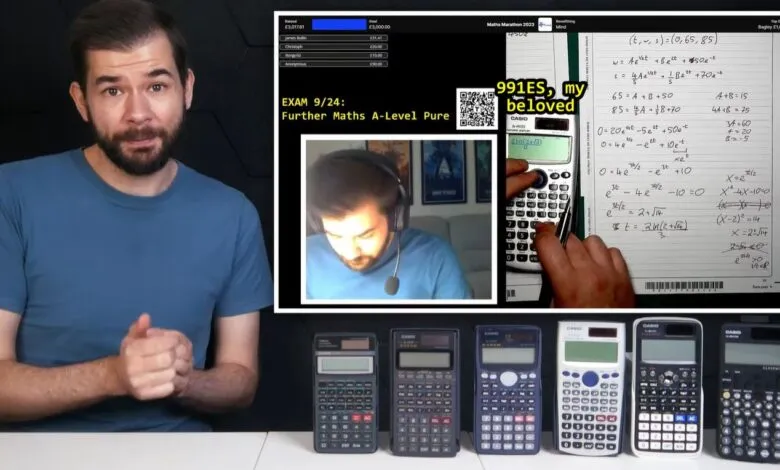
Scientific calculators have transformed from simple arithmetic tools into powerful pocket computers capable of handling complex statistics and algebra. For students, Casio’s fx-991 series remains a top choice, largely due to its use of traditional algebraic notation that mirrors how problems are written on paper. However, the popularity of these models has led to a troubling market of counterfeit devices, as detailed in a recent investigation. These fakes are causing significant problems for educators and families alike.
The evolution of the fx-991 line sees updates every few years, with suffix letters indicating the release year. The fx-991EX model, launched in 2015, became a classroom staple. Its successor, the fx-991CW, introduced a completely redesigned interface that has been widely criticized for abandoning the familiar layout that users relied on for building muscle memory. This shift has led many teachers to continue recommending the older EX model, creating sustained demand even as Casio attempted to phase it out.
This sustained demand for the discontinued EX model has opened the door for counterfeiters. Parents seeking affordable school supplies often encounter these convincing-looking fakes online. While a smartphone app could theoretically replace a physical calculator, exam regulations and the benefits of a dedicated, tactile device keep scientific calculators essential. The physical buttons and consistent layout promote faster, more accurate input during high-pressure tests, something a touchscreen cannot reliably replicate.
The counterfeit EX calculators suffer from a range of serious flaws. Performance is often noticeably slower, and the firmware can contain critical omissions or outright mathematical errors, rendering them useless for accurate calculations. The quality varies based on the internal components used, but all fakes compromise reliability. This places a burden on teachers who must verify the functionality of each student’s device and on parents who believe they are purchasing a legitimate tool.
In response to the backlash, Casio has quietly walked back some of the most controversial changes in the CW model, acknowledging the issues its redesign caused. The situation highlights the difficult balance between innovation and usability. For now, the market is stuck between an unpopular new model and a flood of unreliable copies of the old favorite. The hope is that Casio’s next iteration will fully return to the intuitive EX-style interface while implementing stronger measures to protect its brand and customers from damaging counterfeits.
(Source: Hackaday)