Apple Home AI vs Amazon & Google: Which Camera Wins?
▼ Summary
– The article uses a personal anecdote about lost chickens to illustrate the limitations of basic motion alerts in smart home security cameras.
– AI-powered text descriptions offer immediate context for camera events, potentially allowing users to react faster than waiting for video buffers.
– A comparative test evaluates AI features from Apple, Ring, and Google, focusing on notification speed, accuracy, and reliability.
– The author notes that while all three platforms provide significant improvements over basic alerts, Apple charges significantly more for its service.
– The ultimate value of AI in security lies not just in description but in intelligently determining what activity matters and triggering appropriate automations.
For years, the standard smart home alert has been a generic “motion detected” ping. This lack of context often leads to notification fatigue or, worse, missed critical events. The author recounts a personal tragedy where ignored alerts led to the loss of four chickens because the camera failed to distinguish between harmless movement and a predator. Today, AI-powered text descriptions promise to solve this by providing immediate, specific details about what triggered an alert, allowing homeowners to assess situations before video buffers.
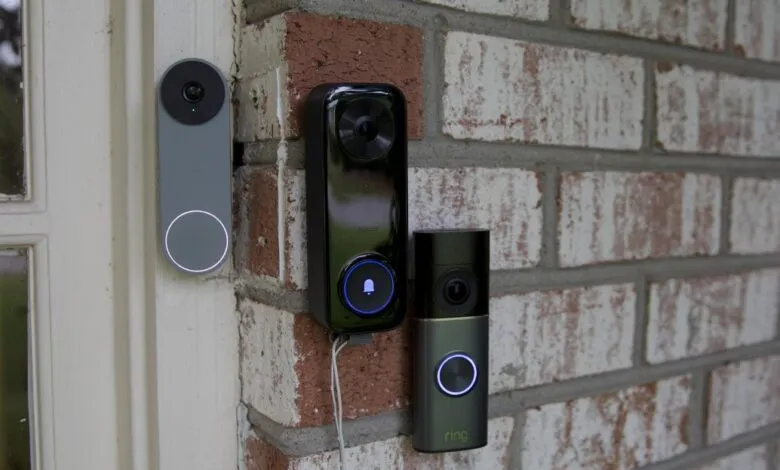
However, a significant disparity exists in how these features are priced and implemented across major platforms. While Apple, Google, and Amazon Ring all offer AI-driven insights, Apple’s pricing structure is notably higher for fewer cameras. This raises the question: does the premium cost of Apple Intelligence justify its performance compared to competitors?
Pricing Models and Feature Sets
The core functionality of AI security cameras involves generating natural language summaries of video feeds. Apple HomeKit Secure Video integrates Apple Intelligence to provide text descriptions such as “a dog sat on the floor” or “someone delivered a package.” It also offers natural-language search, event stitching, and a reduce notifications feature that groups related alerts. These capabilities are bundled into iCloud Plus plans: $10 monthly for one camera, $30 for two, and $60 for up to five cameras. Notably, Apple caps support at five devices, regardless of the tier.
In contrast, Google Nest and Amazon Ring offer more scalable pricing. Google’s Gemini-powered service costs $20 per month for unlimited cameras, including video search, facial recognition, and a daily activity digest. Similarly, Amazon’s Ring plan charges $20 monthly for unlimited coverage, adding features like unusual event detection and clip recording. Ring allows 24/7 continuous recording on wired models for an additional $3 per camera, whereas Apple’s base subscription does not include continuous recording.
Accuracy and Descriptive Quality
Testing reveals significant differences in how accurately each platform describes scenes. Ring and Google generally provide richer context, identifying subjects with greater specificity. For instance, while Apple might report “someone is walking in the yard,” Ring and Google often specify “a delivery person” or “a person in uniform.” In vehicle identification, Google excels by describing color and type (e.g., “light-colored car”), while Apple and Ring typically default to generic terms like “a vehicle drove by.”
Facial recognition accuracy also varies. Ring proved most consistent in identifying the reviewer, whereas Apple frequently hedged with phrases like “Someone who may be Jennifer Pattison Tuohy.” Google achieved roughly 50% accuracy, sometimes misidentifying the reviewer as a family member.
Notification reliability further complicates Apple’s offering. Due to its reliance on third-party hardware via HomeKit Secure Video, users may experience inconsistent alerts. The reviewer noted issues with an Aqara doorbell camera where motion alerts failed to appear in the Apple Home app despite working in the manufacturer’s native app. Conversely, Google Nest and Ring demonstrated superior consistency in delivering timely notifications.
Innovation vs. Utility
Apple introduces unique features like clip stitching, which combines footage from multiple cameras into a single sequence when it detects the same subject moving between zones. While innovative, its practical utility remains limited for many users. Additionally, Apple surfaces “noteworthy” events at the top of the search feed, though recent tests showed this feature highlighted mundane activities like trash pickup.
Ring’s Unusual Event feature emerged as a standout solution for reducing notification overload. By learning normal patterns, Ring filters out routine activity and only alerts users to anomalies, such as a raccoon appearing at night instead of a familiar pet. This approach significantly reduced daily alerts, transforming the user experience from chaotic to manageable.
Privacy and Future Automations
As cameras become smarter, privacy concerns intensify. Ring processes footage in the cloud by default, though it recently introduced TAKE encryption to rotate keys and delete copies after 24 hours. Apple uses local processing for storage but sends video summaries to its Private Cloud Compute (PCC) for AI analysis, where data is temporarily unencrypted. Google employs similar cloud-based processing for its Gemini features without end-to-end encryption.
The next evolution lies in automations triggered by visual recognition. Google recently enabled automations based on camera alerts, though early testing showed reliability issues. Accurate identification is crucial; if an AI cannot reliably distinguish between a pet and a intruder, automated responses will fail. Rumors suggest Apple may soon release its own cameras, potentially bringing advanced automation capabilities to its ecosystem.
Verdict
Apple Intelligence represents a substantial improvement over previous HomeKit versions, making it competitive in feature set. For users with a single camera and existing iCloud storage needs, the $10 monthly fee is reasonable. However, for those with multiple cameras, the cost becomes prohibitive compared to Ring and Google, which offer more detailed descriptions and broader coverage for less money.
While Apple’s implementation is currently less accurate and more expensive, it is a first-generation effort expected to improve rapidly. The true value of AI in security cameras lies not just in description, but in actionable intelligence. As these systems mature, they will transition from passive recorders to active participants in home safety, distinguishing between trivial movements and genuine threats.
(Source: The Verge)