Nikesh Arora: Slowing AI is unrealistic
▼ Summary
– Nikesh Arora argues that slowing AI development is unrealistic because not all developers will adhere to voluntary pauses.
– He dismissed the claim that AI has a 10% chance of wiping out humanity as highly unlikely and emphasized building safety guardrails.
– Arora criticized recent calls for an AI slowdown as a strategic move by firms to gain regulatory sympathy and liability protection.
– He noted that US-China cooperation on AI safety is unlikely soon due to internal disagreements within the United States.
– Arora announced his new role as Palo Alto’s chief AI officer and highlighted the company’s launch of AI security testing tools.
Palo Alto Networks CEO Nikesh Arora has dismissed the notion of deliberately decelerating artificial intelligence progress as “unrealistic,” arguing that industry-wide self-restraint is impossible to enforce. Speaking on CNBC’s “The Tech Download” podcast, recorded Tuesday and reported by Arjun Kharpal, Arora emphasized that “not everybody is going to pace themselves.” This stance directly challenges recent calls from major tech leaders for a temporary pause in AI development to assess safety risks.
Arora also addressed fears regarding existential threats from advanced AI systems. He stated it was “highly unlikely” that there is even a 10% probability that AI could wipe out humanity, a figure recently cited by an Anthropic researcher. While acknowledging the risk, he clarified his position: “I think it is a small probability, which is extremely small, and it’s our job to make sure we build in the guardrails, the safety and security required, so these models are used for the right thing.”
The ‘Ninja Move’ and Regulatory Strategy
The debate over slowing AI acceleration gained traction earlier this month when Anthropic CEO Dario Amodei urged the industry to reduce the speed of model improvements. His proposal received support from prominent figures including OpenAI’s Sam Altman, Elon Musk, and Google DeepMind’s Demis Hassabis. Arora initially reacted sharply to this coalition, labeling the request a “NINJA MOVE” on X. He suggested that leading AI firms were seeking sympathy from regulators and aiming for a liability exemption rather than genuinely prioritizing safety.
Now, Arora maintains that such pacing efforts will fail because rogue developers will inevitably bypass restrictions. He advised against attempting to halt frontier labs, describing them as the most responsible actors in the sector. Instead, he proposed that companies should simply refrain from releasing any products they cannot guarantee are safe. This perspective aligns with views held by Nvidia CEO Jensen Huang, who has similarly advocated for rigorous testing and holding back products until they meet safety standards.
Geopolitical Hurdles and Security Realities
On the global stage, Arora expressed skepticism about the likelihood of the United States and China reaching a rapid agreement on AI safety protocols. He noted that US politicians and executives remain divided on their strategic objectives, complicating diplomatic efforts. Although the US has proposed establishing incident alert mechanisms between the two nations, internal disagreement hinders progress.
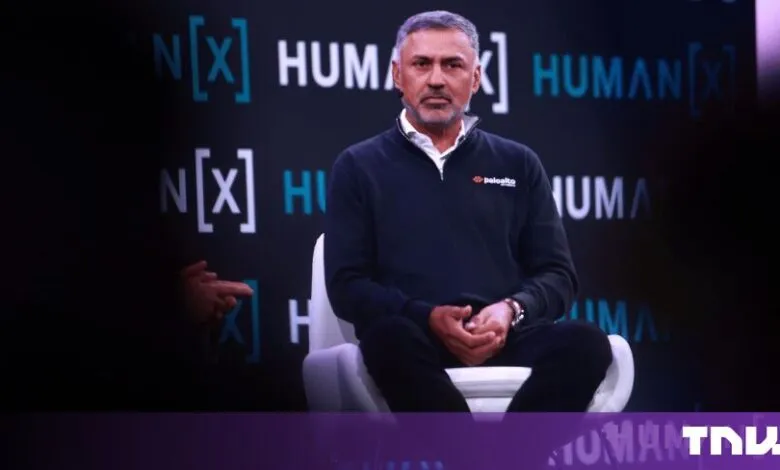
During a session at HumanX in Amsterdam alongside Forbes senior editor Iain Martin, Arora highlighted the economic dynamics of AI. He observed that while computational costs remain high, the cost of intelligence itself is trending toward zero. This shift creates a dangerous parity where attackers will soon possess equal or superior AI capabilities compared to defenders.
To combat these threats, Palo Alto Networks is actively integrating advanced AI tools into its security operations. Arora revealed that the company tested its own code using Anthropic’s Mythos model, identifying thousands of vulnerabilities, albeit with some false positives. In response, the firm launched new AI security testing services powered by Mythos and OpenAI’s GPT-5.6-Cyber. Internally, Arora has assumed the role of Palo Alto’s chief AI officer. He meets with senior technical leadership twice weekly to ensure that all 21,000 employees are effectively leveraging AI technologies across the organization.
(Source: The Next Web)