Spacecraft Firm Releases Otters Into Wild After 7 Years
▼ Summary
– Starfish Space was founded in October 2019 by engineers Trevor Bennett and Austin Link to address the growing challenges of satellite management in orbit.
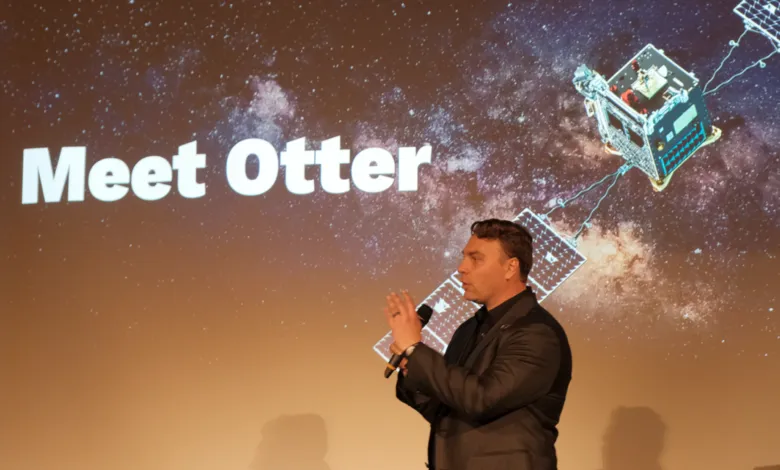
– The company developed Otter, a spacecraft designed to extend satellite life and inspect defunct assets in low-Earth and geostationary orbits.
– The first Otter spacecraft is scheduled to launch this fall on a Falcon 9 mission for NASA’s SSPICY demonstration program.
– During the mission, Otter will approach multiple older US-owned satellites to gather data on their condition and spin rates without physical contact.
– NASA has funded this commercial debris inspection mission with $15 million, marking the agency’s first investment in such a capability.
Starfish Space, a spacecraft manufacturer founded in October 2019, has navigated a turbulent path from inception to launch. Co-founder Trevor Bennett and his partner, Austin Link, established the company with ambitions to reshape the space industry, only to face the immediate disruption of a global pandemic.
“Little did we know what the world had in store for us,” said Trevor Bennett, an engineer who co-founded Starfish Space after a few years at Blue Origin. “But that’s kind of become part of our story, showing some resilience along the way.”
The founders’ vision was rooted in observations made during their tenure at Blue Origin. Witnessing the rapid expansion of satellite constellations and the aggressive goals of billionaire-led rocket programs, they questioned the long-term sustainability of low-Earth orbit. While concepts like asteroid mining or lunar infrastructure appeared distant, practical solutions for orbital management seemed urgent. They identified two primary market needs: extending the lifespan of large geostationary satellites and actively managing the debris fields accumulating in low-Earth orbit.
“So we had two business cases that we thought were meaningful,” Bennett said. “What we needed was a vehicle to go match that, and that was Otter.”
The First Launch
Seven years post-founding, the first Otter spacecraft is scheduled for its inaugural flight this fall. Weighing approximately 350 kg and roughly the size of a large washing machine, the unit will ride aboard a Falcon 9 Transporter mission. This deployment marks a significant milestone for the company, transitioning from theoretical design to operational reality.
The mission serves primarily as a technical demonstration for NASA. Officially designated SSPICY,which stands for Small Spacecraft Propulsion and Inspection Capability,the flight will test Otter’s ability to navigate near older, non-functional spacecraft. The objective involves approaching several US-owned defunct satellites to within hundreds of meters, collecting critical data on spin rates and structural conditions.
This initiative represents a historic shift in federal space policy. It is the first time NASA has funded a commercial mission dedicated to inspecting orbital debris. In support of this groundbreaking effort, the agency has committed $15 million to Starfish Space, validating the commercial viability of active debris removal and satellite inspection services.
(Source: Ars Technica)


