Meadow: Leave Your Smartphone at Home
▼ Summary
– Meadow founder Shreyas Narlanka introduces a minimalist smartphone designed to help users disconnect from social media while maintaining essential connectivity.
– The device runs on Android and supports utility apps like Uber, Maps, and Spotify, serving as a supplementary tool rather than a full smartphone replacement.
– Users must subscribe to Meadow for a separate phone number, allowing them to use the ‘driving’ focus feature to manage expectations with their primary contacts.
– The product sits between fully dumb phones and modern touchscreen devices, aiming to encourage outdoor activities and real-world social interactions.
– This approach addresses a growing consumer sentiment of feeling suffocated by constant connectivity, offering a middle ground in the emerging minimal phone market.
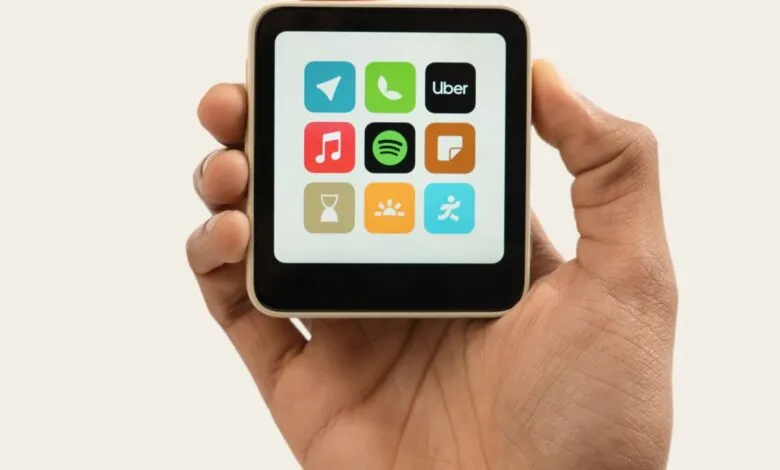
Stepping into the concert venue, I presented a three-inch square screen to the bouncer. The device displayed a ticket barcode that had been scanned from Meadow’s minimalist phone earlier that day. My heart raced slightly, fearing the code might fail, but the scan went through instantly. “Cool phone,” the bouncer remarked as he ushered me inside.
I had successfully navigated the event without touching my iPhone even once. I had called an Uber, streamed Apple Music during the transit, and entered the show using only this barebones gadget. My smartphone remained in my pocket, serving purely as a backup plan for a scenario that never materialized. This experience highlighted the core philosophy behind Meadow: it is not designed to replace your primary device, but rather to supplement it by encouraging you to disconnect from the digital noise while staying connected to the physical world.
A Middle Ground in Minimalist Tech
The market for distraction-free devices is expanding rapidly. On one end of the spectrum, products like the Light Phone demand a complete abandonment of smartphones. On the other, devices such as the Wisephone offer modern touchscreens with stripped-down interfaces. Some manufacturers are experimenting with tactile designs, such as the Commodore Callback flip-phone. Meadow occupies a unique middle ground. It runs on Android, allowing it to support essential applications like Maps, Strava, Uber, Spotify, and Apple Music. It also includes native utilities for texting, calling, notes, location sharing, and ticket scanning.
Founder Shreyas Narlanka emphasizes that his goal was never to create a full replacement for the iPhone. “With so many dumb phones, the Brick, and everything, the messaging is like, ‘Slow down, focus on your work’ or whatever,” Narlanka explains. “But the reason we’re different is because we’re all about getting outside and unplugging and having a sick social life.” He acknowledges the practical need for a primary phone. “I knew there were going to be times where I needed my phone,” he says. “I didn’t want a full replacement.”
This approach resonates with a growing global sentiment. Many users feel suffocated by constant connectivity and are seeking reprieves from social media feeds. The trend toward reducing screen time has become almost universally accepted as beneficial, akin to eating vegetables or flossing. Even celebrities are participating in this shift. Pop star ADÉLA recently posted on Instagram, stating, “I have deleted social media because i want to stay sane!” Yet, her fans at the concert continued to record the entire performance on their iPhones, illustrating the tension between personal digital detoxes and societal norms.
Hardware Limitations and User Experience
Meadow’s hardware design prioritizes function over constant engagement. The camera app operates differently than standard smartphone software. While users can take unlimited photos and videos, these files are inaccessible until they return home and view them via the Meadow app on their main smartphone. There is no front-facing camera; instead, a small mirror sits beside the lens to help users frame selfies. During daytime use, the camera performed adequately, though images taken in low-light concert settings were less impressive.
Battery life and screen brightness proved reliable throughout the day. In fact, the display was sometimes too bright in dim environments, ensuring high visibility outdoors. Holding the small, square device feels unfamiliar compared to an iPhone, but this is intentional. Meadow does not intend for the device to be used constantly, so ergonomic comfort takes a back seat to its purpose. Users must also manage a separate phone number through Meadow’s subscription service, as the device cannot link to existing carrier plans. Narlanka suggests leveraging the iPhone’s “driving” focus feature to inform contacts that you are unavailable, customizing the message to reflect that you are out with your Meadow.
“We’re not Luddites that are going to be like, ‘Streaming’s bad, and this is bad,’” Narlanka clarifies. “It’s just we don’t want social media, browsing and that kind of stuff.”
Founder Background and Market Position
Despite being only 25 years old, Narlanka brings significant entrepreneurial experience to Meadow. He dropped out of UC San Diego in 2020 when his previous venture, Scoutapp AI, began gaining traction. That inventory management platform for online businesses was eventually acquired by fashion resale giant StockX. Meadow marks his first foray into hardware manufacturing.
The company secured backing from prominent investors in December 2024. The funding round was led by Alana Goyal of basecase capital, with participation from angel investors Terrence Rohan, Discord’s founding CMO Eros Resmini, Vercel founder Guillermo Rauch, and Diagram founder Jordan Singer. As Meadow ships its first bulk batches to pre-order customers, early testers have reported minor glitches, such as delayed ride-end notifications in the Uber app. Narlanka confirms these issues have since been resolved. For those willing to adapt to managing a second phone number, Meadow offers a functional tool to disconnect from the grid without fully leaving it.
(Source: TechCrunch)