When the Past Goes Viral: Why Solar Impulse 2 Is Flying Again on Social Media
The Comeback of an Old Triumph
▼ Summary
– Solar Impulse 2’s 2016 solar-powered global flight resurfaced on social media in 2025, presented as a recent event.
– The aircraft made history by flying 40,000 km using only solar energy, proving renewable energy’s viability in aviation.
– Social media algorithms and engagement tactics often repackage old news without dates, misleading viewers into thinking it’s current.
– This recycling of historical events blurs the line between past achievements and present news, distorting public perception of progress.
– The trend highlights how digital platforms prioritize engagement over accurate, contextual storytelling, eroding trust in information.
In early November 2025, feeds across Facebook, X, and Instagram began lighting up with the same post: “A plane powered only by the sun just flew around the world , without burning a drop of fuel.” Accompanied by breathtaking photos of a sleek white aircraft soaring above the clouds, the story spread fast. Thousands of shares later, it looked like a new breakthrough in aviation , a clean-energy milestone just reached.
Except it wasn’t new at all.
The flight being celebrated happened nine years ago, in 2016. The aircraft, Solar Impulse 2, had already made history as the first plane to circle the globe powered entirely by sunlight. It was a remarkable achievement , just not a recent one. The renewed attention says less about aviation progress than about how digital media recycles history to chase engagement.
Many of these posts omitted any date. Some used the present tense , “is flying,” “has completed its world journey,” , creating the impression of breaking news. Others added dramatic headlines about “a new era of flight.” The facts were correct, but the framing was deceptive.
This kind of repackaging is becoming common. As algorithms reward posts that trigger emotion and surprise, pages resort to rediscovering old events and dressing them up as current ones. The intent isn’t necessarily malicious , it’s often a tactic to revive engagement when original content runs thin. Yet, it quietly blurs the line between history and headlines.
When Attention Rewrites Time
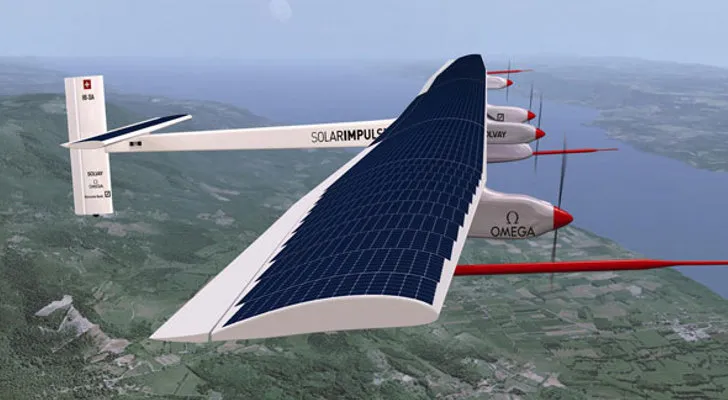
Solar Impulse 2 deserves attention. Built by Swiss explorers Bertrand Piccard and André Borschberg, the aircraft flew 40,000 kilometers across five continents without a single drop of fuel. Its 17,248 solar cells powered four electric motors, storing enough energy by day to stay airborne at night. The journey took 505 days from its first takeoff in Abu Dhabi in 2015 to its final landing there in July 2016.
It was an extraordinary example of engineering meeting conviction , a global mission that proved renewable energy could achieve what once seemed impossible. But what’s happening today isn’t about rediscovery; it’s about digital amnesia.
Social media rarely distinguishes between “what’s happening” and “what once happened.” Timelines are structured for flow, not for context. A post from 2016 can appear beside a fresh video from yesterday, and if the publisher doesn’t specify dates, it feels current. In a sense, these platforms have turned history into a bottomless loop , where old news can always feel new again.
For Solar Impulse 2, that loop revived a genuine story, but in doing so, it stripped away its historical grounding. It’s a reminder that truth can be technically accurate yet still misleading. The aircraft did fly around the world using only solar power , just not this year.
This isn’t an isolated case. The same recycling trick has surfaced with old Mars landing footage, decade-old AI demos, and even defunct tech startups suddenly re-appearing as “rising innovators.” The pattern reveals something about how social media now treats information: not as a record of progress, but as raw material for engagement.

A Real Flight, a Real Message
Revisiting Solar Impulse 2 is not the problem , forgetting when it happened is. The mission remains one of the boldest demonstrations of sustainable technology in aviation. With a wingspan wider than a Boeing 747 and a total weight close to a family car, the aircraft relied entirely on sunlight to cross oceans and continents. It climbed by day to 8,500 meters, charging batteries, and descended by night to 1,500 meters, gliding in darkness on stored power.
The two pilots alternated through long legs of up to five days each, including the record-breaking stretch from Japan to Hawaii. They flew without autopilot, resting in 20-minute naps while the aircraft cruised silently over the Pacific. The design achieved a 94% energy-conversion efficiency, outperforming most combustion engines on the planet.
Those numbers remain as inspiring today as they were nine years ago. The flight was not just an engineering triumph but a statement , a message that renewable energy is viable beyond the ground. It inspired the creation of the Solar Impulse Foundation, which now supports over a thousand certified clean-tech solutions worldwide.
What makes its resurfacing bittersweet is how it exposes the state of digital storytelling. In 2016, the flight represented innovation. In 2025, it represents how innovation stories are being recycled , edited, stripped of dates, and served back as novelty to an audience scrolling too fast to notice.
The Cost of the Endless Scroll
There’s irony in watching a project that once embodied progress now used as bait in an attention economy. The Solar Impulse 2 team wanted to prove that the planet could thrive on renewable energy. Social media, nine years later, is proving that attention can thrive on recycled truth.
It’s easy to see how it happens. A page administrator finds an old post with high engagement potential, replaces the caption, and re-uploads it. The algorithm rewards the activity, the page grows, and few followers ever realize they’re reacting to history. The cycle continues because it works.
But there’s a price. The timeline of innovation becomes distorted. People begin to believe we’re further ahead , or sometimes further behind , than we really are. Genuine breakthroughs are drowned out by déjà vu. And public trust in science communication erodes one quiet repost at a time.
In the case of Solar Impulse 2, it’s a harmless confusion. No harm comes from rediscovering a hopeful story about clean flight. But the pattern it reveals matters. Journalism verifies and timestamps; engagement platforms flatten and repeat. The distance between those two approaches defines how the internet now remembers the world.