Xiaomi Leads Arm’s Push for Better Phone Gaming Graphics
▼ Summary
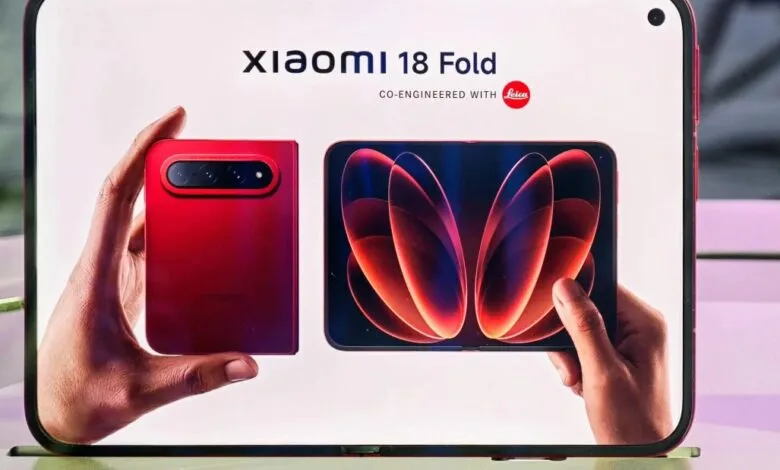
– The Xiaomi 18 Fold launches in China featuring the Arm Mali G2-Ultra NX GPU, which integrates a new AI gaming graphics accelerator.
– This technology enables PC-like graphical features such as AI upscaling and frame generation to improve performance without increasing power consumption.
– Arm claims these neural graphics techniques can deliver up to four times the framerate by using AI to fill in rendered pixels and frames.
– Similar to Nvidia’s DLSS, the new hardware-accelerated methods include Neural Super Sampling, Neural Frame Rate Upscaling, and Neural Denoising.
– These advancements are expected to expand beyond Chinese phones to other devices like tablets and Chromebooks starting next year.
Xiaomi has secured the global debut for a groundbreaking British technology that promises to fundamentally alter mobile gaming. The new Xiaomi 18 Fold launches in mainland China today, powered by an internal custom chip called the Xring O3. This processor features the Arm Mali G2-Ultra NX, a graphics unit that marks a significant leap forward after five years of development. For the first time, Arm has integrated an AI gaming graphics accelerator directly into its GPU architecture.
By adopting strategies similar to those used by Nvidia, Arm is bringing PC-level graphical enhancements to smartphones. These advancements aim to deliver higher resolutions, faster frame rates, and sophisticated lighting effects without increasing power consumption. Consequently, the jagged edges and visual compromises often seen in mobile ports of major titles may soon become a thing of the past. While the initial release is restricted to China, this hardware and the accompanying software ecosystem are already moving toward a broader global market.
“You will be able to buy it; you will be able to get it in phones next year, you will be able to get it in other types of larger screen devices, whether that be tablets or Chromebooks,” said Chris Bergey, EVP of Edge AI at Arm, during an interview with The Verge.
Although Bergey declined to specify which other manufacturers will adopt the Mali G2-Ultra NX, he hinted that future Googlebooks might also utilize this advanced graphics technology. “We think it’s going to be huge,” he added.
Hardware-Accelerated Neural Graphics
The impact of the Mali G2-Ultra NX can be viewed through two distinct lenses. On one hand, it represents a raw performance upgrade, boasting an alleged 85 percent increase over the previous GPU used by Xiaomi and a 14 percent boost over Arm’s prior flagship in standard non-AI gaming scenarios. However, the more transformative aspect lies in its ability to enable a suite of hardware-accelerated graphical techniques. These mirror technologies found in high-end desktop GPUs, including AI upscaling, frame generation, and ray reconstruction capabilities comparable to Nvidia’s DLSS 4.5.
“This really is about bringing Tensor-like capabilities into the GPU shader,” explained Bergey.
Arm refers to these innovations collectively as neural graphics. It is important to distinguish this from Nvidia’s usage of similar terminology, as the focus here is not merely on enhancing facial details or light simulation, but on computational efficiency. By leveraging AI to reconstruct images and frames, the system reduces the workload required for traditional pixel rendering. When techniques such as Neural Super Sampling, Neural Frame Rate Upscaling, and Neural Denoising are combined, Arm claims users can achieve up to four times the framerate.
Despite these impressive metrics, gamers should manage their expectations regarding perceived speed. Because half of this boost comes from generating synthetic frames between existing ones, the experience may introduce additional latency, a common trade-off with current frame generation technologies from Nvidia, AMD, and Intel. Furthermore, these features will not all arrive simultaneously. According to Bergey, initial game support will focus primarily on super sampling, with frame generation expected in early 2027 and denoising following shortly thereafter.
Efficiency and Mainstream Adoption
The true value of this technology lies in its efficiency. Bergey noted that a phone utilizing these chips would consume no more than 2.5 watts, with only 1.5 watts dedicated to the GPU itself. This low power draw allows for sustained gaming sessions without overheating or rapid battery depletion. “It might be like, hey, you can now play 1080p, 60 frames per second for three hours,” Bergey said. “In the past, it was 30 minutes.”
Devices with larger form factors, such as the Xiaomi Pad 9 Pro Max, may offer even greater performance due to enhanced cooling and battery capacity. This tablet, also equipped with the Xring O3 chip, is capable of running games at 3.2K resolution at 120 frames per second.
Crucially, Arm emphasizes that this is not just for niche gaming enthusiasts. “This is not overclocking, this is mainstream,” Bergey stated. “This is about AI replacing traditional rendering; anywhere you can use it, you will use it.” The technology will be available across Premium and Pro device tiers, expanding access beyond flagship smartphones.
While competitors like Nintendo are also integrating similar techniques into consoles like the Switch 2, widespread adoption on mobile requires developer integration. Participating engines such as Unreal Engine and Unity are facilitating this transition. Currently, three titles,Where Winds Meet, Infinity Nikki, and Arena Breakout: Infinite,are confirmed to support the new accelerator, with more announcements expected in the coming weeks.
(Source: The Verge)