Lachy Groom Backs Indian Startup for Year-Long Flight
▼ Summary
– Bengaluru-based startup Alteon has raised $2.5 million in a pre-seed round led by investor Lachy Groom to develop autonomous aircraft capable of staying airborne for over a year.
– The company aims to utilize dynamic soaring, a technique inspired by albatrosses, to harvest energy from ocean wind shear and eliminate the need for conventional fuel or large batteries.
– Initial applications for this technology include maritime surveillance, providing governments with real-time visibility into activities within their territorial waters.
– Although the startup recently demonstrated autonomous flight cycles near the water surface, it has not yet proven that the aircraft can sustain continuous flight using only harvested wind energy.
– Experts acknowledge the promising nature of low-altitude tests but highlight significant engineering challenges related to turbulence, spray, and sensing complex ocean conditions.
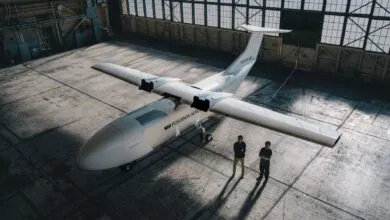
Solo investor Lachy Groom has placed a significant bet on the future of autonomous aviation by backing Alteon, a Bengaluru-based startup aiming to keep aircraft airborne for over a year. The company, founded by 20-year-old Samay Sanghvi, recently secured $2.5 million in pre-seed funding. This round was led by Groom and included participation from Together Fund. The capital will support the development of small, fixed-wing drones that mimic the flight patterns of albatrosses to harvest energy from ocean winds.
Sanghvi revealed that his conviction in the technology was immediate. “Once you build airplanes that can stay in the air for more than a year, there are millions of things you can do with them,” he told TechCrunch. Alteon intends to use these long-endurance platforms primarily for maritime surveillance, providing governments with continuous, real-time visibility into activities within their territorial waters. By eliminating the need to carry heavy fuel or large battery packs, the startup hopes to overcome the traditional limitations of conventional aircraft endurance.
Mastering Dynamic Soaring
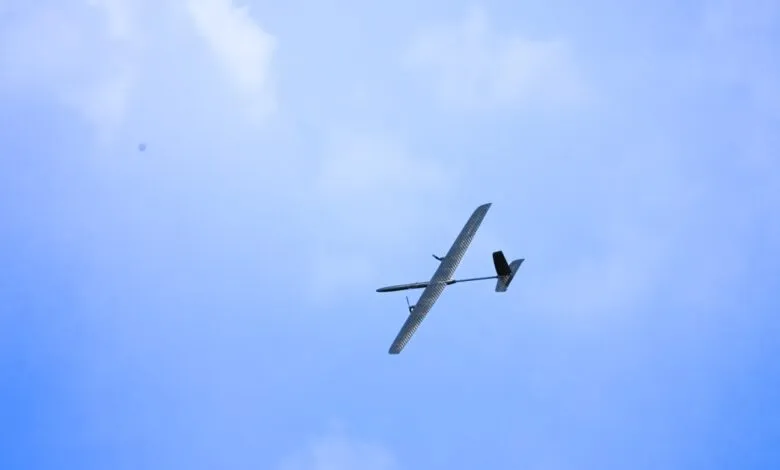
The core innovation behind Alteon’s design is dynamic soaring, a technique where an aircraft repeatedly moves between layers of air traveling at different speeds. In this model, the drone flies close to the ocean surface, climbs into faster-moving air, turns, and repeats the cycle to gain kinetic energy. Eventually, the plan involves using propellers as turbines to convert some of this wind energy into electricity, recharging onboard batteries without external power sources.
“We decided we wanted to invest within the first 30 minutes of their first meeting,” Sanghvi noted regarding Groom’s rapid decision-making process. While the physics of dynamic soaring are established, executing it reliably in a marine environment presents unique engineering hurdles. Alteon has not yet demonstrated sustained flight powered solely by harvested wind energy. However, the team recently completed a test over the Bay of Bengal where the aircraft autonomously executed seven O-shaped cycles at speeds exceeding 62 miles per hour, maintaining a distance of just one meter from the water.
Engineering Challenges Ahead
The next critical milestone for Alteon is achieving what Sanghvi terms “energy-neutral dynamic soaring.” This phase would require the aircraft to fly continuously with its propulsion systems switched off, relying entirely on wind shear to remain aloft. Experts acknowledge the difficulty of this task. Dr. Gabriel Bousquet, an aerospace engineer who studied dynamic soaring at MIT, described the recent low-altitude flights as a “promising first result.” He cautioned, however, that proving the aircraft can extract sufficient energy from variable real-world winds remains a steep challenge.
Flying safely at such low altitudes requires navigating complex environmental factors. Bousquet highlighted that the drone must contend with turbulence, waves, spray, rain, and shifting light conditions while continuously sensing the moving ocean surface. Dr. Bharath Swaminathan, whose PhD research focused on the stability of dynamic soaring at IIT Madras, called the effort commendable. He stated that keeping an aircraft airborne for several days via this method would be “a very big step, and a big achievement.” Yet, he warned that local wind shear and turbulence can vary significantly, potentially complicating energy extraction in ways that only real-world testing can reveal.
From High School Hobby to Startup
Sanghvi’s journey began immediately after high school in 2023. He started by building and crashing radio-controlled models before developing early prototypes. He formally established Alteon in 2025, following initial support from Emergent Ventures and 1517. Today, the company operates out of a 10,000-square-foot facility in Bengaluru with a team of 20 engineers. Production capabilities are ramping up, with the startup currently manufacturing four to five aircraft weekly. According to Sanghvi, the team has conducted more than 200 test flights in the past month alone.
Groom recognized the inherent technical risks involved in such an ambitious project. “Ambitious problems are always going to come with risks,” he said. “For me, it came down to believing Samay and the Alteon team are the ones to figure them out.” With increased funding and a growing test portfolio, Alteon is positioning itself to prove whether autonomous, wind-powered endurance flight is a viable reality for global monitoring and surveillance.
(Source: TechCrunch)