Runable Raises $21M to Scale AI Agents From Build to Growth
▼ Summary
– Indian startup Runable has secured $21 million in Series A funding led by Susquehanna Venture Capital and Nexus Venture Partners to expand its AI-driven business growth tools.
– The Bengaluru-based company pivoted from an infrastructure focus to a general-purpose AI agent that helps small businesses build digital assets and acquire customers through automated marketing.
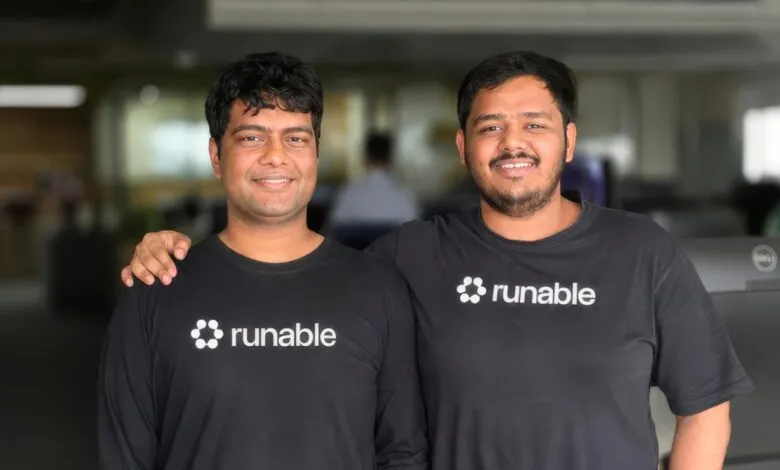
– Co-founders Umesh Kumar and Saksham Sarda launched the platform with a rapid revenue run rate of $2 million within three weeks of enabling payments, highlighting strong market demand.
– Runable’s AI agent automates tasks such as website creation, ad campaign management, SEO optimization, and social media promotion to deliver tangible business outcomes for users.
– The startup currently boasts 1.7 million registered users primarily in the U.S., UK, and Japan, aiming to consolidate multiple business operations into a single conversational interface.
Runable, an Indian startup founded in 2025, has secured $21 million in Series A funding to expand its platform for small businesses. The round was co-led by Susquehanna Venture Capital and Nexus Venture Partners, with participation from existing investors Together Fund and Array VC. This all-equity, primary investment values the Bengaluru-based company at $65 million, according to co-founder and CEO Umesh Kumar.
While the AI landscape is saturated with tools focused on software creation, Runable distinguishes itself by targeting the post-build phase of business operations. The startup’s AI agent is designed to handle customer acquisition, advertising campaigns, presentation creation, and promotional activities across search engines, social media, and AI chatbots. This strategy positions Runable against industry giants like Anthropic and OpenAI, as well as coding platforms such as Cursor, Lovable, and Replit.
From Infrastructure to Growth
The company’s origins lie in AI infrastructure. Co-founders Umesh Kumar and Saksham Sarda initially developed browser technology capable of scraping data at scale. However, they observed a shift in user behavior, as clients began requesting the agent to generate slide decks and websites rather than just extract information. This insight prompted a pivot toward a general-purpose AI agent.
The transition proved highly effective. After launching payments in March, Runable achieved a $2 million annualized revenue run rate within three weeks. Currently, the platform boasts approximately 1.7 million registered users, with significant traction in the U. S., UK, and Japan. Brazil also represents a growing market, though the company is increasingly prioritizing its top three regions. Kumar expects Japan to solidify its status alongside the U. S. as a primary market within the next month.
The core value proposition centers on delivering tangible business outcomes rather than merely providing development tools. As Kumar told TechCrunch: “In the end, a business doesn’t require Codex or Claude Code or anything. They require real outcomes.” He emphasized that small business owners are often willing to pay agencies substantial sums for marketing services. If an AI agent can perform these tasks more efficiently and cost-effectively, it offers a compelling alternative. The goal is to allow entrepreneurs to request specific results, such as acquiring a set number of customers, without manually configuring disparate tools for web hosting, analytics, and advertising.
Navigating Costs and Competition
Despite rapid growth, Runable faces financial and competitive headwinds. The company declined to disclose its current revenue figures or exact count of paying customers. However, Kumar noted that users consumed over 1 trillion tokens in the last 90 days, with 60% to 70% of that usage originating from paid accounts. This high volume of activity comes at a steep price, resulting in negative gross margins as the startup subsidizes AI inference costs for its users.
To improve its economic model, Runable is working with a mix of external models while developing its own proprietary solutions. Kumar believes that advancements in technology will drive down inference costs significantly. He stated: “We are seeing this path where you can provide the same quality of inference at almost 10x less cost.”
Competition remains intense, particularly as major AI model providers begin building their own agents. Kumar argues that Runable’s advantage lies in its holistic approach. While competitors may focus on code generation, Runable integrates infrastructure, analytics, and distribution into a single workflow. This reduces the burden on non-technical users who would otherwise need to stitch together multiple services to launch a functional business.
Testing highlights both capabilities and limitations. In a trial, Runable successfully built and deployed a website for a fictional coffee subscription service, set up analytics, and prepared an ad campaign with a $25 budget. However, the agent halted before executing the ads, requiring users to connect external advertising accounts first. Similar constraints were observed when testing competitor Cursor, which also required access to Meta Ads accounts and third-party deployment services.
Runable notes that it can currently run ads without direct account connections specifically for ChatGPT ads, leveraging undisclosed partnerships described as a “soft wedge.” For developers working extensively with local files or complex codebases, traditional coding agents like OpenAI’s Codex or Anthropic’s Claude Code remain superior options. Runable is instead targeting nontechnical small business owners who seek to leverage AI for growth rather than construction. General-purpose agents like Manus and Genspark are viewed as the closest competitors, but Runable differentiates itself by focusing on customer acquisition and operational efficiency rather than pure development.
(Source: TechCrunch)