Robotics hits its GPT moment, but home adoption is still pending

▼ Summary
– Skild AI, a Pittsburgh-based startup valued at over $14 billion, is developing the ‘universal brain’ for physical AI rather than manufacturing hardware itself.
– The company recently closed a $1.4 billion Series C round led by SoftBank, bringing total capital raised to over $2 billion with backing from NVIDIA and Samsung.
– Skild’s software is currently deployed on hundreds of robots in factories and logistics hubs, generating approximately $30 million in revenue within six months.
– Co-founder Abhinav Gupta predicts that the industry is entering a ‘GPT moment’ where real-time, live robotic demonstrations replace polished video recordings.
– OEM partners like ABB Robotics are embedding Skild’s technology directly into their machines to transform specialized hardware into general-purpose tools.
Skild AI, a Pittsburgh-based startup, is redefining the robotics landscape by developing a universal intelligence layer rather than manufacturing physical hardware. Valued at over $14 billion following a recent funding round, the company has moved beyond theoretical demonstrations to deploy its software on hundreds of robots in active industrial environments. This shift marks a pivotal transition from prototype showcases to commercial viability, proving that the industry’s foundational models are ready for real-world application.
The Financial and Commercial Scale
The momentum behind Skild AI follows NVIDIA CEO Jensen Huang’s declaration at CES 2026 that the “ChatGPT moment for physical AI” was imminent. While the broader industry celebrated with viral humanoid demos, Skild focused on generating tangible revenue through existing infrastructure. In January, the company closed a $1.4 billion Series C led by SoftBank, bringing total capital raised to more than $2 billion. Strategic investors include NVIDIA, Jeff Bezos via Bezos Expeditions, Macquarie Capital, 1789 Capital, and major industrial players like Samsung, LG, and Schneider Electric.
This financial backing supports a rapid commercial rollout. During a six-month period in 2025, Skild generated approximately $30 million in revenue. Its software currently powers robots in factories, data centers, and logistics hubs, including deployments at NVIDIA’s Houston facility and a trial at LaGuardia Airport. By partnering with OEMs such as ABB Robotics, Universal Robots, and Mobile Industrial Robots, Skild embeds its “Brain” directly into third-party hardware, transforming specialized machines into general-purpose tools capable of handling diverse tasks.
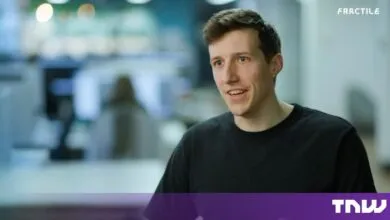
“We are starting to see the start of that whole process right now,” says Abhinav Gupta, Skild’s co-founder and president. “We are seeing a lot more robots going into factories and warehouses like Skild has already hundreds of robots live on these scenarios. And so I would say it’s a start of a GPT moment which will happen over the next one, one and a half year.”
From Research Lab to Industry Pioneer
Gupta’s journey to leading Skild began at Meta, where he spent four years building the FAIR Robotics Lab after a decade in computer vision research. He left in 2023 alongside Carnegie Mellon professor Deepak Pathak to found the company, driven by a realization that robotic systems were finally achieving reliability outside controlled lab settings.
“People are no more showing videos, they are showing live demos, things working live on your face. So then, that’s when I decided that since it’s starting to work, it’s time to do my own thing,” Gupta recalls.
He emphasizes that Skild was an early pioneer in this space, predating the current hype cycle. “Now again, I want to remind you that 2023 is before the ChatGPT came in. So before the hype came in, we were one of the first companies to actually pitch a robotics foundation model. And now you see so many companies talking about it,” Gupta notes. “But the last three years have been kind of amazing. We have not only built our first foundation model, but we have built it very robust that works across different setups.”
The “Omni-Bodied” Approach
Skild’s core innovation is the Skild Brain, an omni-bodied AI system designed to control various robot forms, including quadrupeds, humanoids, tabletop arms, and mobile manipulators. Unlike competitors that focus on specific hardware or single-task applications, Skild adopts a horizontal strategy.
“So we have a very horizontal approach to robotics. What that means is that we are building a platform or a brain that will work for any task, any scenario, and any hardware. Our motto is any task, any hardware, one brain,” Gupta explains.
This philosophy addresses the critical bottleneck of data scarcity. Large language models benefit from vast internet datasets, but robots require physical interaction data, which is historically limited. Skild argues that focusing on a single task or hardware type yields insufficient data to train robust models. Instead, the company aggregates data from multiple sources to create a common model that transcends specific form factors.
“And the reason is because you need lots and lots of data to build these foundation models and brains and so on. If you take only one task, there’s not enough data. If you take only one piece of hardware, there’s not enough data. You pour in data from everywhere that you can get and you learn one common model that transcends the task and that transcends the hardware form factor,” Gupta states. “The result, he argues, is a system that learns a true physical AI underlying behind it. It reasons about how the world works in a physical world.”
Training Through Simulation and Video
To overcome the lack of real-world training data, Skild employs a three-tiered pipeline. First, the model analyzes internet-scale human videos to understand task dynamics across diverse environments. Second, it utilizes billions of simulated scenarios on NVIDIA’s Isaac platform to practice under extreme conditions. Finally, small amounts of real-world teleoperation data fine-tune the system for high-accuracy execution.
“At robotics we are very data hungry. We just don’t have enough data,” Gupta admits. “So at Skild, we use any data that we can get to train our models.”
He uses a tennis analogy to illustrate why video alone is insufficient: “If videos were sufficient, all of us can watch Roger Federer videos and become Roger Federer. That’s not how tennis works. We have to go and practice. And that’s where simulation comes in. We use the tasks that you have learned from videos and practice it in simulation under different conditions. Think of it as a high amount of wind, making the ball wet, and you still learn how to play tennis under these conditions. That gives you the robustness and it gives you how to recover when things are going wrong.”
Deployment Strategy and Future Outlook
Skild’s commercial thesis prioritizes structured environments where return on investment is immediate. The company is currently deploying its technology in factories, warehouses, and data centers before expanding to semi-public spaces like airports and banks. Consumer home adoption remains a long-term goal, as hardware maturity lags behind software capability.
“So our commercial thesis is that robots are ready for today. They’re just not ready for homes tomorrow,” Gupta says. He acknowledges that while humanoid robots show promise, the hardware is not yet deployment-ready. “Humanoid is still there, some way to go because hardware is not deployment ready, but there’s still a long way to go. And our thesis is to deploy as much as you can, because whoever has the deployment advantage will also get the data advantage at the end of the day.”
This creates a flywheel effect where every deployed robot feeds performance data back into the brain, enhancing future iterations. However, Gupta warns against expecting an overnight transformation similar to the rise of smartphones or apps.
“I tell people a lot that the GPT moment is not going to be an overnight moment when it comes to robotics. Because it’s not like an app you can put on a web and then millions of people can use it. With robotics, you have to put one robot one by one into deployment. So it’s a very slow process,” he explains. “For me, the GPT moment will be that the robots start appearing more and more around us. So it will start from factories and warehouses. Every factory and every warehouse will have lots of robots. Then, you will have robots appear in public spaces, for example airports, conferences, shopping malls, and then finally the last bit of GPT moment will be robots in every home, the consumer robots.”
Currently, Skild aims to further reduce the data required for new task deployments. “Yeah, at Skild we are now trying to make our brain more and more robust. We are trying to make the post-training amount of data lesser and lesser. And our hope is we can actually have such a general model, that can train from zero to one example of a new task and become very, very robust on day zero itself. So again, reducing the amount of data that is required to deploy is what we are working on at this moment of time.”
If successful, Skild AI will not merely be another high-valued tech firm but will likely serve as the default operating system for the global robotics industry.
(Source: The Next Web)