Why Data Center Gas Plants Are So Polluting
▼ Summary
– Amazon acquired an off-grid Texas power plant for a data center, permitted to emit up to 33 million tons of greenhouse gases annually, potentially making it one of the largest US emission sources.
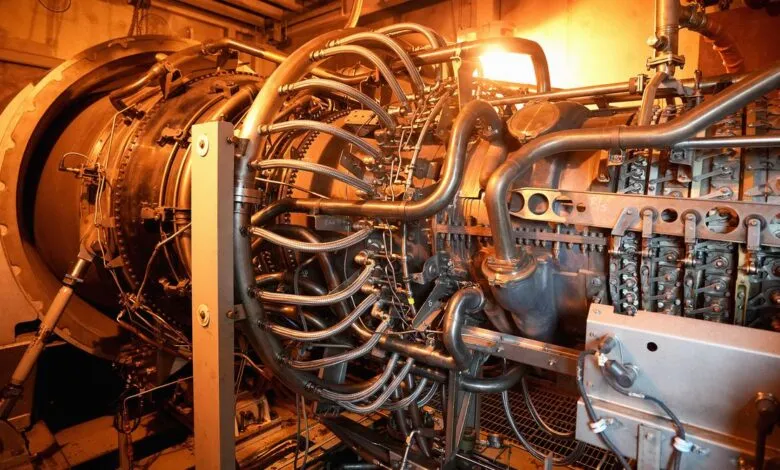
– The plant uses simple-cycle gas turbines, which are less efficient than combined-cycle units because they waste heat, producing more emissions per unit of energy.
– Even at half its permitted emissions, the facility would generate more pollution than 78 average-sized natural gas plants, per EPA data.
– Simple-cycle turbines are increasingly used at other data center projects, including Meta, Microsoft, Google, and xAI sites, due to faster installation and lower costs amid supply chain backlogs.
– Amazon defends the plant as on-site generation that won’t raise Texas electricity costs, and notes it includes solar and battery storage, while maintaining a 2040 net-zero emissions goal.
Amazon’s newly acquired off-grid power facility in Texas, built to serve one of its data centers, is poised to become one of the largest single sources of greenhouse gas emissions in the United States. Yet its sheer scale isn’t the only factor driving its outsized climate impact.
The installation relies on simple-cycle gas turbines, a markedly less efficient technology than what standard grid-connected power plants typically employ. This same turbine choice is increasingly appearing at data center developments across the country, raising serious questions about the environmental footprint of artificial intelligence and the long-term trajectory of the U. S. power grid.
The Texas facility holds a permit allowing up to 33 million tons of annual greenhouse gas emissions. Simple-cycle turbines operate by mixing fuel with air in a combustion chamber, generating power while releasing substantial waste heat. In contrast, combined-cycle units, the industry standard for on-grid plants, incorporate an additional steam turbine that captures that waste heat and converts it into extra electricity. The result is significantly lower emissions per unit of energy produced.
While permitted emission levels at natural gas plants typically exceed actual output, even a scenario where Amazon’s facility emits just half its allowance would still generate more pollution than 78 average-sized natural gas plants, according to U. S. Environmental Protection Agency data.
Amazon spokesperson Heather Callahan defended the project in an email to WIRED, stating that the on-site generation “won’t raise electricity costs for Texas families.” She added that the site will include solar and battery storage, and reiterated the company’s commitment to achieving net-zero emissions by 2040.
The shift toward simple-cycle turbines reflects a broader trend among data center power developers who prioritize flexibility and speed over efficiency. Williams, an oil and gas company, has filed permit applications for at least three Ohio power plants serving Meta that will use simple-cycle units. In Abilene, Texas, Crusoe is constructing a facility on its Stargate campus with 39 simple-cycle turbines to power a Microsoft data center. Google’s Goodnight data center, also developed by Crusoe at another Texas location, has a permit application describing 20 simple-cycle turbines. Meanwhile, xAI’s Colossus 1 and Colossus 2 facilities in Memphis run on dozens of these units. Each of these projects is permitted to release millions of tons of greenhouse gases. Both Williams and Crusoe confirmed to WIRED that their plants comply with local and national regulations and feature emissions control technology.
Britt Burt, senior vice president at Industrial Info Resources, an energy market intelligence firm, admitted he didn’t anticipate data center developers leaning so heavily on simple-cycle turbines. “It’s not the most efficient way to use a gas turbine,” he said.
For companies racing to bring data centers online, however, practicality wins. Installing a handful of simple-cycle turbines is considerably faster and cheaper than waiting for the additional components required for combined-cycle systems, particularly given the multi-year backlog for turbine orders and spare parts. “Right now, because of the way the supply chain is for turbines, they’re having to go with what they can get their hands on,” Burt noted.
The unique demands of AI training also play a role. Simple-cycle turbines have fewer moving parts, allowing them to start and stop more quickly than combined-cycle units. That rapid response capability aligns well with AI workloads, which require sudden, massive surges of power. Ironically, those same spikes have proven so intense that numerous data center operators report turbines breaking under the extreme stress of frequent cycling.
(Source: Wired)