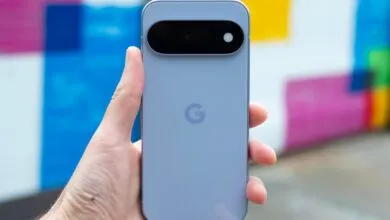
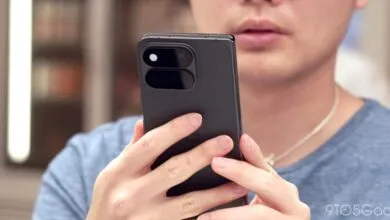
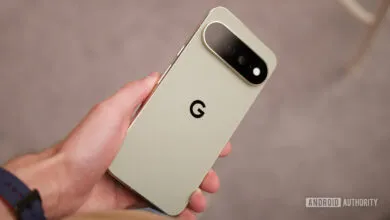
Google Tensor G6 boosts Pixel 11 performance, efficiency, security

▼ Summary
– All four Pixel 11 models use Google’s Tensor G6 and a new Titan M3 security coprocessor, which is the first Google phone chip to meet NIST’s post-quantum cryptography standards.
– Titan M3 provides quantum-safe secure boot and runs Trusty, with Common Criteria certification at the level used for SIM and bank cards, addressing “harvest now, decrypt later” threats.
– The Tensor G6 offers 25% faster browsing, 15% faster app loading, and up to 20% better power efficiency than the Tensor G5, with a TPU that has 50% more compute.
– The TPU runs Gemini Nano on device, enabling up to 3.5 times faster background work and 3.5 times less energy use, plus features like 120x Pro Zoom, 4K portrait video, and faster Instant Night Sight.
– Pricing starts at $899 for the Pixel 11, $1,099 for the Pro, $1,299 for the Pro XL, and $1,899 for the Pro Fold, with the 128GB tier dropped due to rising memory costs.
Google’s next-generation silicon is here, and while the Tensor G6 takes center stage across all four Pixel 11 models, the real headline is the security hardware sitting beside it. The new Titan M3 security coprocessor marks a first for the company: it implements the post-quantum cryptography standards established by the US National Institute of Standards and Technology (NIST). That makes the Pixel 11 the inaugural Google phone to meet those federal guidelines.
The Titan M3 handles quantum-safe secure boot and runs Trusty, Google’s trusted execution environment, uniformly across the lineup. Google frames this as defense against “emerging, highly advanced digital attacks,” and notes the coprocessor carries Common Criteria certification at the same level used for SIM cards and bank cards.
Here is the logic behind shipping this now. No quantum machine currently exists that can crack standard encryption, but that is not the point. Data intercepted today can be stored indefinitely and decrypted later, once such a machine arrives. The industry calls this harvest now, decrypt later, and TNW has previously argued it is an inevitable threat rather than a distant hypothetical.
Pressure is also building from Washington. The White House has signed directives aiming for a functional quantum computer by 2028, effectively putting a hard date on work that many vendors had treated as open-ended.
Performance upgrades are more conventional, though still substantial. Google claims the Tensor G6 delivers 25% faster browsing and 15% faster app loading compared to the Tensor G5, alongside up to 20% better power efficiency, a metric that has plagued every prior Tensor chip. The TPU gets a 50% boost in compute and higher memory bandwidth, which powers on-device Gemini Nano. Google says that model now handles background tasks up to 3.5 times faster while consuming 3.5 times less energy. The same hardware drives the 120x Pro Zoom on Pro models, 4K portrait video, and an Instant Night Sight that captures images up to 4.5 times quicker.
Google has stayed quiet on the manufacturing process and core configuration. That leaves benchmark comparisons against Qualcomm and Apple silicon as the perennial weak spot, and nothing in this announcement suggests that gap will close this year.
Pricing, however, is confirmed. The Pixel 11 starts at $899, the Pro at $1,099, the Pro XL at $1,299, and the Pro Fold at $1,899. The 128GB base storage tier is gone, validating the price hike Google hinted at in July as memory costs climbed.
(Source: The Next Web)