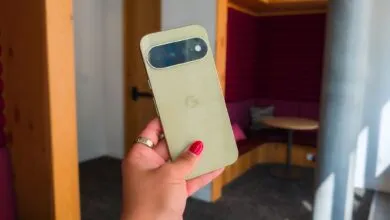
Google Pixel 11 drops the feature that made Pixels worth buying

▼ Summary
– The Pixel 11 series launched with a uniform price increase of $100/£80 across all four models compared to the Pixel 10 series, with the standard Pixel 11 seeing the highest percentage jump.
– The author argues the price hike is especially damaging because Google made no significant battery, performance, or camera changes with the Pixel 11, eroding its historical value proposition.
– Pixel phones were once significantly cheaper than rivals, like the Pixel 6 at $599, but the Pixel 10 series had already matched Apple and Samsung pricing, and now the Pixel 11 costs at least $899, tying Samsung and making Apple’s $799 iPhone 17 the cheapest flagship.
– The price increase is partly attributed to rising component costs from RAM shortages driven by the genAI boom, for which Google, as a major AI player, bears some responsibility.
– The author criticizes Google for not absorbing more of the component costs to protect buyers, noting that consumers interested in new features like HiLight or Rambler now face higher prices with fewer budget flagship options.
The Google Pixel 11 series hit store shelves last Wednesday, and the reception has been decidedly lukewarm. While the new lineup brings a handful of genuinely interesting upgrades and refinements across Google’s four flagship models, I have found myself fixated on something else since the keynote wrapped: the price.
Google never explicitly announced the cost increase during its presentation, so let’s lay it out plainly. The Pixel 11 starts at $899 (£879), the Pro at $1,099 (£1,079), the Pro XL at $1,299 (£1,279), and the Pro Fold at $1,899 (£1,799). Compare that to the Pixel 10 series, which launched at $799 (£799), $999 (£999), $1,199 (£1,199), and $1,799 (£1,749). That is a uniform $100 (or roughly £80) jump across the entire range. Worse still, the standard Pixel 11 absorbs the largest percentage increase of the group. Price hikes are never welcome, but this one stings more than most.
Why the Pixel 11 price increase feels especially painful
For years, I have argued that if I ever left this industry and had to buy my own smartphones again, I would start with a Pro Pixel. The reasoning was simple: Pixel phones were not only enjoyable to use and packed with clever features, they were also cheaper than the competition. That belief crystallized with the Pixel 6 series in 2021. That was the moment Google’s phones stopped being a niche curiosity and started feeling like a true rival to Samsung and Apple. For the first time, I saw everyday people, not just tech enthusiasts, carrying Pixels.
A big part of that surge was the price. The Pixel 6 launched at $599 (£599), with the Pro model at $899 (£849), roughly equivalent to today’s Pro XL in size and capability. At the same time, Apple’s iPhone 13 and Samsung’s Galaxy S22 were retailing for $799, while the iPhone 13 Pro Max and Galaxy S22 Ultra demanded $1,099 and $1,199 respectively. The gap was substantial.
But that gap has narrowed over the years, and my confidence has eroded. By the time the Pixel 10 arrived, Google had matched the pricing that Apple and Samsung had held for years. The Pixel 10 briefly reclaimed its “budget flagship” status only because Samsung raised Galaxy S26 prices earlier this year. Now, however, the playing field is level again. Whether you choose a Galaxy S26 or a Pixel 11, you are looking at a minimum of $899. And ironically, it is Apple that now offers the cheapest flagship of the three major Western phone makers, with the iPhone 17 starting at $799.
Strip away the price advantage in a year when Google has not delivered major improvements in battery life, performance, or camera hardware, and you have to ask what the Pixel is really for anymore.
Who is really to blame for the Pixel 11 price hike?
We are living through an era where technology is getting more expensive, largely driven by RAM shortages that have sent component costs soaring. That shortage is almost entirely a byproduct of the generative AI boom, and Google, as one of the biggest players in that space, carries a fair share of responsibility for this self-inflicted wound. Still, I do not feel sorry for Google. I feel sorry for the buyers.
Anyone intrigued by the new HiLight feature, the AI-powered Rambler assistant, or camera upgrades like Pro Stable Video and Magic Capture now has to pay more for the privilege. Diehard Pixel fans have to shoulder the increase too. Meanwhile, consumers hunting for a solid deal on a flagship-grade device have fewer options than ever. With the smartphone market steadily losing players, whether through brands exiting certain regions or abandoning phones altogether, Google’s pricing decision has an outsized ripple effect.
Even if manufacturing costs have risen, I believe Google could have absorbed more of the expense to shield the Pixel 11 series from these increases. Google’s marketing constantly urges us to “ask more of your phone.” Asking the company to hold the line on pricing does not seem unreasonable.
(Source: Android Authority)