Cancer surveillance startup Bios Life launches with $25M, Tempus deal
▼ Summary
– Bios Life, founded by BioNTech alumni, raised $25M to replace episodic cancer screening with continuous, AI-driven surveillance via a “digital twin” model.
– The company targets over 40 million Americans who are cancer survivors or at heightened risk, citing that over 40% of people will be diagnosed with cancer in their lifetime, often at late stages.
– Its technology includes commercial rights to the Nucleotide Transformer genomics model and a multi-year data alliance with Tempus to train predictive systems using de-identified oncology datasets.
– The virtual-first service, launching in the second half of 2026, will be delivered through an online platform with licensed clinicians and partnerships with cancer centers.
– The platform is unlaunched and unvalidated, with caveats including the need for clinical proof and risks of false alarms, over-screening, and anxiety from continuous surveillance.
More than 40 million Americans are either cancer survivors or carry an elevated risk of the disease, and a new Boston-based startup believes they have been underserved by a fragmented, reactive system. Bios Life has officially launched from stealth with $25 million in seed funding and a multi-year data partnership with Tempus, aiming to replace episodic screening with continuous, AI-powered surveillance.
The seed round brings together an unusually broad coalition of backers for a company at this stage. Redmile, Vsquared Ventures, and Kindred Capital led the raise, with additional participation from healthcare and technology investors across the US and Europe. That syndicate gives Bios Life meaningful runway as it prepares for a commercial debut in the second half of 2026.
The problem the company is targeting is stark. Bios Life points out that more than 40% of people will receive a cancer diagnosis at some point in their lives, and a significant portion of those cases are caught late, at stage three or four, when treatment becomes more difficult and survival odds drop. The current model, a scan every year or two, leaves gaps that the company argues are dangerous.
Bios Life’s answer is a conceptual shift from discrete tests to a continuous loop. The company plans to build what it calls a “digital twin” for each patient, a living model of their biology that updates over time and turns scattered screenings into lifelong monitoring. The service will be delivered through a virtual-first care platform, staffed by licensed clinicians across the country and coordinated with cancer centers. A waitlist is already open.
The underlying technology has serious academic weight behind it. Bios Life holds commercial rights to the Nucleotide Transformer, a genomics foundation model developed by BioNTech-InstaDeep that ranks among the most cited and downloaded tools in its field. The model can parse genetic information down to the level of a single nucleotide, which gives the company’s predictive systems a granular view of cancer risk.
That is where the Tempus alliance becomes critical. Under the agreement, Bios Life gains access to Tempus’ de-identified, multi-modal oncology datasets, which will be used to train and validate its AI models. In healthcare, access to high-quality data is the difference between a compelling demo and a credible product, and this deal supplies the raw material.
Genetic screening will round out the offering. Through Tempus-owned Ambry Genetics, a leader in hereditary cancer testing, Bios Life intends to integrate inherited risk factors into its platform, layering that information alongside clinical and lifestyle data it tracks over time.
Clinical advisors are framing the launch as a correction to decades of stagnation. Kevin Oeffinger, a physician at Duke and an academic advisor to the company, described cancer screening as being at a “relative standstill” for years. He argues that an AI-enhanced virtual model could be a “game changer” for high-risk populations, a bold assertion from someone with his credentials.
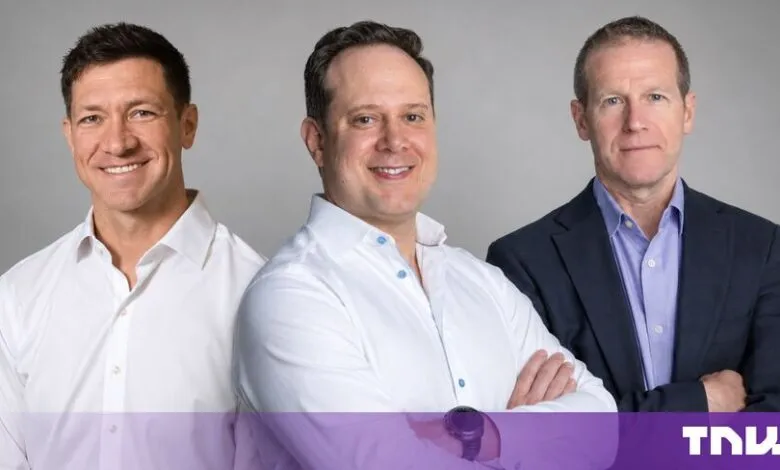
The founding team lends credibility to the pitch. Chief executive Ryan Richardson previously served as BioNTech’s chief strategy officer and chaired its AI subsidiary InstaDeep. He is joined by other veterans of BioNTech and InstaDeep, people who were in the room during the mRNA and genomics-AI boom. That pedigree matters in a funding environment where founder-led health-AI startups are attracting serious capital.
Early results suggest the technology has real momentum. The models have already demonstrated the ability to spot breast cancer from imaging, and in some studies, they have performed comparably to or better than biopsies at assessing rare tumors. Those are meaningful signals, not just theoretical promise.
Still, the caveats in healthcare deserve attention. The platform has not launched, and AI-based risk prediction must undergo rigorous clinical validation before it earns trust. Continuous surveillance carries its own risks, including false positives, over-screening, and the anxiety that comes from chasing findings that may never amount to anything. The cost of that vigilance, both financial and emotional, is a genuine concern.
That tension defines the broader field of AI health tech right now. The hype has run ahead of the evidence in many cases, and the burden is on companies like Bios Life to show that constant monitoring actually improves outcomes rather than just increasing the volume of data collected.
Bios Life enters the market with a strong team, a major data partner, and substantial funding. What it has yet to prove is that lifelong surveillance translates into better patient outcomes. That is the standard it will ultimately be judged against.
(Source: The Next Web)